
Troubleshooting Concrete Pump Pipeline Blockages: The Professional Australian Guide
Updated: Jul 29
A concrete pump blockage is rarely a random stroke of bad luck; it is almost always the mechanical result of poor pipeline hygiene or a mismatch in your accessories. When the flow stops and the pressure gauge spikes, the atmosphere on an Australian job site shifts instantly from productive to high-pressure. You're suddenly facing expensive downtime while your labour sits idle, and the looming threat of concrete setting in the line can turn a minor delay into a total equipment overhaul. It’s a stressful scenario that every operator wants to avoid.
This guide provides a professional framework for troubleshooting concrete pump pipeline blockages, helping you identify the root cause of a plug before it leads to a dangerous burst. We'll show you how to clear lines safely, protect your delivery pipes from premature wear, and implement a maintenance routine that keeps your site running without unplanned interruptions. Whether you're managing a high-rise pour or a residential slab, mastering these protocols ensures your machinery stays ready and your project stays profitable.
Table of Contents
Understanding the Mechanics of Concrete Pump Pipeline Blockages
Thinking about the pipeline as an extension of the concrete pump itself is the first step toward effective troubleshooting. It isn't just a delivery tube; it's a high-pressure artery system where every millimetre of diameter and every degree of bend affects the outcome. If the internal diameter is compromised by old buildup or if a coupling isn't seated perfectly, you create turbulence. This turbulence disrupts "laminar flow"-the smooth sliding of the concrete lubricated by a layer of grout-and forces the aggregate to collide. When this happens, the concrete "shears," meaning the liquid paste separates from the heavy stones to create a dry, immovable plug. Mastering the art of troubleshooting concrete pump pipeline blockages starts with keeping this internal environment consistent.
These plugs cause immediate, violent pressure spikes that stress the entire hydraulic system. Using the right concrete pump pipeline accessories, such as properly tapered reducers and high-quality seals, is essential for maintaining a smooth path. If the pipeline isn't perfectly aligned or if accessories are mismatched, the friction increases exponentially, leading to the very failures that stop a pour in its tracks.
The Pressure-Friction Balance
Every elbow, reducer, and hose adds friction to the system. On a hot Australian summer day, this friction generates significant heat within the steel lines. If the pipeline becomes too hot, the water in the concrete mix evaporates faster, causing the mix to stiffen or "set" while it's still in the pipe. Worn internal surfaces on delivery lines also increase resistance. A pipe that has lost its smooth finish creates more drag, which forces the pump to work harder and increases the likelihood of a plug forming at the first restriction it hits.
Economic Impact of Blockages on Australian Sites
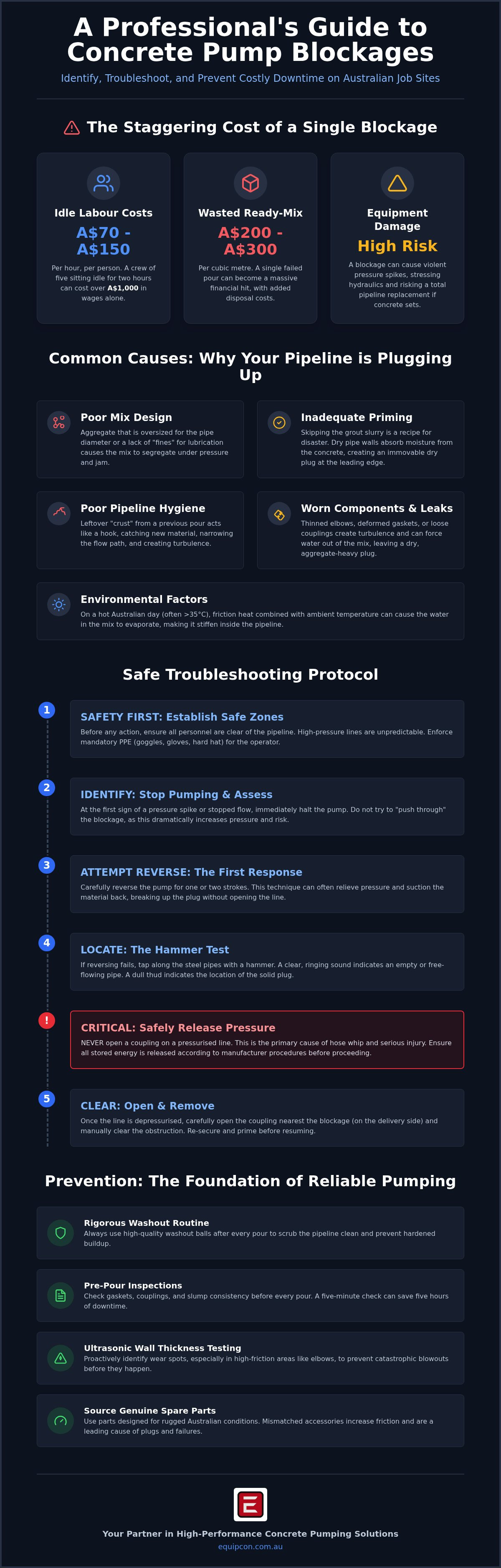
The cost of a blockage goes far beyond a bit of wasted material. With concreter labour costs in Australia often ranging from A$70 to A$150 per hour per person, a crew of five sitting idle for two hours can easily cost a business owner over A$1,000 in wages alone. When you factor in the cost of ready-mix concrete-which can sit between A$200 and A$300 per cubic metre-a single failed pour becomes a massive financial hit. If you "lose the line" because the concrete sets during a delay, you're then facing the expensive task of replacing entire sections of pipe. Investing in preventative maintenance is always more cost-effective than a single mid-pour failure.
Common Causes: Why Your Pipeline is Plugging Up
When you're troubleshooting concrete pump pipeline blockages, you'll often find that the problem started long before the first stroke of the pump. One of the most frequent culprits is a poor mix design. If the aggregate is oversized for the pipe diameter or if there aren't enough "fines" to lubricate the flow, the mix will inevitably jam. Equally dangerous is inadequate priming. Skipping the grout slurry or using a shortcut is a recipe for disaster; the dry pipe walls immediately absorb moisture from the leading edge of the concrete, creating a dry plug that won't budge.
Pipeline hygiene plays a massive role too. Leftover "crust" from a poorly washed-out previous pour acts like a hook, catching new material and narrowing the flow path. Mechanical wear, such as thinned elbows or deformed gaskets, creates turbulence that disrupts the mix. Even operator error, like improper hose handling or allowing a "kink" at the end hose, can trigger a spike. This isn't just about downtime; a sudden blockage can lead to dangerous pressure releases. As highlighted in this NT WorkSafe safety alert, blockages are a primary cause of "hose whip," a phenomenon that puts everyone on site at risk. Ensuring your gear is in top shape through Equipcon's national service network helps mitigate these operational hazards.
Mix and Slump Consistency
A "dry" mix significantly increases the risk of segregation under pressure. When the slump is too low, the pump has to exert more force, which can squeeze the water out of the paste and leave the stones behind. Many operators try to fix this by adding water on-site, but without re-mixing properly for several minutes, you end up with "slugs" of inconsistent material. In the harsh Australian climate, ambient temperatures often exceed 35°C, which rapidly reduces the "open time" of the mix. If you aren't prepared for the heat, the concrete will begin to stiffen inside the line before it even reaches the boom.
Worn Components and Air Leaks
Even a tiny air leak can cause a major headache. If a gasket is deformed or a coupling isn't tight, water is forced out of the mix under pressure. This leaves a dry, sandy plug that is nearly impossible to push through. There is also the "internal lip" problem; when mismatched pipe diameters or poorly seated reducers create a shelf, material catches and builds up. Protecting your pump starts at the source. High-quality concrete pump wear plates and rings in the hopper are your first line of defence, ensuring the material enters the pipeline with the correct pressure and consistency.
Step-by-Step Troubleshooting: Locating and Clearing the Blockage
When the pump stalls and the pressure gauge hits the limit, your immediate priority is site safety. Effective troubleshooting concrete pump pipeline blockages requires a calm, methodical approach to prevent a dangerous pressure release. Before anyone touches a coupling, clear all non-essential personnel from the vicinity of the pipeline. Ensure every worker involved is wearing full PPE, including high-impact eye protection and gloves. A blockage under pressure is a stored energy hazard; treating it with anything less than total respect is how accidents happen on site.
The first mechanical response should always be to stop the pump and then use the "Reverse" function. By reversing the pump for two or three cycles, you can often pull the material back toward the hopper, breaking the vacuum and loosening the plug. If this doesn't clear the line after a few attempts, you'll need to locate the exact point of the obstruction before taking further action.
The "Tap Test" and Visual Diagnostics
Locating a plug in a long run of steel pipe requires a keen ear. Take a small hammer and walk the line, tapping the pipe every metre or so. A clear pipe will produce a ringing, hollow sound, while the section containing the blockage will result in a dull, solid "thud." This is the most reliable way to pinpoint where the aggregate has packed tight. You should also look for visual cues; a section of hose that is vibrating violently or "sweating" moisture at the couplings is a clear indicator of high internal stress. Always keep one eye on your hydraulic pressure gauge; if it spikes instantly upon starting a forward stroke, the blockage is likely close to the pump or in the first few elbows.
Safe Clearing Procedures
If reversing the pump doesn't work, you'll have to open the line manually. This is the most critical moment of the process. You must bleed the pressure entirely before loosening any coupling. Most modern pumps have a specific procedure for this, often involving several reverse cycles until the pressure gauge reads zero. Never attempt to "crack" a coupling that is still under tension. Once the pressure is relieved, slowly open the coupling at the identified blockage point. Be prepared for a "blowout" or a sudden surge of material if the blockage releases unexpectedly. Have a plan for containing the spill to keep the site clean and ensure that once the obstruction is removed, the line is thoroughly primed again before resuming the pour. Taking these extra few minutes protects your crew and prevents the secondary blockages that often occur when an operator tries to rush back into production.
Prevention: The Foundation of Reliable Pumping
The most effective approach to troubleshooting concrete pump pipeline blockages is to ensure they never occur in the first place. A proactive maintenance culture turns a potentially chaotic site into a methodical, predictable operation. It starts with the "Prime and Lubricate" rule: never attempt to push concrete through a bone-dry line. Even the most perfectly balanced mix will lose its moisture to the thirsty walls of a steel pipe, leading to an immediate jam at the first bend. By ensuring the line is properly coated with a grout slurry or specialised priming agent, you create the necessary "slip" for the concrete to travel under pressure.
Operator intuition is equally vital for prevention. A seasoned operator can recognise the "feel" of a struggling pump through the vibration of the remote or a subtle change in engine pitch long before the pressure gauge hits the red zone. To support this boots-on-the-ground expertise, every truck should carry an emergency kit stocked with fresh gaskets and heavy-duty clamps. Being able to swap a leaking seal in five minutes prevents the moisture loss that causes dry plugs. For a full range of high-performance pipeline accessories and expert technical advice, contact the specialists at Equipcon.
Effective Washout and Pipeline Hygiene
Pipeline cleanliness is non-negotiable. Establishing a rigorous daily routine using high-quality washout balls is the most effective way to prevent internal "crusting" that narrows the delivery path. You need to choose the right density for the specific job; soft sponge balls are excellent for standard runs, while hard-density balls provide the necessary scrubbing power for long vertical lines or complex boom configurations. For heavy-duty buildup, mechanical "pigs" or scrapers may be required to restore the internal diameter of the pipe. While air-washout is sometimes used for speed, water-washout remains the superior choice for Australian sites; it is safer, more thorough, and ensures the pipe is cooled down after a hot summer pour.
Component Inspection Protocols
Regularly checking your concrete pump pipe couplings for wear and deformation is essential for site safety. A coupling that doesn't close perfectly allows grout to escape under pressure, which is the leading cause of aggregate segregation at the joints. Beyond visual checks, you should use ultrasonic thickness gauges to find thin spots in the hardened steel, particularly on the outer radius of elbows where the abrasive force of the aggregate is highest. Once a pipe reaches its wear limit, retire it immediately. The risk of a high-pressure burst far outweighs the cost of a replacement length. You should also inspect end hoses for internal delamination or wire-braid damage to prevent catastrophic failures during a pour.
Professional Support and Quality Sourcing in Australia
Mastering the protocols for troubleshooting concrete pump pipeline blockages is a vital skill for any operator, but the long-term goal for a profitable Australian contractor is to minimise the need for these interventions. Reliability on a job site is built on the foundation of the equipment you use and the technical support network behind it. When you source genuine concrete pump spare parts, you're investing in components designed to handle the specific abrasive qualities of Australian aggregate mixes and the high-pressure demands of modern pours. At Equipcon, we position ourselves as more than just a supplier; we're a seasoned partner invested in the functional success of your projects.
Our national network of strategically located service depots across Australia ensures that you have "boots-on-the-ground" support whenever a mechanical challenge arises. We don't just sell parts; we help you audit your entire pipeline system to maximise your return on investment. By identifying potential failure points before they become mid-pour disasters, we help you maintain zero unplanned downtime and extend the lifespan of your delivery pipes and hoses.
The Value of Genuine Components
The difference between premium delivery pipes and cheap imports often comes down to the metallurgy. High-performance pipes are engineered with hardened internal layers that resist the scouring action of the concrete, whereas lower-quality alternatives wear unevenly and create the internal "lips" that trigger blockages. Precision-engineered gaskets are equally important; they provide a "turnkey" seal that prevents the pressure and moisture loss discussed earlier in this guide. Using high-quality gear doesn't just prevent plugs; it also reduces the physical strain on your mobile concrete pumps, protecting the main hydraulic pumps and S-valves from unnecessary back-pressure spikes.
National Service and Technical Advice
Our commitment to your fleet extends through the entire equipment lifecycle. You can leverage our specialised depots for everything from minor coupling replacements to major hydraulic overhauls and technical repairs. We specialise in high-performance Zoomlion machinery but provide support for a wide range of pumping configurations. If you're tackling a unique project-such as a high-pressure vertical pour or a long-distance line job-we can provide customised pipeline solutions tailored to your specific requirements. We believe that clear communication and logistical precision are the keys to reducing site stress. Contact our team today for expert advice on your next pour or to discuss a preventative maintenance plan for your fleet.
Keep Your Site Flowing with Professional Pipeline Care
Mastering the art of troubleshooting concrete pump pipeline blockages is an essential skill, but the real secret to a smooth pour lies in proactive maintenance and high-quality gear. You've seen how aggregate segregation and poor pipeline hygiene create the plugs that lead to costly downtime and unnecessary site stress. By implementing a strict washout routine and using ultrasonic testing to monitor wall thickness, you transform your pumping operation from reactive to reliable. It's about shifting your focus from clearing failures to ensuring consistent, laminar flow.
Equipcon is here to support you through every stage of the equipment lifecycle. As a genuine parts specialist with a national service network and expert technical support, we ensure your machinery stays in peak condition for the long haul. Don't let a preventable blockage stall your next project or put your crew at risk. Browse our range of high-performance pipeline accessories to find the turnkey solutions you need for a stress-free pour. With the right accessories and a methodical approach, you can keep your project on schedule and your pipeline running clear.
Frequently Asked Questions
What is the most common cause of a concrete pump blockage?
The most common cause is a combination of poor mix design and inadequate pipeline priming. If the aggregate is too large for the pipe diameter or the grout slurry is skipped, the concrete loses its lubrication and creates a dry plug. This often happens at the first elbow or reducer where friction is highest. Ensuring a consistent slump and using a proper priming agent is the best way to prevent these early-stage jams.
How can I tell where a blockage is located in the pipeline?
You can locate a blockage by performing a "tap test" with a hammer along the length of the pipeline. A hollow, ringing sound indicates a clear section, while a dull "thud" pinpoints where the material has packed tight. Additionally, look for sections of hose that are vibrating excessively or "sweating" moisture at the couplings. These visual cues often signal where the internal pressure is highest and help focus your clearing efforts.
Is it safe to clear a blockage by increasing the pump pressure?
No, it is never safe to attempt to clear a blockage by simply increasing the pump pressure. Forcing the pump beyond its limits can lead to catastrophic pipeline bursts or the dangerous "hose whip" phenomenon. High pressure can compress the plug further, making it even harder to remove. Always stop the pump and follow a safe pressure-relief protocol before attempting to clear the line manually to protect everyone on site.
What is the "reverse" method for clearing a block?
The "reverse" method involves cycling the pump in the opposite direction for two or three strokes to pull material back toward the hopper. This action breaks the vacuum and can often loosen a plug without needing to open the line. It is the first mechanical step in troubleshooting concrete pump pipeline blockages. If the material moves back into the hopper, you can then try to pump forward again slowly to resume the pour.
How often should I replace my concrete pump pipe gaskets to prevent leaks?
You should replace your pipe gaskets as soon as you notice any signs of deformation, tearing, or thinning. While some operators check them weekly, a daily inspection before the first pour is the professional standard. Even a minor leak allows water to escape the mix under pressure. This leads to aggregate segregation and the formation of dry, immovable plugs at the joints, which can halt your entire operation.
Can I use a sponge ball if there is already a blockage in the line?
No, you cannot use a sponge ball if the line is already fully blocked. Attempting to force a washout ball against an existing plug will only compress the material further and add another obstacle to the line. Washout balls are preventative tools used for cleaning at the end of a successful pour. If a blockage occurs, you must clear the obstruction manually or via the reverse method before using any cleaning accessories.
What safety gear is required when troubleshooting a pipeline blockage?
Troubleshooting a pipeline blockage requires full personal protective equipment (PPE), including high-impact eye protection, heavy-duty gloves, a hard hat, and high-visibility clothing. Because blockages involve stored energy and high pressure, the risk of a sudden release of material is significant. Ensuring all personnel are properly geared up and non-essential workers are cleared from the area is a mandatory safety requirement on any Australian construction site.
Why does my concrete pump keep blocking even with a good mix?
If your mix is perfect but blockages persist, the issue is likely mechanical wear or poor internal pipeline hygiene. Worn internal surfaces, thinned elbows, or "internal lips" caused by mismatched pipe diameters create turbulence that disrupts the flow. Air leaks at the couplings can also cause the mix to dehydrate. Regular audits of your pipeline and using high-quality components are essential for troubleshooting concrete pump pipeline blockages effectively over the long term.


Comments