

Assessing a New Operator's Skills for Independent Work
A sign-off alone doesn’t prove a new operator is ready to work independently. Readiness shows in consistent performance, sound judgement and the ability to respond when conditions change. When assessing a new operator’s skills, observe them during a changeover, an abnormal condition and a shift beyond their first.
It’s understandable to want clear evidence before assigning independent responsibility. Training lays the foundation, but practice and fair assessment show whether a learner can apply their skills in real working conditions.
This guide explains what competency assessments measure, how supervised practice prepares learners, and which Australian skills-assessment pathways and eligibility factors may be relevant. It also distinguishes practical workplace readiness from a formal migration skills assessment, helping you identify the appropriate next step.
What Does an Operator Competency Assessment Actually Measure?
An operator competency assessment measures practical performance, decision-making and hazard awareness against the tasks required for a specific role. When assessing a new operator's skills, compare their work with an experienced operator’s approach, then record which tasks they complete independently and where further training is needed.
Practical Performance Comparisons
Compare the trainee’s task sequence, equipment control and response to instructions with an experienced operator’s approach. Criteria should reflect the occupation and equipment, since earthmoving plant tasks differ from operating other machinery.
A divergence check can take about two hours, comparing a recently signed-off operator’s work with a best operator’s work. Include at least one changeover, one abnormal condition and a shift other than the trainee’s first. A recently signed-off operator may be someone signed off within the previous 90 days.
Experience and Qualification Requirements
Match the person’s work history and qualification to the nominated occupation. Time served alone doesn’t show whether someone can perform the job’s practical tasks. For Trades Recognition Australia’s Migration Points Advice Program, one pathway asks for at least 5 years of full-time paid employment, or equivalent part-time employment, in the nominated occupation.
Another listed pathway combines at least 3 years of that employment with a directly related qualification. These are migration assessment pathways, not a general experience rule for every operator role. Compare the occupation’s requirements with the person’s training and work evidence.
Competency Standards and Credentials
In Australia, competency criteria depend on the occupation and equipment, so use standards relevant to the work. Earthmoving Plant Operator (General) is ANZSCO occupation 721211, with an indicative Australian qualification of AQF Certificate II or III for Skill Level 4.
No single licence or certification applies to every operator. Identify the occupation and equipment, then establish the credentials required for the work. A workplace competency observation assesses practical performance, not migration eligibility.
Practical Skills and Safety Checks
Assess practical ability in sequence: explain the task, observe the operator performing it, record results against each criterion, then give specific feedback. For example, an earthmoving plant operator may need to prepare and position plant, follow drawings or verbal instructions, and manipulate attachments using manual or hydraulic controls.
Ask the operator to identify hazards and explain how they would respond to an abnormal condition. Assessment and probation periods vary by role, so set the review period around the tasks and conditions the operator must demonstrate. A sound approach to assessing a new operator's skills covers routine work and non-routine situations.
Learner practice before assessment
Practice lets learners apply their training before an assessor records their performance. Use equipment-specific tasks, clear instructions and feedback to address gaps before independent operation.
Learner Equipment Handling
According to Australian Operator Training, learners need enough practice with new skills before assessment. Set a task, demonstrate the controls, then let the learner practise while a trainer observes and gives clear guidance.
For earthmoving plant, practise manipulating attachments with manual and hydraulic controls. Ask the learner to prepare and position the plant, then explain their control choices. This connects practical handling with task knowledge instead of relying on verbal answers alone.
Practical Assessment Activities
Choose practical activities that reflect the equipment and work setting. Give the learner a defined task, observe their approach, and record performance against the relevant criteria. For example, assess whether they follow drawings or instructions while operating attachments.
According to Australian Operator Training, assessment activities should be fair and clearly explained, with helpful feedback. Trainers and assessors should understand their subject and industry. Even when a department faces a staffing shortage, keep practice separate from assessment. Feedback should identify the next skill to practise, not take the place of a fair assessment.
Skills assessment pathways and eligibility
Australia’s skills-assessment pathways depend on the nominated occupation, qualifications and employment history. Identify the migration program first, then compare its eligibility criteria with the applicant’s documents.
For Trades Recognition Australia’s Job Ready Program, applicants need a valid Provisional Skills Assessment. Its program selector also covers Temporary Graduate (subclass 485) and Temporary Skills Shortage (Subclass 482) visa applications. Before applying for a Temporary Skills Shortage assessment, Trades Recognition Australia advises applicants to confirm with the Department of Home Affairs whether their visa pathway and circumstances require one.
For the Temporary Skills Shortage Skills Assessment Program, one route requires 3 years of full-time paid employment in the nominated occupation, an Australian qualification, and 12 months of full-time employment in that occupation during the last three years. Another route applies to people with an unrestricted Australian occupational licence and requires 12 months of full-time employment in Australia in the nominated occupation during the last three years.
The Offshore Skills Assessment Program includes a route for applicants without a related qualification: at least 5 years of full-time paid employment, including 12 months completed in the last three years. Pathway 1 also sets experience thresholds: licensed-trade applicants need six years without formal training or four with it; non-licensed applicants need five years without formal training or three with it. All require 12 months of full-time paid employment in the nominated occupation during the three years before applying. For this pathway, formal training means an overseas qualification accepted as comparable to at least AQF Certificate III for a skilled occupation in Major Group III of ANZSCO.
Equipcon: Mobile Concrete Pumps
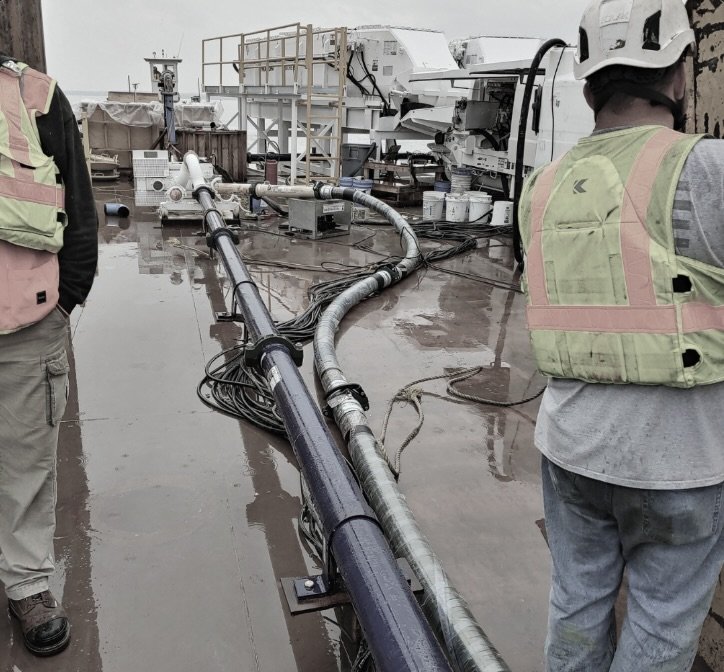
Equipcon supplies mobile concrete pumps and specialises in high-rise placing booms and high-pressure static concrete pumps. As an established industry reseller, Equipcon also offers stationary concrete pumps and concrete placing booms for different project requirements.
For pipeline needs, Equipcon is the exclusive dealer of Telant Pipeline. Upcoming additions include a double-wall pipeline and the EquipconXanjer product line. Concrete pump parts and accessories support equipment requirements, while repair and service work covers all major concrete pump brands.
Contact Equipcon to discuss concrete pumping equipment, parts or repair requirements.
Build the Next Step Around the Work
Readiness is more than a one-off tick on a checklist. Use assessment observations to shape the operator’s next training tasks, then review progress against the work they’ll perform. This links assessing a new operator’s skills with the equipment they’ll need to use confidently on site.
If equipment planning is a priority, Equipcon offers mobile concrete pumps, stationary concrete pumps and concrete placing booms. Consider the type of work, site setup and machinery the operator is preparing to use when planning the next stage. This helps align equipment choices with workforce planning without confusing equipment supply with competency assessment.
Discuss concrete pumping equipment options with Equipcon and take the next step with confidence.
Frequently Asked Questions
How do you know when a new operator is ready to run alone?
An operator is ready when they can complete the role’s essential tasks reliably without prompts. Look for consistent decisions in different conditions, not just a smooth run through a familiar task. For example, observe whether they pause and seek direction when a machine behaves unexpectedly, communicate clearly with the work team, and resume only once the issue is understood.
Who should sign off a new operator?
A person with relevant operational experience and a clear understanding of the role’s criteria should sign off the operator. They need to observe the work directly and distinguish independent performance from actions taken after coaching. If the sign-off is part of a formal training program, follow its assessment and recording process, including any assessor requirements.
Why Do Sign-Offs Pass People Who Aren’t Ready?
A sign-off can overstate readiness if it records attendance or task completion without noting how independently the person worked. A single familiar task may also miss difficulties with unfamiliar instructions, interruptions or shifting priorities. Improve the decision by recording prompts, repeated errors and the conditions observed, then base approval on evidence that reflects the actual role.
What skills should a new operator be assessed on?
Assess skills that directly affect the assigned work: equipment control, following instructions, communication and responding appropriately when conditions change. Include preparation and shutdown if they’re part of the operator’s duties. For example, ask the operator to explain a control choice during a task, then observe whether their actions match the work instructions.
What workplace assessment methods are used for new operators?
Workplace assessment can combine direct observation, task demonstrations, questions and review of work records. Observe what the operator does, then ask brief questions to understand the reasoning behind key decisions. A realistic scenario can show how they respond to an interruption or changed instruction. Record the evidence against the role’s criteria and give clear feedback.

Comments