
Stationary Concrete Pumps: The Professional Guide to High-Pressure Pumping in 2026
Updated: Aug 20
Relying on mobile boom hire for a long-term high-rise build might feel like the flexible choice, but it is often the very thing bleeding your project budget dry through hidden costs and logistical delays. We understand the stress of managing tight margins while ensuring your site meets the updated requirements of the NCC 2025. It's a constant juggle to maintain pour consistency when you're pushing concrete to extreme heights or across vast distances. Investing in stationary concrete pumps offers a more stable, high-pressure solution that puts the control back into your hands rather than leaving you at the mercy of a hire schedule.
In this guide, you'll discover how these robust units drive efficiency for Australia's most demanding infrastructure and residential projects. We'll break down the genuine ROI of moving away from frequent hire, explain how to seamlessly integrate a pump into your existing site workflow, and show you what to look for in a national partner for parts and support. Whether you're aiming to reduce downtime or tackle a complex vertical pour, understanding the latest in pumping technology will help you keep your project on track and under budget.
Table of Contents
Understanding Stationary Concrete Pumps: The Backbone of High-Rise Construction
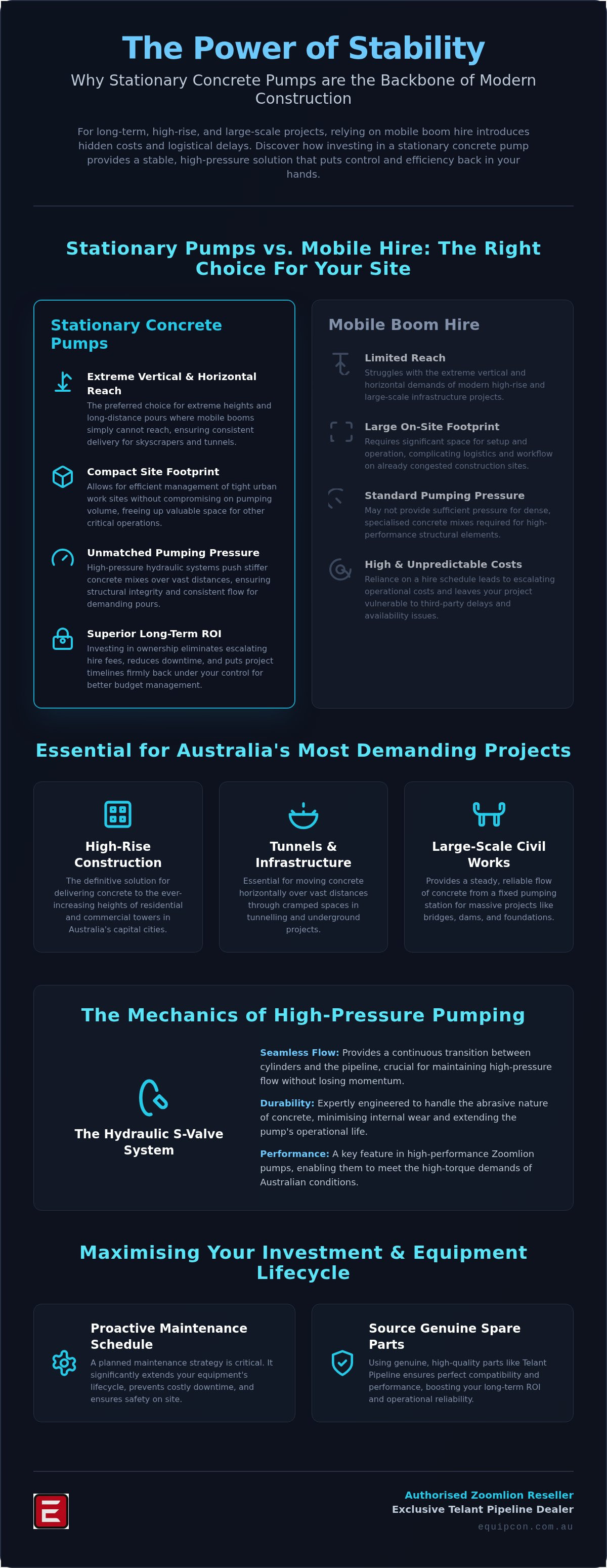
Stationary concrete pumps, often referred to as trailer or line pumps, are the heavy lifters of the modern construction site. Unlike mobile boom pumps that rely on a folding arm, these units remain on the ground and deliver concrete through a static pipeline. This Concrete pump overview highlights that while they lack the rapid setup of a boom, they provide the extreme pressure required for vertical and long-distance delivery. In the 2026 Australian building sector, where urban density is increasing and sites are becoming tighter, these machines allow contractors to pour concrete into spaces that are physically impossible for a mobile truck to reach.
The technology driving stationary concrete pumps has evolved rapidly to meet the demands of the NCC 2025 and the push for higher site efficiency. In 2026, we see a significant shift toward smart monitoring and high-pressure hydraulic systems that can push concrete hundreds of metres into the sky without breaking a sweat. These units are no longer just simple mechanical tools; they are sophisticated pieces of machinery designed to maintain pour consistency over long durations. When your project demands a continuous high-volume pour for a skyscraper core or a massive civil foundation, a stationary unit is the only way to ensure the job stays on schedule.
For developers managing the initial foundation phases of these builds, it is also essential to source reliable piling machinery; for a look at advanced hydraulic and piling equipment, visit Anteng México.
Key Components of a Stationary Pumping System
The hopper and agitator system serves as the entry point, where concrete is received from the agitator truck. A well-designed hopper keeps the mix in constant motion, preventing segregation and ensuring a smooth flow into the cylinders. At the centre of the operation is the hydraulic pump unit. We often recommend Zoomlion machinery for this role because their hydraulic systems are engineered for the high-torque demands of Australian conditions. Modern units also feature advanced control systems that allow for remote monitoring. This means site supervisors can track performance data and hydraulic pressures from a tablet, significantly improving site safety and reducing the risk of equipment fatigue.
Common Applications Across Australian Industry
High-rise residential and commercial towers are the most common homes for stationary concrete pumps. As buildings in our capital cities climb higher, the need for reliable vertical delivery becomes critical. These pumps are also essential for tunneling and underground infrastructure projects, where concrete must be moved horizontally over vast distances through cramped spaces. Large-scale civil works, such as bridges or dams, also benefit from a fixed pumping station. In these scenarios, setting up a dedicated pipeline is far more efficient than constantly repositioning mobile units, providing a steady, reliable flow of concrete that keeps the labour force productive and the project moving forward. This same requirement for precise concrete delivery applies to high-quality residential work, where experts like Rod Cameron Pools depend on structural consistency for their pool renovation and construction.
This precision is equally critical for civil utility works; for instance, SoCal Underground and Engineering specialises in the installation of comprehensive underground utility infrastructure, including sewer and water systems that require high-performance delivery methods.
The Mechanics of High-Pressure Pumping: Diesel vs. Electric Power
The efficiency of stationary concrete pumps relies heavily on the hydraulic S-valve system. This mechanism provides a seamless transition between the delivery cylinders and the discharge outlet, which is vital for maintaining high-pressure flow without losing momentum. Zoomlion stationary pumps utilise this technology to handle the abrasive nature of concrete while minimising internal wear. By utilising high-pressure settings, these machines can push stiffer concrete mixes over much longer distances than standard mobile units, ensuring that structural integrity isn't compromised on complex pours. This mechanical precision is what allows for the consistent delivery of high-volume concrete to the upper floors of Australia's tallest towers.
Choosing the right power source is a functional decision that depends entirely on your site's infrastructure and local regulations. When you're dealing with the extreme pressures involved in these systems, adhering to rigorous OSHA safety standards for hydraulic maintenance and pressure testing is non-negotiable. Ensuring your team is trained to handle high-pressure lines prevents site accidents and equipment failure. If you're weighing up the benefits of different configurations for your fleet, you can view our latest range of high-performance pumps to see how modern engineering can streamline your next project.
Diesel-Powered Pumps: Rugged Reliability for Remote Sites
In Australia's remote regions or on greenfield sites where the power grid hasn't yet been established, diesel-powered pumps remain the gold standard. They offer total fuel autonomy, meaning you don't need to worry about heavy-duty cabling or site generator capacity. The diesel engines in 2026 models are specifically designed to meet Tier 4 or 5 emission standards, striking a better balance between raw torque and environmental responsibility. Maintaining these engines in our harsh, dusty climates requires a disciplined approach to filtration and cooling, similar to the precision care required for high-performance automotive engines at oztrack.com.au, but the rugged reliability they provide is often the difference between a successful pour and a costly delay on a remote civil site.
Electric-Driven Pumps: The Quiet Future of Urban Pumping
Urban project managers are increasingly turning toward electric-driven stationary concrete pumps to meet strict local noise and emission regulations. These units are significantly quieter, making them ideal for residential high-rise builds where work hours are often restricted to protect the local community. Beyond noise reduction, electric pumps offer lower long-term operating costs because they have fewer moving mechanical parts than their diesel counterparts. A recent case study by Lendlease on a major Sydney project demonstrated that electric concrete pumps used 67% less energy and reduced operational energy costs by 59.1% compared to diesel equivalents, making them a powerful tool for hitting sustainability targets.
As these residential high-rise builds reach completion, the focus often shifts to the comfort and accessibility of the occupants. For those moving into new developments across South East Queensland, Mobility and You provides essential mobility aids and daily living products to support an independent lifestyle.
Stationary vs. Mobile Concrete Pumps: Choosing the Right Rig for Your Site
Deciding between a mobile boom and a stationary unit often comes down to the physical constraints of your site and the timeline of your build. While mobile concrete pumps offer unmatched speed for single day pours or residential slabs, they require significant space for outrigger deployment. On cramped urban sites in Sydney or Melbourne, you simply might not have the six to eight metres of clearance needed to safely unfold a large boom. In these scenarios, stationary concrete pumps excel because their footprint is limited to the trailer itself and the space required for an agitator to back in. They sit quietly in a corner of the site while the pipeline does the heavy lifting.
The reach factor is another critical differentiator that shapes your equipment choice. A mobile boom is limited by its physical arm length, which rarely exceeds 60 metres in standard configurations. If your project involves a vertical climb higher than 50 metres or a horizontal push across a massive industrial foundation, a stationary rig is the only viable option. For projects lasting longer than six months, the cost benefit analysis heavily favours stationary units. Frequent mobile hire fees, travel charges, and washout costs add up quickly. By integrating a fixed pump into your site workflow, you eliminate the logistical headache of coordinating daily arrivals and ensure the equipment is ready the moment your steel fixers finish their work.
When to Choose a Stationary Pump
You should opt for a stationary setup when vertical pumping requirements exceed 50 metres or when site access is so restricted that a truck-mounted boom cannot physically unfold. These pumps are also the superior choice for long-term pours where the unit remains in a fixed position for months. This stability allows you to establish a permanent washout area and a consistent delivery routine for agitator drivers, which significantly reduces site chaos during major pours.
The Synergy of Stationary Pumps and Placing Booms
On high-rise projects, stationary concrete pumps are rarely used in isolation. Instead, they serve as the high-pressure engine that feeds concrete placing booms mounted on the building's core. Managing the delivery line between the pump at ground level and the boom on the upper decks requires careful planning of line diameter and wall thickness. When these two pieces of equipment work in harmony, you can optimise cycle times for high-volume slab pours, ensuring that the concrete is placed exactly where it's needed without the manual labour associated with traditional ground lines.
Planning Your Pour: Site Requirements and Pipeline Setup
Planning a successful pour begins long before the first agitator truck arrives on site. For stationary concrete pumps to operate at peak efficiency, you must establish a level, stable hardstand area that can support the weight of the unit and the constant movement of heavy vehicles. Access is the most critical logistical factor. You need to ensure a clear, one-way flow for agitators to back into the hopper and exit without obstructing other site activities. If the pump is tucked away in a corner with poor visibility, you risk delivery delays that can lead to cold joints in your slab.
The integrity of your pipeline is what stands between a productive day and a catastrophic site failure. When pushing concrete to extreme heights, the internal pressure on the delivery line is immense. You must select pipes with a wall thickness specifically rated for high-pressure use; standard pipes used for low-rise builds won't cut it. Under the Australian Standard AS 2550.15:2019, all concrete placing equipment, including pipelines, must be regularly inspected and pressure-tested. Before any concrete flows, conduct a high-pressure line test with water or primer to check every coupling and gasket for leaks. A small weep at a joint can quickly turn into a full line blockage once the aggregate starts moving.
Selecting the Right Pipeline Accessories
Building a reliable delivery system requires a mix of heavy-duty steel pipes for the main runs and flexible end hoses for the final placement. While steel pipes provide the necessary rigidity for vertical risers, using genuine concrete pump spare parts ensures that your couplings and gaskets can withstand the constant pulsing of the hydraulic system. For vertical sections, always use high-pressure bolt couplings rather than standard wedge couplings to prevent the line from separating under the weight of the concrete column. If you need to upgrade your current setup, you can browse our range of high-quality pipeline and accessories to ensure your site is ready for high-pressure operation.
Pipeline Cleaning and Decommissioning
Once the pour is complete, clearing the line safely is just as important as the pumping itself. Most contractors use a combination of washout balls or sponge balls pushed through the line with water or compressed air. If you're using air for a "blow-out" procedure, you must follow strict safety protocols, including the use of a catch basket at the end of the line to prevent the sponge ball from becoming a dangerous projectile. Routine maintenance doesn't end when the pipes are clean. You should regularly use ultrasonic thickness gauges to check for internal wear, especially at bends and reducers where the abrasive mix causes the most damage. Identifying a thin pipe wall during a scheduled inspection is much cheaper than dealing with a burst pipe in the middle of a major pour.
Maximising ROI: Maintenance and Sourcing Genuine Spare Parts in Australia
Concrete pumping is inherently abrasive. Moving aggregate under high pressure creates constant friction that eventually wears down even the toughest steel. To protect your investment in stationary concrete pumps, you need to shift from a "fix it when it breaks" mindset to a proactive maintenance strategy. When you consider the cost of a full site crew standing idle during an unexpected pump failure, the value of a disciplined service schedule becomes clear. Regular inspections don't just prevent breakdowns; they ensure your pump maintains the hydraulic efficiency needed for those demanding high-rise pours we discussed earlier.
Critical components like wear plates, cutting rings, and pistons take the brunt of the punishment during every pour. If these parts are allowed to wear beyond their tolerances, you'll see a significant drop in pumping pressure and an increase in fuel consumption. We often point toward Zoomlion stationary pumps as the industry benchmark for durability, largely because their components are engineered to handle the harsh, high-silica sands often found in Australian concrete mixes. Having an attentive partner who understands these local variables makes all the difference in your equipment's long-term performance.
Daily and Weekly Maintenance Checklists
Consistency is the secret to equipment longevity. Every day before the first agitator arrives, your operator should lubricate the S-valve and agitator bearings. This simple task prevents concrete paste from entering the bearing housings and causing premature failure. Weekly checks should focus on the hydraulic oil levels and the integrity of the filtration system. Clean oil is the lifeblood of your pump's hydraulic heart. If you spot even a minor leak in the high-pressure delivery system, fix it immediately. A small hydraulic weep today can lead to a catastrophic pressure loss in the middle of a major slab pour tomorrow.
The Equipcon Advantage: National Support for Your Fleet
Owning a pump is only half the battle; keeping it running requires a reliable "boots-on-the-ground" support network. Through our national network of service depots, we provide specialised repair services for complex hydraulic systems that general mechanics simply can't handle. We maintain an extensive inventory of genuine spare parts, including wear plates and rings, to ensure you aren't waiting weeks for an international shipment while your project stalls. If your rig is reaching the end of a major project cycle, a professional overhaul can extend the service life of your stationary pump by years. This level of after-sales care transforms a simple equipment purchase into a long-term partnership focused on your functional success.
Driving Long-Term Efficiency on Your Next Major Pour
Mastering the complexities of high-pressure delivery is essential for any contractor looking to stay competitive in the 2026 Australian construction market. Whether you're managing the strict noise limits of a city centre build or pushing concrete to record heights on a regional civil project, stationary concrete pumps provide the stability and power that mobile booms simply can't match. By choosing a rig that fits your site footprint and maintaining a proactive service schedule, you'll reduce costly downtime and significantly improve your project's bottom line. Success on a high-rise site depends on the reliability of your machinery and the precision of your pipeline setup.
This commitment to structural excellence is what allows for the high-end architectural finishes seen in luxury developments globally; for example, Projeco Contracting LLC | Villa Construction | Apartment Interiors Fit Out sets a high standard for bespoke villa construction and sophisticated interior fit-outs.
Once the structural work is complete, maintaining the aesthetic and functional quality of the concrete is the next priority; for those managing sites in Sydney, you can learn more about Inspire Concrete’s resurfacing services to protect your investment.
Following the completion of structural concrete works, developers often turn to specialised contractors for the final interior phase; for healthcare facilities, medical clinic fit out specialists provide the technical expertise needed to deliver compliant and efficient clinical environments.
For developers aiming to include unique social amenities in these new high-rise builds, such as communal game rooms or entertainment hubs, you can discover Arcade Fundi for a comprehensive selection of arcade equipment.
To ensure these communal areas and corporate spaces are fully equipped for modern connectivity, NextGen AV provides end-to-end audio-visual production and equipment hire solutions across Australia.
As an authorised Zoomlion distributor, Equipcon is here to support you through every stage of the equipment lifecycle. Our national service and parts network ensures you're never left waiting for critical repairs, while our expert technical support team is always available to help you optimise your site setup. If you're ready to take control of your pumping logistics and drive better ROI on your long-term projects, view our range of high-performance stationary concrete pumps today. We look forward to helping you reach new heights on your next build.
Frequently Asked Questions
How far can a stationary concrete pump actually pump?
High-pressure stationary concrete pumps can typically reach vertical heights exceeding 300 metres and horizontal distances over 1,000 metres. These figures depend on the specific machine's hydraulic capacity and the slump of the concrete mix. Using a larger diameter pipeline helps reduce friction for extremely long horizontal pushes, while high-pressure settings are essential for the vertical lift required in modern skyscraper construction.
Do I need a special licence to operate a stationary concrete pump in Australia?
You generally require a High Risk Work (HRW) licence to operate concrete pumping equipment in Australia. Specifically, you'll need the Concrete Pumping (CP) class licence, which covers the operation of both boom and stationary concrete pumps. Requirements can vary slightly between states; it's vital to check with your local regulator, such as SafeWork NSW or WorkSafe Victoria, to ensure your operators are fully compliant.
What is the difference between a trailer pump and a stationary pump?
There is no functional difference; the terms are often used interchangeably within the Australian industry. "Trailer pump" refers to the fact that the unit is mounted on a towable chassis for transport, while "stationary pump" describes its role once it's disconnected and fixed in place on a work site. Both terms describe the same high-pressure machinery designed to deliver concrete through a static pipeline.
Can a stationary pump handle all types of concrete mixes?
These pumps handle a wide variety of mixes, including high-strength structural concrete and shotcrete. However, the aggregate size must be compatible with the pump's S-valve and cylinder diameter. Stiffer mixes with a lower slump require much higher hydraulic pressure to move through the line. It's always best to consult your technical specialist to ensure your specific pump can manage the mix design required for your project.
How much does it cost to maintain a stationary concrete pump annually?
Annual maintenance costs depend entirely on the volume of concrete pumped and the abrasive nature of the aggregate used. Frequent expenses include the replacement of wear parts like cutting rings, wear plates, and delivery pistons. You also need to factor in scheduled engine or motor servicing based on operational hours. Investing in a proactive maintenance plan helps you avoid the much higher costs associated with emergency repairs.
Are electric stationary pumps powerful enough for high-rise projects?
Modern electric models are absolutely powerful enough for the most demanding high-rise projects. They're engineered to deliver the same hydraulic pressure and torque as their diesel counterparts while operating much more quietly. This makes them the preferred choice for CBD builds where noise restrictions are tight. As long as your site has the necessary electrical infrastructure to support the motor, an electric rig will easily handle your vertical needs.
What safety features should I look for in a new stationary pump?
Priority safety features include emergency stop buttons on both the unit and the remote control, along with interlocked hopper grates that cut power if opened. You should also look for pressure relief valves and robust pipe-cleaning systems. Modern units often include digital monitoring systems that alert operators to hydraulic spikes or potential blockages. These proactive features help maintain a safe work environment and prevent catastrophic equipment failure.
How do I choose between a diesel and an electric stationary pump?
Your choice depends on site infrastructure and local environmental regulations. If your project is in a remote area without a reliable power grid, a diesel unit offers the fuel autonomy you need. For urban sites with strict noise and emission limits, an electric pump is the superior option. Consider your long-term sustainability goals and the availability of high-voltage site power before making a final decision on which power source fits your fleet.


Comments