

Maintaining and Replacing Concrete Pump Piston Rams: The 2026 Professional Guide
Updated: Aug 5
You are halfway through a massive slab pour in the heat of a Brisbane afternoon when you notice the water box turning a murky grey. It starts as a slight discolouration, but within minutes, you have a full-blown slurry bypass that is threatening to chew through your expensive cylinders. Every experienced operator knows that sinking feeling; it is the sound of unexpected downtime and a repair bill that could have been avoided with a bit of foresight.
We understand that keeping your gear moving is the only way to stay profitable in the Australian construction industry. Maintaining concrete pump piston rams is not just a routine chore; it is the most effective way to protect your hydraulic system from catastrophic failure. This guide will help you master the technical signs of ram wear and walk you through the professional replacement process to ensure your Zoomlion or EquipconXanjer machinery stays on the job and performs at its peak.
We will examine the specific indicators of seal failure, the logistical steps for a clean swap, and how the expertise available at our national service depots can help you minimise downtime and extend the life of your high-pressure pipeline and accessories.
Table of Contents
The Critical Role of Piston Rams in Concrete Pumping Efficiency
Think of concrete pump piston rams as the heart of your material delivery system. Just as a heart pumps blood to keep a body functioning, these rams provide the rhythmic pulse required to move heavy, abrasive concrete through hundreds of metres of pipeline. They sit at the junction between the machine's hydraulic power and the raw material, acting as the primary driver for every cubic metre you pour.
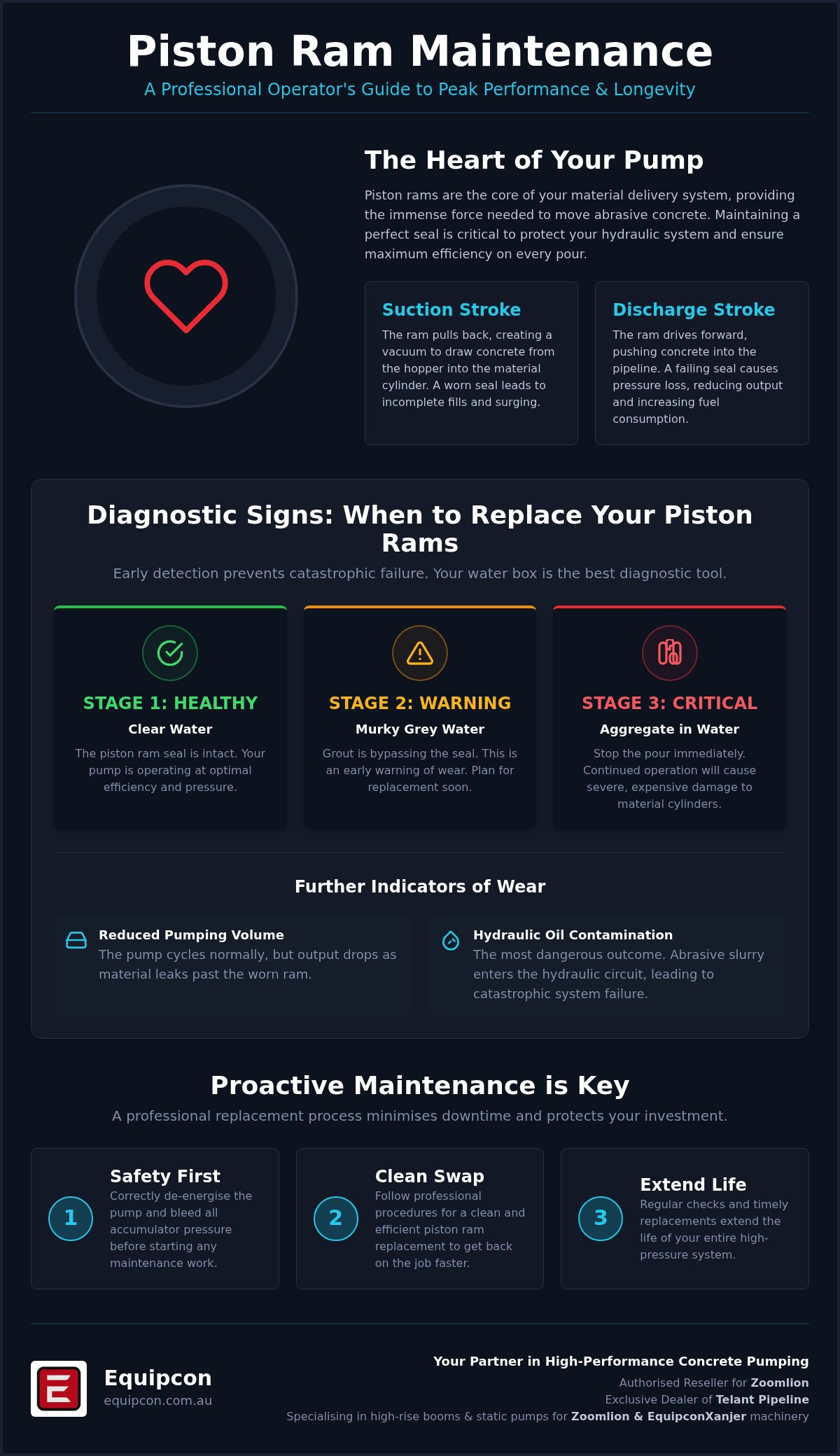
The process relies on a precise interaction between the hydraulic cylinder and the material cylinder. During the suction stroke, the hydraulic ram pulls the piston back, creating a vacuum that draws concrete from the hopper into the cylinder. On the discharge stroke, the ram drives forward with immense force, pushing the material into the S-valve and through the delivery line. To withstand the constant friction of Australian aggregates, which are often notoriously harsh and abrasive, using high-quality components from established brands like Zoomlion is a necessity rather than a luxury.
Maintaining a perfect seal is the most important factor in this equation. If the seal on your concrete pump piston rams fails, you risk more than just a messy water box. A compromised seal allows abrasive slurry to bypass the ram and enter the hydraulic system, which can lead to expensive internal scarring and total component failure.
How Piston Rams Impact Your Pumping Pressure
When a piston ram begins to wear, the first thing you will notice is a loss of efficiency. This often manifests as "blow-by," where material or water slips past the seal during the high-pressure discharge stroke. For operators using high-rise concrete placing booms or high-pressure static concrete pumps, even a minor loss of seal integrity can significantly reduce your vertical reach and overall output.
Suction Stroke: A worn ram fails to create a complete vacuum, leading to half-filled cylinders and surging.
Discharge Stroke: Loss of pressure means the pump has to work harder to maintain flow, increasing fuel consumption and heat.
The water box serves as the critical diagnostic zone where you can monitor the health of your piston rams in real-time by observing the clarity of the cooling water.
Diagnostic Signs: When Your Concrete Pump Piston Rams Need Replacing
Identifying a failing seal before it turns into a job-site disaster is a hallmark of a professional operator. Your machine provides subtle clues long before it stops moving material entirely. Ignoring these signs doesn't just slow down the pour; it risks the structural integrity of your cylinders and hydraulic components. By keeping a close eye on your concrete pump piston rams, you can catch wear during routine maintenance rather than mid-pour.
A primary indicator of wear is a noticeable loss of pumping volume. You might find the pump is cycling at its usual speed, but the actual cubic metres delivered per hour have dropped. This happens because concrete is leaking back around the worn ram during the discharge stroke. Instead of being pushed through the pipeline, the material simply washes back and forth within the cylinder, wasting fuel and increasing heat levels across the entire system.
The most dangerous consequence of neglected maintenance is hydraulic oil contamination. When a ram seal fails completely, abrasive slurry can work its way past the water box and into the hydraulic circuit. This leads to catastrophic internal damage and necessitates expensive hydraulic concrete pump repairs. Regularly checking the clarity of your hydraulic oil is just as important as monitoring the water box itself.
The Slurry Bypass Test
The water box is your most effective diagnostic tool. During your daily pre-start and throughout the shift, you should monitor the water for any change in colour or consistency. Clear water is the goal. If the water begins to turn a murky grey, it is a sign that grout is bypassing the piston rams. Once you see actual aggregate particles or sand at the bottom of the box, you've reached the "grey water" threshold. At this point, it's time to stop the pour and organise a swap to avoid scoring the material cylinders.
If you're noticing other performance issues alongside murky water, it's worth reviewing common concrete pump problems and solutions to rule out S-valve or pressure settings. For those operating Zoomlion or EquipconXanjer gear, our team at Equipcon can provide the technical support needed to diagnose these issues quickly.
Replacing Piston Rams: A Guide for Australian Operators
Performing a swap on-site requires a blend of mechanical precision and strict adherence to safety protocols. Before any tools touch the machine, you must ensure the pump is completely de-energised. This means shutting down the engine and, crucially, bleeding off all accumulator pressure. Never attempt to open the water box or adjust concrete pump piston rams while the system is under tension; the stored energy in a hydraulic circuit can be lethal.
Preparation is the key to a fast turnaround. Start by thoroughly cleaning the water box to remove any slurry or debris that could contaminate the new components. You will need a standard kit consisting of heavy-duty spanners, pry bars, and a high-quality lubricant. To make extraction easier, many operators use the 'Reverse-Jog' technique. By using the pump’s own hydraulics to nudge the piston into the centre of the water box, you create the necessary clearance to work without fighting the machine's natural resistance.
The Replacement Process
Follow these steps to ensure a professional fit for your Zoomlion or EquipconXanjer machinery:
1. Retract the piston: Use the remote control box to inch the piston back until it is fully visible and accessible within the water box.
2. Disconnect and pry: Remove the mounting bolts and use your pry bars to carefully separate the old ram from the drive cylinder.
3. Inspect the cylinder: Clean the material cylinder walls and check for deep scoring, pitting, or signs of heat damage that might suggest a more serious mechanical issue.
4. Install the new ram: Apply a generous layer of lubricant and seat the new ram squarely against the drive cylinder. Ensure it is aligned perfectly before tightening the bolts to the manufacturer’s torque specifications.
Post-Installation Testing
Once the new rams are seated, refill the water box with clean water and watch for any immediate leaks. Cycle the pump several times without material to ensure the travel is smooth and the sensors are picking up the piston position correctly. If you notice any unusual knocking sounds or if the water discolours instantly, it may indicate an underlying alignment issue. In these cases, it is safer to call in professional concrete pump repair services for a full system overhaul rather than risking a failure during a live pour.
Protect Your Performance with Proactive Piston Care
Mastering the maintenance of your concrete pump piston rams is the most reliable way to avoid the logistical nightmare of a mid-pour failure. By monitoring your water box for slurry bypass and following a methodical replacement process, you protect your material cylinders and keep your hydraulic system free from contamination. High-performance gear like Zoomlion and the forthcoming EquipconXanjer range require components that can handle the grit of harsh Australian aggregates.
As an authorised Zoomlion Reseller and exclusive Telant Pipeline dealer, we provide more than just spare parts. We offer a national network of service depots across VIC, SA, WA, and QLD to ensure you have the technical support needed to stay productive. Whether you're operating high-rise placing booms or high-pressure static pumps, our focus is on reducing your stress and maximising your uptime on every site.
Browse Genuine Zoomlion and Equipcon Piston Rams to secure the reliability your project demands. We look forward to being your seasoned partner in the field and supporting your success through the entire lifecycle of your machinery.
Frequently Asked Questions
How long should concrete pump piston rams last under normal Australian conditions?
Lifespan typically ranges between 5,000 and 10,000 cubic metres of concrete delivery, though this varies significantly based on the abrasiveness of your local mix. In the harsh heat of an Australian summer, the cooling water in your box can reach higher temperatures, which may accelerate the softening and wear of the seal material.
Regularly monitoring the water box for grout contamination is the only reliable way to track the specific wear rate of your machine. For fleet owners running Zoomlion or EquipconXanjer gear, keeping a log of cubic metres pumped against ram replacements will help you move from reactive repairs to a proactive maintenance schedule.
Can I replace just one piston ram, or should I always replace them in pairs?
You should always replace concrete pump piston rams in pairs to maintain balanced pressure and suction across the system. If you only replace one, the difference in seal integrity between the new and old ram can cause the pump to cycle unevenly, which puts unnecessary strain on the hydraulic drive cylinders.
Replacing them as a set ensures that both material cylinders are protected equally. It also minimises your total downtime; if one ram has reached its wear limit, the other is rarely far behind, and a second failure just days later would result in another avoidable stoppage on site.
What is the difference between standard rubber rams and polyurethane piston rams?
Polyurethane rams generally offer much higher abrasion resistance and a longer service life than standard rubber alternatives. While rubber is often more flexible and cost-effective for low-pressure residential work, polyurethane is the industry standard for high-pressure static concrete pumps and high-rise placing booms where the seals are under extreme mechanical stress.
The choice often depends on your specific application and the typical aggregates you pump. Polyurethane maintains its structural integrity better when exposed to the friction-induced heat common in high-volume pours, making it the reliable choice for contractors focused on long-term equipment readiness.
Does the type of concrete aggregate affect the wear rate of my piston rams?
Yes, the sharp, angular edges of crushed stone and manufactured sands found in many Australian quarries act as a powerful abrasive against the ram seals. Pumping "harsh" mixes with high cement content or recycled aggregates will wear out your components significantly faster than smooth river gravel or well-graded pump mixes.
When you are working with these abrasive materials, it is vital to use high-quality parts and ensure your water box is flushed frequently. Fine particles that bypass the seal can settle in the water box and act as a grinding paste, further accelerating the wear on both the rams and the material cylinders.


Comments