
How to Prevent Concrete Pump Blockages: The 2026 Professional Guide
Updated: Jul 29
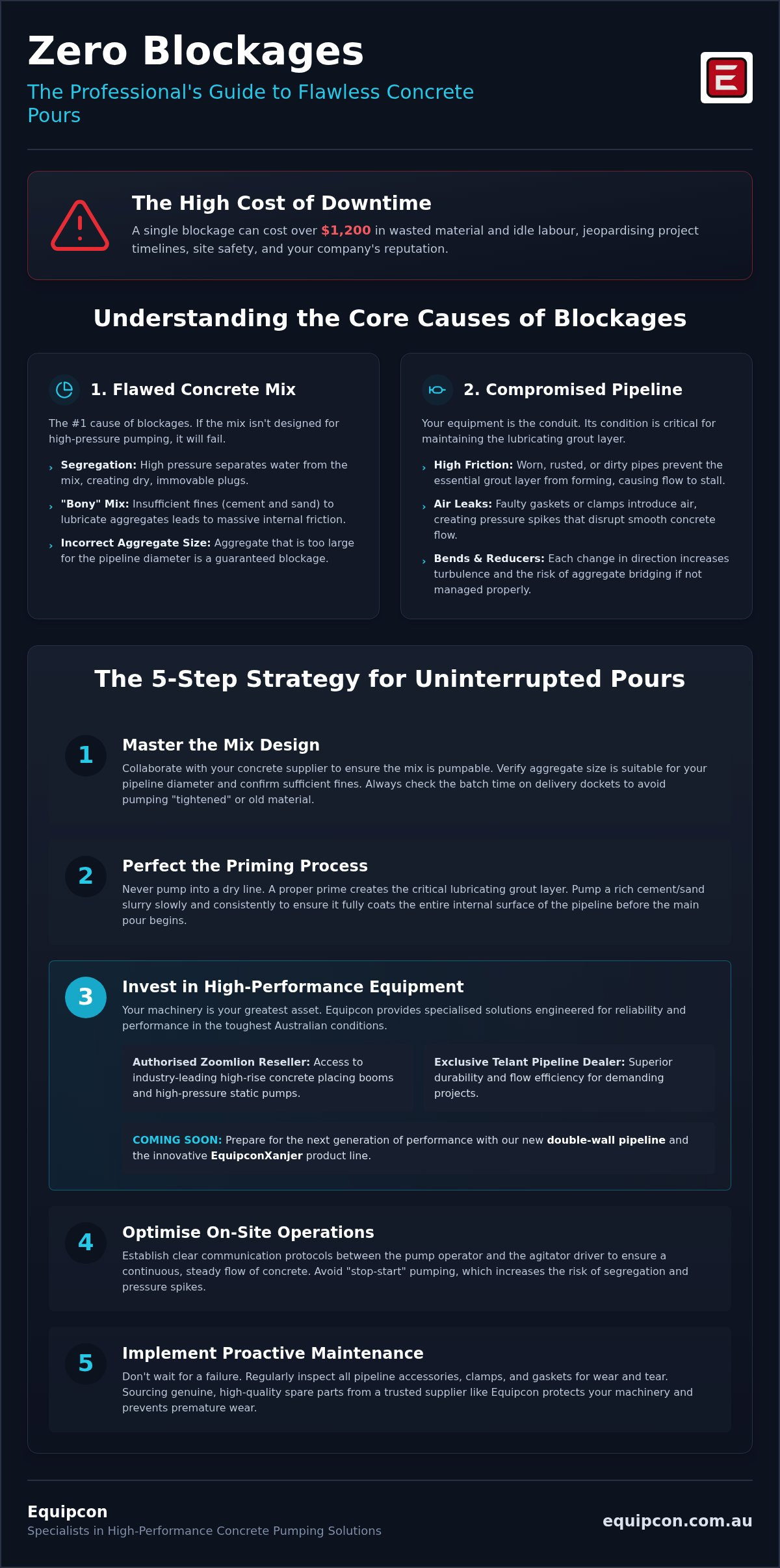
A single concrete pump blockage in 2026 can swallow over $1,200 in wasted material and idle labour before you've even managed to clear the line. If you've ever watched your pressure gauge spike while a frustrated crew waits on the clock, you know that downtime is more than just a nuisance; it's a massive hit to your bottom line and site safety. Understanding how to prevent concrete pump blockages is the difference between a profitable, turnkey project and a logistical nightmare that wears out your specialised spare parts prematurely.
We've designed this 2026 professional guide to help you achieve zero blockages on your major pours while protecting the lifespan of your pipeline accessories. You'll learn the expert strategies required to keep your concrete flowing smoothly, including the latest ACI 211 mix design principles and proactive maintenance routines. Whether you're operating a mobile boom or a stationary pump, these insights will help you reduce maintenance costs and solidify your reputation for reliability on every job site. By the end of this guide, you'll have a clear roadmap to ensure your equipment stays ready for the most demanding pours.
Table of Contents
The Mechanics of a Blockage: Why Your Concrete Stops Flowing
A concrete pump is a high-pressure system that demands a perfectly balanced material to function. When the flow stops, it's usually because the physics of the mix has failed. Learning how to prevent concrete pump blockages requires a deep dive into what's actually happening inside your pipeline. If the pressure exceeds the mix's ability to stay together, you're looking at a site shutdown. Effective troubleshooting concrete pump pipeline blockages always starts with an analysis of flow dynamics rather than just hitting the reverse button and hoping for the best.
Segregation and Bleeding Explained
High pressure can be a double-edged sword. While it moves the material, it also tries to force the water out of the suspension. This process is known as bleeding. If the water escapes through a leaky gasket or is squeezed past the aggregates, the remaining mix becomes too dry to move. These "dry packs" lead to aggregates bridging together, forming a physical plug that no amount of pump pressure can shift. You can often tell if it's a mix issue if the concrete looks "bony" or lacks enough fines to keep the stones apart. Equipment-related blocks often stem from air pockets or "slugs" where the suction isn't consistent, leading to sudden pressure spikes that disrupt the flow.
Friction: The Invisible Enemy of Flow
Every successful pour depends on a microscopic layer of cement and sand grout that lines the pipe wall. This lubricating film reduces the friction between the heavy aggregate and the steel pipeline. If this layer is compromised, friction levels spike instantly. The condition of your internal pipe surface is critical. If your pipes are rusted or have old concrete buildup, the grout layer cannot form properly. Bends, reducers, and elbows also play a massive role. Each change in direction or diameter forces the material to change velocity, which creates turbulence. This turbulence can throw the aggregates out of the suspension, causing them to scrape against the pipe wall and eventually stall the flow. Keeping your equipment in turnkey condition is the best way to maintain this invisible but essential flow aid. If your pipeline accessories are worn, the risk of a blockage increases exponentially with every cubic metre pumped.
Optimising the Mix: The Foundation of Blockage Prevention
The best machinery in the world cannot save a bad mix. If the concrete arriving on your site isn't designed for the specific diameter of your pipeline or the height of your pour, you're fighting a losing battle from the first stroke. Understanding the chemistry and physics of your material is the most effective way to learn how to prevent concrete pump blockages during high-pressure operations. A pumpable mix requires a stable suspension where the "fines" (cement, fly ash, and sand) completely coat the larger aggregates to prevent them from rubbing together and stalling. If you're pushing a "bony" mix with too much stone and not enough paste, the internal friction will eventually overcome the pump's capacity.
Modern Australian concrete often relies on chemical admixtures to maintain workability without compromising strength. Superplasticisers and water reducers are essential for keeping the mix fluid enough to navigate bends and reducers. However, these chemicals have a shelf life once they leave the batch plant. If an agitator sits on site for too long in the sun, the mix can "tighten up" and become a prime candidate for a blockage. Always check the batch time on the delivery docket before you start the pour. If you're looking to improve your site's reliability, ensuring your team uses high quality pipeline and accessories can provide the necessary durability to handle these high-performance mixes.
The 5-Step Line Priming Process
Never pump dry concrete into a dry line. Priming is a non-negotiable step that creates the initial lubricating layer required for a smooth flow. Follow this disciplined routine for every pour:
Step 1: Prepare a dedicated primer or grout slurry. This mixture should be rich in cement and sand to thoroughly coat the internal pipe walls.
Step 2: Check the consistency before it enters the hopper. It needs to be wet enough to flow but thick enough to stick to the steel.
Step 3: Pump the primer slowly. Moving too fast can cause the primer to bypass air pockets, leaving dry spots that catch the following concrete.
Step 4: Monitor the discharge at the end of the line. You must see the primer fully expelled before placing the hose for the pour.
Step 5: Introduce the concrete mix immediately. Any delay allows the primer to settle or dry, which creates a high-friction zone.
Aggregate Ratios and Slump Management
The "three-to-one" rule is your primary safeguard against physical plugs. This means the internal diameter of your pipeline should be at least three times the size of the largest aggregate in the mix. For a standard 100mm line, your aggregate should not exceed 32mm; however, most professional operators prefer a 20mm max to ensure a safety buffer. Before you start, perform a field slump test. It's a simple, low-tech way to verify that the mix matches the specifications you ordered. If the slump is too low, the mix is too stiff; if it's too high, you risk segregation. Maintaining clear communication with the batch plant about the pumping distance and height allows them to adjust the mix design for your specific site conditions, which is a key strategy in how to prevent concrete pump blockages before the first truck even arrives.
Maintaining Pipeline Integrity and High-Quality Accessories
While a perfect mix is essential, the physical state of your delivery system is what actually handles the force of the pour. High-quality pipeline accessories are your first line of defence against site failures. Many operators focus solely on the hopper, but the mechanical integrity of every joint and seal is exactly how to prevent concrete pump blockages when the pressure is on. If your gear isn't in turnkey condition, the physics of the concrete will eventually find the weak spot, leading to a dry pack that stalls the entire job. Relying on sub-standard components is a risk that rarely pays off when you're facing a strict deadline.
Sourcing reliable concrete pump spare parts Australia ensures that every component fits with the precision required for high-pressure pumping. Generic or worn-out parts often have slight tolerance issues. These small gaps might seem minor, but under 80 bar of pressure, they become catastrophic failure points that compromise the lubricating grout layer. When you use genuine parts, you're investing in the readiness of your machinery and the safety of everyone on the job site.
The Critical Role of Couplings and Gaskets
A tiny air leak in a coupling is more than just a mess; it's a vacuum that sucks water out of your mix. When water escapes at a joint, the concrete behind it loses its slump and forms a dry pack. This is a primary cause of segregation within the line. Always check for "slop" in your couplings. If the joint has any movement when locked, the internal surfaces are likely worn and won't hold a seal. You should never reuse damaged or stretched gaskets. These are inexpensive consumables, yet they're the most common cause of pressure loss. Replacing a five-dollar gasket is a small price to pay to avoid a two-hour delay and a wasted load of concrete.
Wear Parts: Plates, Rings, and Pistons
The internal components of your hopper must maintain a tight seal to keep the material moving forward. If your wear plates or cutting rings are shot, the S-valve cannot seat properly. This allows pressure to escape back into the hopper during each stroke, reducing the "push" available to move the concrete. You can usually spot this when the concrete starts pulsing or surging rather than flowing steadily. Piston ram health is equally vital. If the rams are worn, they won't provide the consistent suction needed to fill the cylinders completely, leading to air pockets or "slugs" in the line. Make daily inspection of the hopper, S-valve, and agitator components a core part of your routine. Catching a worn cutting ring during a morning check is far better than having it fail mid-pour during a major slab finish.
Operational Best Practices for Pump Operators
Maintaining a constant flow is the golden rule of pumping. If the concrete stops moving for more than a few minutes, the hydration process begins to take hold, especially in the delivery line where the material is under pressure. This is a primary factor in how to prevent concrete pump blockages during long pours. A seasoned pumpie knows that rhythm is everything. If the agitator trucks are backing up or the hose hand needs a break, it's better to slow the pump down to a crawl than to stop it entirely. Consistent movement keeps the lubricating grout layer active and prevents the aggregates from settling.
Communication is the glue that holds a pour together. The operator, the agitator driver, and the hose hand must function as a single unit. Clear hand signals or reliable two-way radios are essential, especially on noisy sites with multiple placing booms. If the hose hand notices the mix becoming stiff or "bony", they must signal the operator immediately to adjust the speed or check the hopper. Proactive communication allows you to catch a potential issue before it becomes a physical plug. If your equipment is struggling to maintain a consistent stroke despite a good mix, it might be time to book a professional concrete pump repair to keep your fleet in turnkey condition.
Pumping in the Australian Heat
Australian summers present a unique challenge for any operator. When the mercury hits 35 degrees, the chemical reaction in the concrete accelerates, significantly reducing your window of workability. High temperatures can suck the moisture out of the mix before it even reaches the end of the boom. Learning how to prevent concrete pump blockages in the heat is about staying one step ahead of the chemistry. Many operators use wet hessian or shade to keep the pipeline cool. If you're tackling a high-rise pour or a long-distance run, talk to the batch plant about adding retarders to the mix. These chemical additives slow down the set time, giving you the extra minutes needed to navigate the line without a blockage.
The Art of the Washout
Your next successful job starts with how you finish the current one. A half-hearted washout is a recipe for disaster. Hardened "scabs" left in the hopper or pipeline will break loose during the next pour and cause an instant blockage. Selecting the correct size washout balls is critical; they must be slightly larger than the pipe diameter to ensure they scrape the walls clean. Whether you prefer the "suck-back" or "pump-through" method, the goal is the same: a completely clear line. Ensure the hopper is scrubbed and the S-valve is free of any residue before you pack up for the day.
Professional Maintenance and Sourcing Genuine Spare Parts
The most effective strategy for how to prevent concrete pump blockages isn't found in a troubleshooting manual; it's found in your workshop calendar. While on-site techniques and mix designs are critical, they cannot compensate for a machine that is mechanically compromised. Scheduled overhauls and proactive component replacement are what separate the industry leaders from those constantly fighting equipment failure. If your S-valve is slightly out of alignment or your cutting ring has a minute gap, you've already lost the battle against high-pressure segregation. Investing in the mechanical health of your fleet ensures that when the pressure gauge climbs, your equipment holds firm.
Reliability is built on precision. Using genuine Zoomlion parts and high-spec pipeline accessories ensures that every seal is airtight and every stroke is consistent. Generic parts often lack the metallurgical standards required to withstand the abrasive nature of Australian aggregates, leading to rapid wear and unexpected site failures. When you maintain your equipment with genuine components, you're ensuring that your mobile concrete pumps stay in turnkey condition for the entire lifecycle of the machine. This level of readiness is what allows you to bid on major infrastructure projects with total confidence in your delivery.
Equipcon’s National Support Network
You don't have to manage the technical complexities of pump maintenance alone. Equipcon provides a national service network with dedicated depots in Victoria, Adelaide, Perth, and Queensland. This infrastructure is designed to support contractors through every stage of equipment ownership, from initial hydraulic setup to major structural repairs. Having access to specialised repair depots means your machinery is serviced by experts who understand the specific stresses of the Australian construction environment. We view after-sales care as the primary product because your project's success depends on what happens after the transaction. Our team is invested in your functional success, providing the logistical precision needed to keep your fleet moving.
Investing in Quality to Reduce Downtime
When calculating your operational budget, consider the real cost of a blockage. Between the $1,200 average cost of a failed residential pour and the reputational damage of a site shutdown, the price of premium parts is negligible. Premium pipeline accessories reduce internal friction and maintain the integrity of the grout layer, which is exactly how to prevent concrete pump blockages before they even start. Finalise your readiness with this checklist before your next big contract:
Are your wear plates and cutting rings within the manufacturer's tolerance?
Have you inspected all pistons and rams for consistent suction?
Is your pipeline free of internal buildup and "scabs"?
Are you carrying a full set of genuine gaskets and couplings for on-site swaps?
Proactive care and a partnership with a reliable specialist ensure your machinery remains a catalyst for productivity rather than a source of stress. By combining disciplined site operations with a rigorous maintenance schedule, you'll eliminate the variables that lead to downtime and keep your concrete flowing smoothly on every pour.
Master the Flow for Your Next Major Pour
Success on a high-pressure job site depends on more than just powerful machinery. It requires a disciplined approach to mix design, meticulous line priming, and the operational rhythm to keep material moving in the Australian heat. We've explored how physical plugs form and why maintaining your pipeline's mechanical integrity is the most effective strategy for how to prevent concrete pump blockages. By prioritising the health of your wear parts and using high-quality accessories, you ensure your equipment stays ready for the most demanding projects.
Equipcon is your partner in reducing downtime through our national service network with dedicated depots in VIC, SA, WA, and QLD. We provide specialised support for Zoomlion and all major brands, offering a comprehensive range of genuine parts to keep your fleet in turnkey condition. If you're ready to upgrade your site's reliability, Browse Our High-Quality Pipeline Accessories and Spare Parts to find exactly what you need for your next shift. Stay proactive, keep your communication clear, and enjoy the confidence of a smooth, blockage-free pour.
Frequently Asked Questions
What is the most common cause of concrete pump blockages?
The most common cause is usually a combination of poor mix design and inadequate line priming. If the concrete lacks enough "fines" to keep the aggregates in suspension, the water is forced out under pressure, leading to a dry pack. Ensuring you have a stable, pumpable mix is the first step in learning how to prevent concrete pump blockages on any site.
How do you safely clear a blockage in a concrete pump line?
To safely clear a blockage, you must first stop the pump and reverse the stroke several times to relieve the internal line pressure. Never attempt to open a coupling while the line is under pressure, as this can lead to serious injury or equipment damage. Once the pressure is bled off, you can identify the plug by tapping the pipe and then manually clear the affected section.
Can a worn wear plate cause the pump to block frequently?
Yes, a worn wear plate or cutting ring is a frequent culprit for recurring blockages. When these components are worn beyond their tolerances, they allow grout and pressure to escape back into the hopper during the pumping stroke. This loss of "push" means the concrete in the pipeline loses its momentum, often resulting in a stall or a physical plug that's difficult to clear.
How much grout primer should I use for a 50-metre pipeline?
For a 50-metre pipeline, you should typically use at least two to three bags of cement mixed into a rich grout slurry. A general rule of thumb is one bag of cement for every 15 to 20 metres of standard 100mm line. Using too little primer leaves dry spots in the pipeline, which is a common mistake when researching how to prevent concrete pump blockages for long-distance pours.
What is aggregate bridging and how do I prevent it?
Aggregate bridging occurs when large stones jam together in a narrow section of the pipe, such as a bend or a reducer, to form a physical obstruction. You can prevent this by following the "three-to-one" rule, ensuring your pipeline diameter is at least three times larger than the maximum aggregate size. Maintaining a consistent slump also helps the stones slide past each other more easily during the pour.
Are air leaks in couplings really that dangerous?
Air leaks in couplings are extremely dangerous because they allow water to escape the mix, leading to an immediate dry pack. Even a pinhole leak can cause the concrete to segregate and block the line within minutes. Always check your gaskets for stretches or tears and ensure your couplings are tight with no "slop" before you start the pump.
How does hot weather affect the likelihood of a blockage?
Hot weather accelerates the chemical hydration of the cement, which rapidly reduces the workability and slump of the mix. In the Australian summer, concrete can "tighten up" inside the pipeline if it sits idle for even a few minutes. Keeping the pipeline cool with wet hessian and using chemical retarders are essential practices for managing flow in high temperatures and avoiding a site shutdown.
Should I use a sponge ball or a hard washout ball for cleaning?
You should use a soft sponge ball for your daily washout and reserve hard washout balls for removing stubborn buildup or "scabs". Soft balls deform to the shape of the pipe and provide a more thorough wipe of the internal walls. If you use a hard ball, ensure you have a secure catch basket at the discharge end to prevent site accidents when the ball is expelled.


Comments