
Concrete Pump Wear Plates and Rings: The Professional Guide to Wear Parts
Updated: Jul 29
Your annual maintenance budget is often decided by a single factor: the grade of carbide you choose for your concrete pump wear plates and rings. These components are the sacrificial heart of your machinery, yet many operators only think about them when the pressure drops or the hopper starts leaking mid-pour. We understand how stressful unexpected downtime can be, especially when you're managing high-pressure static pumps or high-rise placing booms where every minute on the clock represents a significant investment.
You want consistent pumping pressure and longer intervals between services, and that starts with knowing exactly what to look for during a routine inspection. In this professional guide, you'll learn how to identify early wear patterns, maintain your seals, and select the right parts to minimise downtime and extend your equipment's life. We'll also look at the latest industry shifts, including our upcoming EquipconXanjer innovations and the durability of Telant Pipeline accessories. Whether you're running a Zoomlion fleet or specialised stationary units, these insights will help you keep your projects moving forward without the headache of frequent, preventable failures.
Table of Contents
Understanding Concrete Pump Wear Plates and Rings
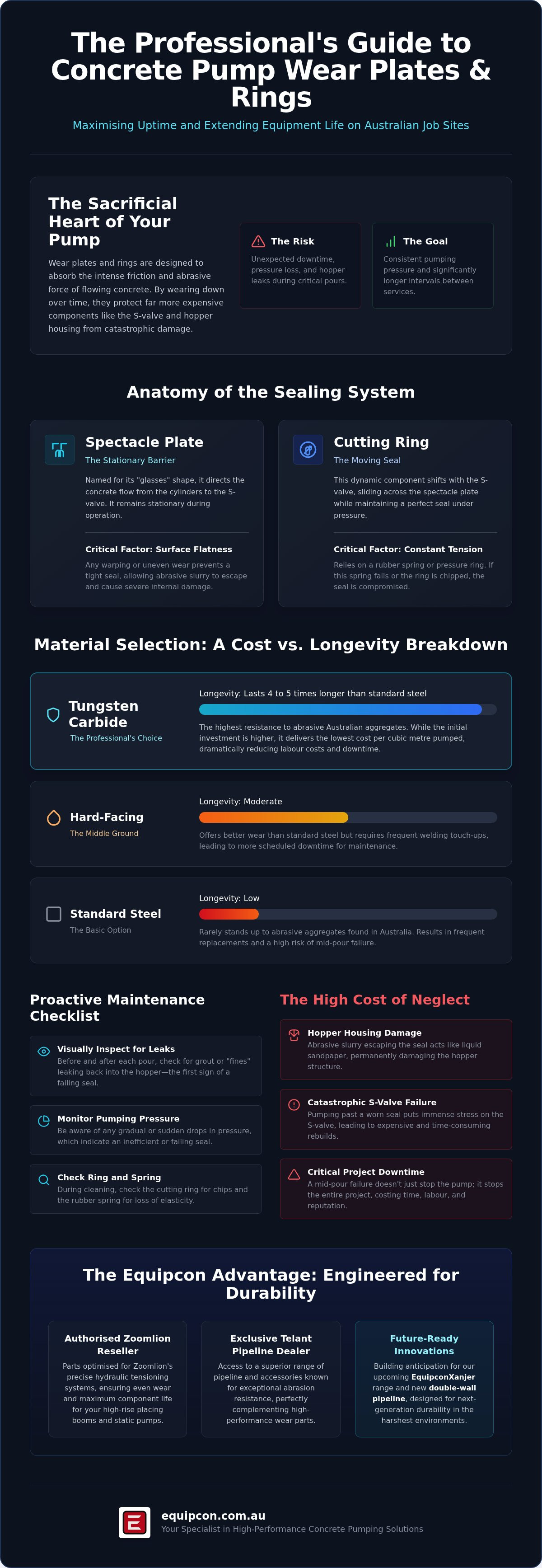
A concrete pump relies on a precise internal seal to maintain the high pressures needed for vertical and long-distance pours. At the centre of this system, concrete pump wear plates and rings serve as the primary barrier between the hopper and the delivery line. These components aren't just accessories; they're the front line of defence for your machinery. They act as "sacrificial" parts, meaning they're designed to take the brunt of the friction and impact from flowing concrete. By wearing out over time, they protect much more expensive components, such as the S-valve and the hopper housing, from catastrophic damage.
Modern high-pressure static concrete pumps and high-rise placing booms use hydraulic tensioning systems to keep these parts pressed firmly together. This constant force ensures that the seal remains tight even when the pump is working at its maximum capacity. In the harsh Australian environment, abrasive aggregates can scour these surfaces quickly. If the seal isn't maintained, you'll lose pumping pressure and risk "fines" leaking back into the hopper, which eventually leads to blockages and increased downtime.
The Mechanics of the Spectacle Plate
The spectacle plate, named for its distinct figure-eight or "glasses" shape, facilitates the alternating flow of concrete from the cylinders into the S-valve. Surface flatness is the most critical factor here. If the plate's surface becomes uneven or warped, it's impossible to maintain a tight seal. This allows abrasive slurry to escape, which acts like liquid sandpaper against your internal components. At Equipcon, we focus on providing plates that maintain their integrity under the extreme conditions typical of local infrastructure projects.
The Cutting Ring: The Moving Seal
While the plate remains stationary, the cutting ring is the dynamic component that shifts or rotates with the S-valve. It must slide across the wear plate while maintaining a perfect seal. This is achieved through a rubber spring or pressure ring that provides constant tension. If this spring loses its elasticity or the ring becomes chipped, the seal fails. Regular checks of this moving seal are essential for any operator who wants to avoid the high costs of a complete S-valve rebuild. Keeping these parts in top condition is a core part of our commitment to helping your fleet run more efficiently.
Selecting Materials for Maximum Longevity
Choosing the right material for your concrete pump wear plates and rings isn't just about the initial invoice; it's about the total cost of ownership. While standard steel plates are available, they rarely stand up to the abrasive nature of Australian river stone and crushed aggregates. Most professional operators now opt for tungsten carbide inserts. This material provides a hard-wearing surface that withstands the constant friction of high-velocity concrete flow, ensuring your pump stays on the job longer.
We're committed to bringing you the latest innovations in material science. Our exclusive Telant Pipeline range is already known for superior abrasion resistance, especially when paired with high-quality accessories. We're also building anticipation for the upcoming EquipconXanjer range and our new double-wall pipeline. These products are designed to offer next-generation durability, specifically for contractors working in the harshest environments where standard parts simply won't cut it.
Tungsten Carbide vs. Hard-Facing
Hard-faced electrodes offer a middle ground, but they often require frequent touch-ups that lead to more downtime. In contrast, tungsten carbide often lasts four to five times longer than standard steel. When you calculate the cost per cubic metre of concrete pumped, the investment in carbide pays for itself. You'll save significantly on labour costs and the stress of mid-pour failures. It's a proactive choice that keeps your fleet ready for high-volume projects.
High-Pressure Pumping Requirements
If you're operating stationary pumps or high-rise placing booms, the demands on your wear parts increase exponentially. High-pressure strokes put immense stress on the internal seal. Zoomlion technology optimises the life of these components by using precise hydraulic tensioning to prevent uneven wear across the plate surface. If you want to ensure your machinery is equipped for the next big project, it's a good idea to browse our latest concrete pump spare parts to find the right fit for your specific model.
Maintenance and Replacement: When to Take Action
A proactive approach to maintenance is the only way to avoid the stress of a mid-pour failure. Your concrete pump wear plates and rings are designed to be replaced, but their lifespan depends heavily on how well you manage them. One of the most effective ways to extend the life of a partially worn ring is by properly adjusting the tensioning nut. This simple adjustment keeps the ring pressed firmly against the plate, maintaining the seal even as the material thins. If you ignore this, you'll likely face poor pumping pressure and increased internal friction.
Pumping past a worn seal is a gamble that rarely pays off. Once the gap between the plate and the ring becomes too wide, abrasive slurry escapes and begins to erode the S-valve and the hopper housing. This leads to structural damage that is far more expensive to repair than a simple part swap. Using genuine concrete pump spare parts Australia ensures that every component fits perfectly, which is essential for preventing the downstream pipeline blockages that can derail your entire project.
Visual Signs of Wear and Tear
Operators should perform a visual check every day. Look for "grooving" on the spectacle plate, which indicates that the cutting ring isn't making uniform contact. You should also check for rounding on the edges of the cutting ring; once those edges lose their sharpness, the seal is compromised. The most obvious sign of trouble is slurry leakage into the hopper. If you see water or fines escaping through the seal during a stroke, it's time to plan for a replacement before the next job starts.
The Replacement Process
When it's time to swap parts, the process usually involves removing the S-valve to gain clear access to the wear components. It's a methodical job that requires attention to detail. You must clean all concrete pump hopper parts thoroughly before installing the new plate and ring. Any leftover concrete or grit can prevent the new parts from seating correctly, leading to premature wear. Taking the time to do this right ensures your pump returns to the field with full pressure and reliable performance.
Maximise Your Pumping Performance and Service Life
Maintaining your concrete pump wear plates and rings isn't just about avoiding a leak today; it's about protecting the long-term health of your entire fleet. By choosing high-performance tungsten carbide inserts and adhering to a strict daily inspection routine, you'll reduce the risk of costly S-valve damage and keep your pumping pressure consistent on every pour. As the industry moves toward even higher-pressure applications, having the right wear parts becomes the difference between a profitable project and an expensive breakdown.
Equipcon is here to support your success as an authorised Zoomlion reseller and the exclusive dealer for Telant Pipeline in Australia. Whether you're managing high-rise placing booms or high-pressure stationary pumps, our national service and support network ensures you have access to the parts you need when you need them. We're also excited to bring you the next generation of durability with our upcoming EquipconXanjer range and double-wall pipeline innovations.
Sourcing high-quality wear parts? Contact Equipcon for Zoomlion and Telant Pipeline solutions today.
We look forward to being your seasoned partner and helping you keep your concrete flowing smoothly on every job site.
Frequently Asked Questions
How many cubic metres should a tungsten carbide wear plate last?
A tungsten carbide wear plate typically lasts between 30,000 and 80,000 cubic metres, though the exact figure depends heavily on the abrasiveness of your concrete mix. In the Australian market, where river stone and crushed aggregates are common, these components generally outperform standard steel by four to five times. If you're using high-performance Telant Pipeline accessories, you'll likely see even better consistency and a lower cost per cubic metre over the life of the part.
Can I flip or regrind a worn spectacle plate to get more life out of it?
You can often flip a spectacle plate if the specific model is designed for it, which effectively doubles the service life before you need a full replacement. However, regrinding concrete pump wear plates and rings that feature tungsten carbide inserts isn't recommended. The grinding process can compromise the bond between the carbide and the base metal, leading to premature failure. It's usually safer and more cost-effective to replace the part once it reaches the manufacturer's wear limits.
What causes a cutting ring to wear unevenly on one side?
Uneven wear on a cutting ring is usually caused by incorrect hydraulic tensioning or a misalignment in the S-valve assembly. If the tensioning nut isn't adjusted properly, the ring won't sit flush against the wear plate, allowing abrasive slurry to scour one side more than the other. You should check the condition of your rubber spring or pressure ring immediately. If these parts lose their elasticity, they can't provide the constant, even pressure required to maintain a perfect seal during high-pressure strokes.
Is it necessary to replace the wear plate and cutting ring at the same time?
It's best practice to replace both the wear plate and the cutting ring simultaneously to ensure a perfectly flat, matched seal from the first stroke. Installing a new cutting ring against a grooved or unevenly worn plate will cause the new ring to wear out much faster than expected. If you're planning to upgrade to the upcoming EquipconXanjer range, starting with a fresh set of components is the most reliable way to maximise your service intervals and prevent unexpected downtime on the job site.


Comments