
Concrete Pump Washout balls & Washout Bags
A single pipeline blockage or a $10,000 environmental fine can instantly erase the profit from an entire week of pumping. You've worked hard to build a reputation for reliability, so the last thing you need is a torn sponge ball or a slurry leak causing a site shutdown. Quality Concrete Pump Washout balls and Concrete Pump Washout Bags are more than just end-of-day consumables; they're the frontline of your machine's maintenance.
Your success depends on gear that doesn't fail when the pressure is on. This guide will show you how to master pipeline cleaning and site containment using professional-grade accessories to keep your fleet operational and compliant. We'll explore the technical nuances of sponge density for premium Telant Pipeline systems and the latest containment strategies to ensure your pack-up is as efficient as your pour.
Table of Contents
Essential Role of Concrete Pump Washout Balls in Pipeline Maintenance
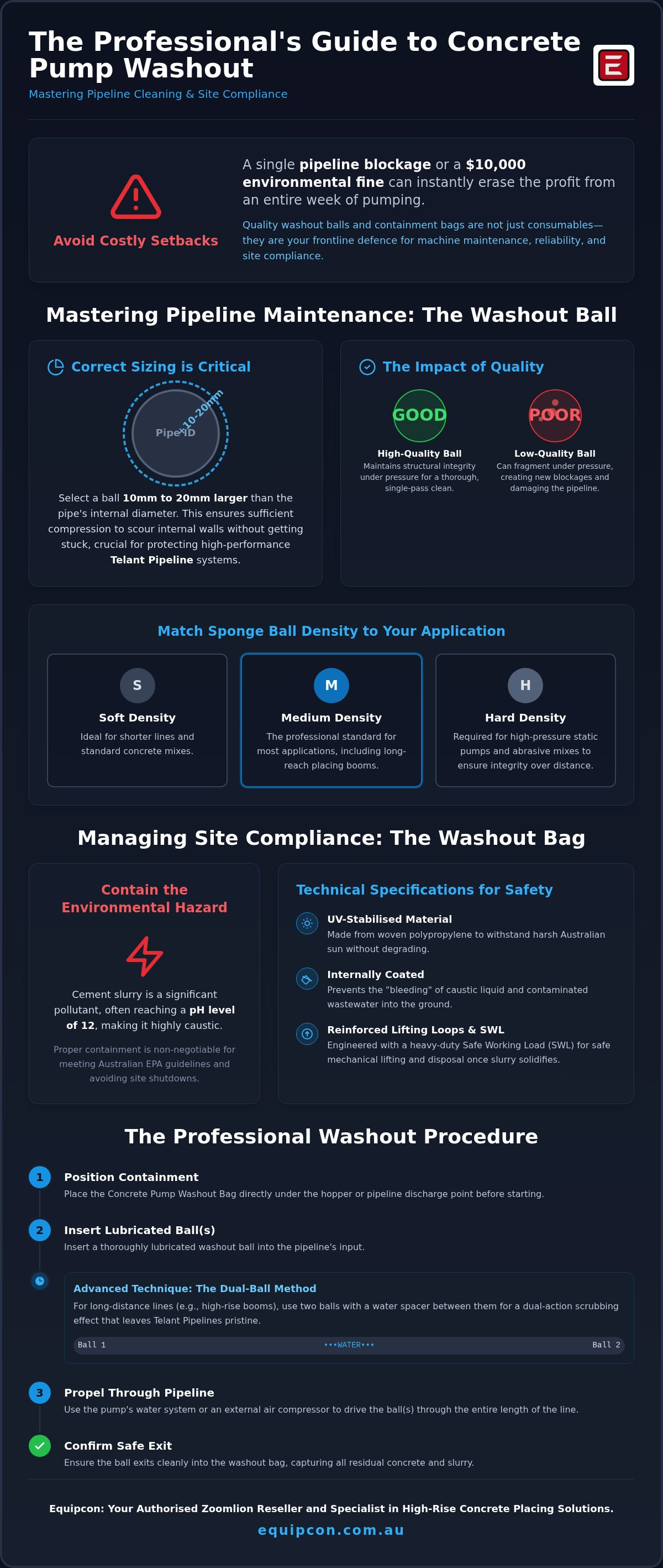
Maintaining the internal integrity of a concrete pump pipeline is a precision task that goes far beyond just running water through the line. Professional-grade Concrete Pump Washout balls, often referred to as sponge balls, serve as the primary mechanical scrubbers for removing residual concrete from internal walls. To achieve a thorough clean, you must select a ball that's 10mm to 20mm larger than the pipe's internal diameter. This ensures enough compression to scour the surfaces without getting stuck. Efficiency matters on every job.
If you use poor-quality balls, they often fragment under the high pressures required for a proper washout. These fragments can become lodged in bends or reducers, creating the very blockages you were trying to prevent. Consistent use of high-quality accessories doesn't just keep the line clear; it also protects your investment in concrete pump spare parts Australia by reducing the abrasive wear caused by hardened concrete buildup.
Choosing the Right Sponge Ball Density for Your Line
Matching ball density to your application is essential for operational success. Soft density balls are ideal for shorter lines or standard mixes. However, for high-pressure static pumps or long-reach placing booms, medium or hard density configurations are often required to maintain structural integrity over distance. Reliability starts with the right gear. When working with premium Telant Pipeline systems, using the correct Concrete Pump Washout balls prevents damage to the internal coating. Whether you're operating a Zoomlion mobile pump or an EquipconXanjer static unit, the right ball density ensures your end-of-day pack-up is fast. Always have your Concrete Pump Washout Bags ready at the discharge point to catch the slurry as the ball exits the line.
Managing Site Compliance with Concrete Pump Washout Bags
Whether you're operating a Zoomlion mobile pump or a high-pressure static unit, site compliance is a non-negotiable part of modern pumping operations. While Concrete Pump Washout balls handle the internal line maintenance, Concrete Pump Washout Bags manage the environmental impact of your pack-up. These heavy-duty containment solutions are specifically designed to capture the caustic cement slurry and wastewater generated during the cleaning process. Cement slurry often reaches a pH level of 12, making it a significant pollutant if allowed to run off into the soil or storm drains. Professional bags are manufactured from UV-stabilised, internally coated woven polypropylene. This construction prevents the "bleeding" of caustic liquids into the ground, ensuring your site remains compliant with Australian EPA guidelines long after the pour is complete.
Technical Specifications for Heavy-Duty Washout Containment
When selecting washout containment, technical specifications matter for safety and efficiency. Look for reinforced lifting loops and a heavy-duty Safe Working Load (SWL) suitable for standard site operations. Once the slurry solidifies, it becomes an extremely heavy mass that requires mechanical lifting. Using a bag with an inadequate SWL is a significant safety risk during the craning process. High-quality internal coatings are equally vital; they act as a barrier to keep contaminants contained until disposal. Positioning these bags directly under the hopper discharge or the end of the line allows for a seamless transition from pumping to cleaning. Ensuring your team has the right high-quality pipeline and accessories on hand makes the difference between a smooth site exit and a costly environmental incident. Reliability is built on these small details.
The Professional Washout Procedure: A Step-by-Step Guide
Executing a flawless washout requires a disciplined workflow that integrates your machinery and accessories into one seamless process. Start by positioning your Concrete Pump Washout Bags directly under the discharge point or hopper to capture the initial slurry. Once the containment is ready, insert a thoroughly lubricated sponge ball into the pipeline. For long-distance lines common with high-rise placing booms or high-pressure static pumps, using two Concrete Pump Washout balls with a water spacer between them is often more effective. This creates a dual-action scrubbing effect that leaves the internal walls of your Telant Pipeline pristine.
Drive the ball through the line using the pump’s internal water system or an external air compressor until it exits safely into the bag. Managing this process correctly is the best way to reduce the risk of common concrete pump problems and solutions caused by hardened residue buildup. It's a simple habit that protects your fleet's long-term value.
Safety and Efficiency During the Cleaning Cycle
Safety remains the priority throughout the cleaning cycle. Maintain clear, constant communication between the pump operator and the person monitoring the discharge end to prevent accidents as the ball exits under pressure. If the ball becomes stuck, ensure all troubleshooting concrete pump pipeline blockages protocols are followed immediately. Finish with a final inspection of the hopper and valves. Removing every trace of residue ensures your Zoomlion or EquipconX equipment is ready for the next pour without delay. A tidy site and a clean pump are the hallmarks of a professional contractor who values efficiency and machinery longevity.
Secure Your Fleet with Professional Washout Protocols
Mastering the end-of-day cleaning cycle is the most effective way to protect your machinery from unnecessary downtime. By integrating high-quality Concrete Pump Washout balls and Concrete Pump Washout Bags into your daily routine, you ensure your pipeline stays clear and your site remains fully compliant with environmental regulations. These small investments prevent the hardened buildup that can damage premium Telant Pipeline systems or lead to costly repairs. As an authorised Zoomlion Reseller with national service and parts support, Equipcon is here to help you maintain peak operational efficiency across every project. Don't let poor-quality accessories compromise your productivity or reputation. Instead, choose gear that's built for the rigours of the Australian construction industry. View our range of high-quality pipeline accessories and washout gear today to keep your pumps running smoothly.
Frequently Asked Questions
What size washout ball should I use for a 125mm (5 inch) pipeline?
For a standard 125mm pipeline, you should use a 150mm washout ball. Selecting a ball that is 15mm to 20mm larger than the internal diameter ensures sufficient compression to scour the pipe walls effectively. This prevents concrete buildup inside your Telant Pipeline system. Using a ball that's too small will simply allow water to bypass it, leaving residue behind that can harden and cause future blockages.
Can concrete washout bags be reused once the concrete has dried?
Concrete washout bags are strictly single-use containment solutions. Once the slurry has dried into a solid mass, the bag is designed to be craned away for disposal at a licensed facility. Reusing them isn't recommended because the internal coating and lifting loops are subjected to extreme caustic stress and weight. Forcing the dried concrete out often damages the material, compromising its ability to prevent leaks on the next job.
How many washout balls are needed for a standard cleaning cycle?
While one ball can suffice for short mobile pump lines, using two Concrete Pump Washout balls with a water spacer is the industry standard for high-rise projects. This method provides a more thorough clean for high-pressure static pumps. The first ball pushes out the bulk of the concrete, while the second ball wipes away any remaining film. It’s a simple way to maintain your equipment and reduce downtime.
What are the legal requirements for concrete washout in Australia?
In Australia, legal requirements focus on preventing caustic cement slurry from entering the environment. You must contain all wastewater on-site to comply with state EPA regulations. Professional Concrete Pump Washout Bags provide a leak-proof solution that meets these site compliance standards. Failing to manage your washout properly can lead to significant financial penalties and project shutdowns, so always use certified containment gear to protect your business.


Comments