

Concrete Pump Shut Off Valves: The Professional Australian Guide to Selection and Safety
A single bolt failure on a manual valve during a high-pressure pour isn't just a maintenance headache; it's a critical safety breach that can shut down an entire tier-one site in minutes. We understand that when you're pushing concrete forty storeys up, you need absolute confidence that your pipeline won't fail under the strain. It's a high-stakes environment where the difference between a successful day and costly equipment downtime often comes down to the quality of your hardware.
By mastering the technical specifications and safety protocols for concrete pump shut off valves, you can eliminate unexpected blockages and ensure your equipment meets the rigorous AS 2550.15:2019 standards. Drawing on extensive industry experience, we understand how crucial the right components are for preventing the risks highlighted in recent WorkSafe alerts. This guide provides a professional roadmap for selecting heavy-duty parts for high-rise projects, helping you implement maintenance schedules that protect your crew and keep your projects on track.
Table of Contents
Understanding Concrete Pump Shut Off Valves: Types and Functional Roles
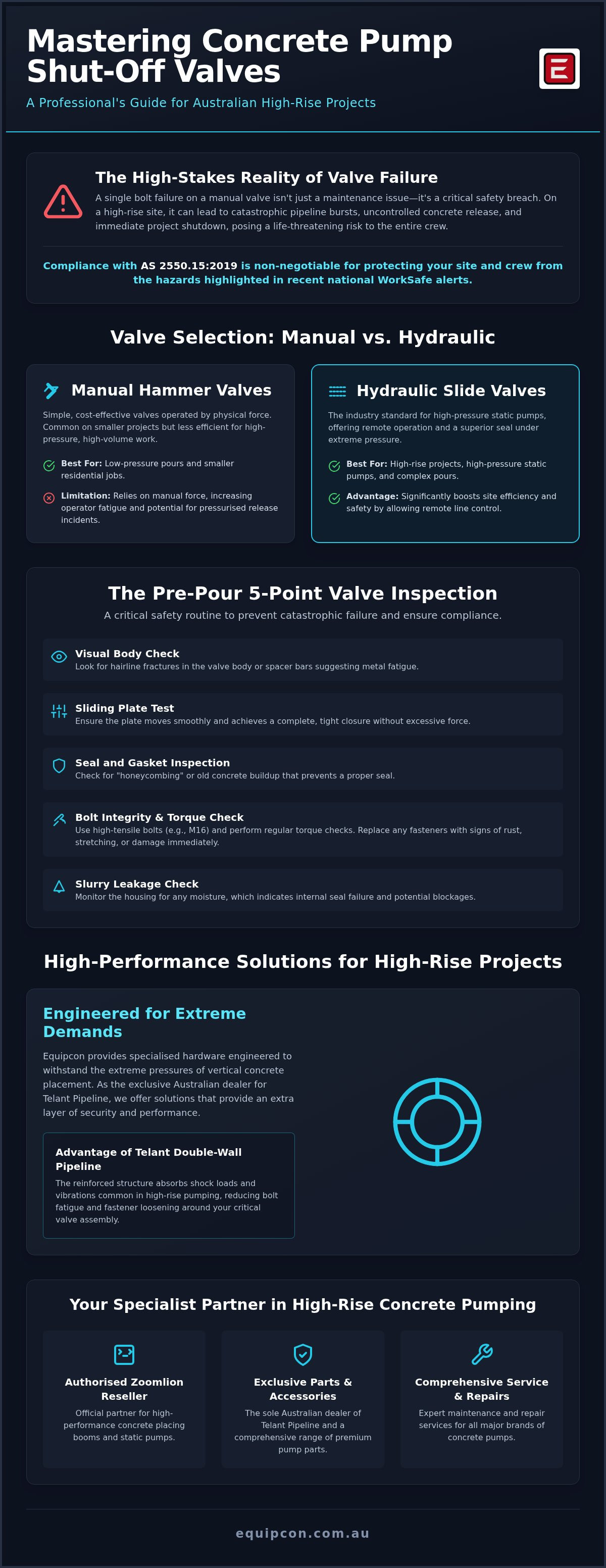
Think of a shut off valve as the primary gatekeeper of your delivery line. Its job is straightforward but critical: it controls the flow of concrete, allowing operators to switch ports or secure the line during vertical pumping. To understand the broader context of these components, it helps to first define What is a Concrete Pump? and how it manages high-volume material flow under pressure. Without a reliable valve, managing a complex pour becomes nearly impossible.
For high-rise projects, concrete pump shut off valves are non-negotiable. When you're pushing wet mix hundreds of metres into the air, gravity is your constant enemy. These valves prevent backflow, ensuring the column of concrete stays put during pump pauses or pipe changes. They also stop air pockets from forming, which can lead to dangerous "slugs" or blockages when pumping resumes. On complex Australian sites with intricate pipeline layouts, high-pressure diversion valves allow teams to direct flow between different placing booms without dismantling the entire setup.
Manual Hammer Valves vs. Hydraulic Slide Valves
Manual valves, often called hammer valves, are a common sight on smaller residential jobs. They're cost-effective and simple, relying on physical labour and a heavy hammer to slide the gate into position. While they do the job for low-pressure pours, they're less efficient for high-volume work. The physical effort required can slow down a cycle, and the reliance on manual force introduces more room for operator fatigue.
If you're operating high-pressure static pumps, hydraulic slide valves are the industry standard. These units offer remote operation, allowing the pumpie to clear or secure the line from a distance. They provide a superior seal under extreme pressure, which is essential for the safety of everyone on-site. Transitioning from manual to hydraulic is a smart move when your project scale increases, as it significantly boosts site efficiency and reduces the risk of pressurised release incidents.
The Importance of Pipeline Compatibility
Precision is everything when it comes to your pipeline. Your valve diameter must perfectly match your pipes, whether you're running a 125mm or 150mm system. Any discrepancy creates a "step" in the flow, which causes rapid internal wear and increases the chance of a blockage. Ensuring your valves work in harmony with your wider inventory of concrete pump spare parts Australia is the best way to extend the lifespan of your equipment. When the fit is exact, the flow remains laminar, reducing friction and keeping your pump running cooler for longer.
Critical Safety Standards and Maintenance for Concrete Pipeline Valves
A 2024 WorkSafe alert highlighted a critical risk that every Australian operator should take seriously: the catastrophic failure of manual shut off valve bolts. In one documented incident, M16 bolts sheared under extreme pressure, leading to an uncontrolled release of concrete that put the entire crew at risk. This isn't just a mechanical glitch; it's a life-threatening event that demands proactive management. To prevent these pipeline bursts, you must use high-tensile bolts and perform regular torque checks as part of your pre-pour routine. Following Safe Work Australia's concrete pumping guide ensures your site remains compliant and your safety systems are robust enough for high-pressure work.
Using double-wall pipeline technology from Telant Pipeline adds an extra layer of security to your valve assembly. The reinforced structure helps absorb the shock loads common in high-rise pumping, reducing the vibration that often leads to bolt fatigue and fastener loosening. Your daily routines should include checking for slurry leakage around the gate and inspecting for hammer-point deformation on manual units. If you notice the metal is mushrooming or thinning, the valve's structural integrity is already compromised.
The 5-Point Valve Inspection Checklist
Visual Body Check: Look for hairline fractures in the valve body or spacer bars that suggest metal fatigue from repeated pressure cycles.
Sliding Plate Test: Ensure the plate moves smoothly through its full range and achieves a complete, tight closure without excessive force.
Seal and Gasket Inspection: Check for "honeycombing" or old concrete buildup that prevents a proper seal and leads to pressure loss.
Bolt Integrity: Replace any fasteners showing signs of rust, stretching, or thread damage immediately with approved high-tensile alternatives.
Slurry Leakage Check: Monitor the housing for signs of escaping moisture, which indicates internal seal failure and upcoming blockages.
Reducing Downtime with Professional Repairs
Knowing when to refurbish a valve and when to scrap it is a key part of your cost management strategy. Minor seal leaks or plate wear can often be fixed with quality spares, but a warped valve body or compromised bolt holes mean it's time for a replacement. Investing in professional concrete pump maintenance ensures your concrete pump shut off valves meet Australian standards before they ever reach the site. If you're unsure about the state of your current gear, our team can help you assess your inventory to keep your projects moving safely. Our comprehensive repair services cover all major brands, ensuring your equipment is always ready for the next high-pressure challenge.
High-Performance Valve Solutions for Australian High-Rise Projects
Success on a CBD high-rise site depends on more than just raw power. It requires a pipeline system where every component, especially concrete pump shut off valves, is engineered to handle extreme vertical pressures. Our EquipconXanjer and Zoomlion components are specifically designed for these high-stakes environments, ensuring the transition from the pump to the boom remains seamless and secure. When you're pushing mix to record heights, you don't want to worry about the structural integrity of your flow control.
As the exclusive dealer of Telant Pipeline, we provide accessories that go beyond standard industry offerings. These high-performance parts are built to maintain constant flow while reducing resistance at the valve head. This synergy is particularly vital when integrating shut off valves with concrete placing booms. By minimising turbulence at the valve, you ensure a smoother distribution across multiple floors, which reduces vibration and wear on the boom's internal pipeline.
Optimising High-Pressure Static Pumping
High-pressure static pumps operate at velocities that would compromise standard hardware. In these setups, the valve acts as a critical dampener. It manages the hydraulic shock, or "slamming," that occurs when the flow is suddenly redirected or stopped. Choosing a specialised diversion valve prevents these shockwaves from rattling your clamps or fatiguing your pipe walls. This is essential for maintaining site safety and preventing the structural damage that leads to unplanned maintenance breaks during a continuous pour.
Sourcing Genuine Parts for Zoomlion and EquipconXanjer
Using non-genuine, third-party valves in stationary concrete pumps introduces unnecessary variables to your project. A valve that isn't precision-matched to your Zoomlion or EquipconXanjer system can lead to premature seal failure or internal scouring. We act as your national partner, providing a comprehensive service network that supports everything from urgent valve replacements to total pipeline optimisation. Whether you're working on a coastal infrastructure project or a metropolitan tower, our team ensures you have the heavy-duty concrete pump shut off valves needed to keep your downtime at zero.
Secure Your Pipeline for the Next High-Pressure Pour
Mastering the selection and maintenance of your concrete pump shut off valves is the most effective way to eliminate site downtime and ensure crew safety. As we've explored, the transition to hydraulic solutions and the use of high-tensile fasteners aren't just technical upgrades; they're essential steps in meeting Australian safety standards. When your pipeline is correctly matched and your maintenance schedule is proactive, you spend less time troubleshooting and more time meeting your project milestones.
As an authorised Zoomlion Reseller and the exclusive dealer of Telant Pipeline, we provide the heavy-duty hardware and technical expertise required for Australia's most demanding high-rise sites. Our national service and repair network is always ready to assist, ensuring your equipment stays operational and your team stays protected. We're committed to being a partner you can rely on for the long haul.
Enquire about our high-pressure valves and Telant Pipeline solutions today to ensure your next pour is your smoothest one yet.
Frequently Asked Questions
What is the difference between a hammer valve and a slide valve for concrete pumping?
A hammer valve is a manual gate that requires an operator to physically strike the unit with a hammer to open or close the flow. In contrast, a slide valve is typically hydraulic and operated via remote control or the pump’s main control panel. While hammer valves are cost-effective for smaller residential jobs, hydraulic slide valves are the preferred choice for high-pressure work because they provide a superior seal and reduce physical labour.
How often should I inspect the bolts on my manual shut off valve?
You should perform a visual inspection and a torque check on your manual valve bolts before every single pour. This daily routine is essential to identify stretched, rusted, or fatigued fasteners before they fail under pressure. Following the 2024 WorkSafe Queensland safety alert, it's critical to ensure all bolts are high-tensile and tightened to the manufacturer’s specific torque requirements to prevent catastrophic pipeline bursts.
Can I use a manual shut off valve for high-pressure high-rise pours?
While technically possible, using manual concrete pump shut off valves for high-rise projects isn't recommended due to the extreme pressures and safety risks involved. High-pressure pours generate significant hydraulic shock that can fatigue manual fasteners quickly. For these applications, we recommend hydraulic valves which offer remote operation and are better engineered to manage the velocities required to push concrete hundreds of metres vertically.
Why is my concrete pump shut off valve leaking slurry?
Slurry leakage is usually a sign that your internal seals or gaskets have worn out or are being held open by concrete buildup. This "honeycombing" prevents the sliding plate from seating correctly against the valve body, allowing moisture to escape under pressure. If you notice leakage, you should strip the valve down immediately for a professional clean and seal replacement to prevent a total blockage or internal scouring.
Are hydraulic shut off valves compatible with all concrete pump brands?
Yes, hydraulic shut off valves are generally compatible with all major brands, provided the pipeline diameter and coupling styles match your existing setup. Whether you're running a 125mm or 150mm system, the valve must align perfectly with your pipe walls to ensure laminar flow. We provide parts and comprehensive repairs for all major brands across our national service network to keep your fleet operational.
What are the benefits of using Telant Pipeline with my shut off valves?
Using Telant Pipeline accessories with your valves offers superior durability and shock absorption, particularly when using their double-wall pipeline technology. This combination is designed to reduce valve-head resistance and minimise the vibrations that lead to bolt fatigue. As the exclusive dealer, we've seen how these accessories maintain a more constant flow, which significantly extends the lifespan of your valve seals during high-volume Australian infrastructure projects.


Comments