
Concrete Pump Pipe Clamps: The 2026 Professional Guide to Selection and Safety
A single failing bolt on a high-pressure line can turn a productive morning into a catastrophic site shutdown in seconds. You already know that when you're pushing material through a high-rise placing boom, the integrity of your concrete pump pipe clamps is the only thing standing between a successful pour and a dangerous equipment failure. It's a high-stakes environment where poor quality gaskets or mismatched couplings aren't just an inconvenience; they're a significant liability for your business and your crew.
This guide helps you select the right components to ensure site safety and maximum uptime across your Australian projects. You'll learn how to achieve zero-failure pumping operations while staying compliant with the latest workplace health and safety standards. We'll also preview essential 2026 updates, including the arrival of the EquipconXanjer line and exclusive Telant Pipeline double-wall systems designed specifically for the most demanding high-pressure applications.
Table of Contents
Understanding Concrete Pump Pipe Clamps: Types and Selection
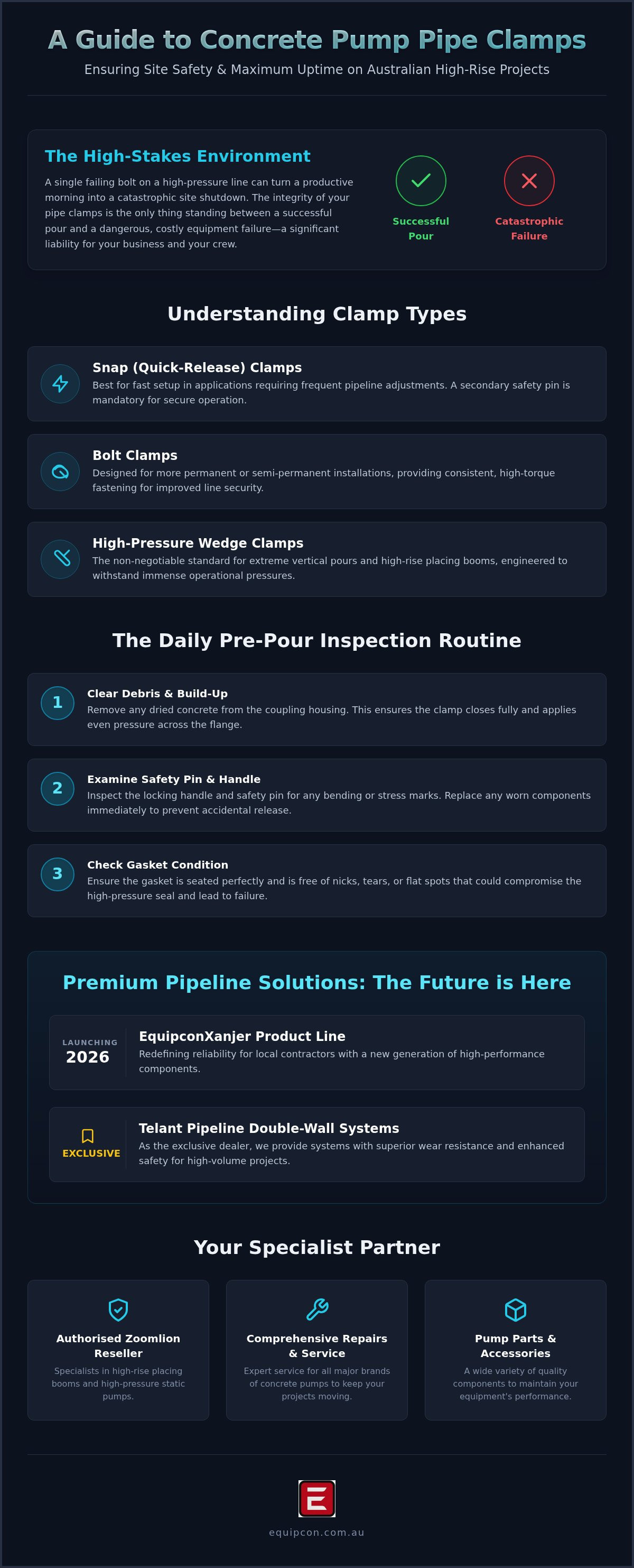
Concrete pump pipe clamps serve as the primary mechanical fastener for your delivery lines. They hold the entire system together while your pump works against gravity. Choosing the right coupling is vital for site safety. As concrete pump technology has advanced, the demand for precision-engineered fasteners has grown. You'll generally find three main types on Australian sites: snap (quick-release) clamps for fast setup, bolt clamps for more permanent installations, and high-pressure wedge clamps for extreme vertical pours.
For high-rise placing booms, forged steel is the non-negotiable industry standard. It offers the structural resilience needed to withstand the constant pulsing of high-pressure pumping. We focus on Telant Pipeline components because they maintain system integrity where uncertified parts often fail. Using the correct concrete pump pipe clamps ensures that your gaskets remain seated and your pipeline stays secure during high-volume delivery.
Matching Clamps to Your Pumping Pressure
Identifying your pipeline's pressure rating is your first step toward a safe pour. While standard mobile pumps might use Metric or HD systems, high-pressure static pumps often operate at levels exceeding 1,233 psi. These setups demand specialised heavy-duty couplings that won't stretch or deform under load. When selecting clamps for high-pressure equipment, always use this compatibility checklist:
Verify the flange type: Ensure your clamp matches the Metric or HD profile of your pipeline.
Check pressure ratings: Confirm the clamp is rated for the maximum output of your stationary pump.
Inspect the gasket: Use high-quality seals that won't perish under heat or friction.
Safety pins: Don't operate a snap-style clamp without a secondary locking pin.
Critical Safety and Maintenance: Preventing Clamp Failure
A clamp failure isn't just a site delay; it's a significant safety hazard. Most catastrophic blowouts stem from preventable issues like material wear, incorrect sizing, or the absence of safety pins. While Australian standards are rigorous, aligning your site practices with OSHA safety requirements provides an extra layer of operational security. Understanding these risks is part of a broader strategy for managing common concrete pump problems and solutions on high-pressure projects.
Gasket health is often overlooked but it's directly linked to clamp longevity. When a gasket perishes or flattens, it allows the pipeline to shift slightly within the coupling. This movement creates micro-vibrations that cause metal fatigue in the clamp housing over time. If you don't replace worn seals early, you're essentially inviting the clamp to fail under load. Regular maintenance ensures your concrete pump pipe clamps remain reliable throughout the pour.
The Daily Pre-Pour Clamp Inspection Routine
Effective safety starts with a "boots-on-the-ground" approach before the first truck arrives. Follow these three steps to secure your line:
Step 1: Clear any dried concrete build-up from inside the coupling housing. This ensures the clamp closes fully and applies even pressure across the flange.
Step 2: Examine the safety pin and locking handle. If you notice bending or stress marks, replace the component immediately to prevent accidental release.
Step 3: Check that the gasket is seated perfectly. It should be free of nicks, tears, or flat spots that could compromise the high-pressure seal.
Maintaining a safe site requires the right gear and a proactive mindset. As an authorised Zoomlion Reseller, we understand the precision required for high-rise infrastructure. If you're unsure about the state of your hardware, our team provides expert concrete pump repairs and advice to keep your project moving.
Premium Pipeline Solutions: The Future of High-Pressure Pumping
The Australian pumping landscape is shifting toward more resilient infrastructure. We're moving beyond standard single-wall pipes to advanced materials that handle higher pressures and abrasive mixes with ease. In 2026, the launch of our EquipconXanjer product line will redefine reliability for local contractors. As the exclusive dealer of Telant Pipeline, we offer high-performance solutions that outlast traditional carbon steel. These systems rely on precision-engineered concrete pump pipe clamps to handle the increased stress of high-rise pours.
Our new double-wall pipeline is a critical upgrade for high-volume projects, offering superior wear resistance and enhanced safety margins. Beyond our exclusive product lines, we provide professional concrete pump maintenance for all major brands. This comprehensive support ensures your entire fleet benefits from our technical expertise and logistical precision.
Why Authorised Zoomlion Parts Save Money Long-Term
Investing in genuine Zoomlion and Telant accessories is a proactive strategy to reduce costly site downtime. High-quality wear parts, including heat-treated pipes and premium concrete pump pipe clamps, extend the operational life of your machinery by minimising vibration and internal friction. When you use authorised components, you're protecting your pump’s hydraulic system and structural integrity. If you need assistance with fitting or fleet maintenance, our national service network is ready to help. Our specialised depots across the country provide professional repairs and technical support, ensuring your gear is always turnkey ready for the next big project.
Securing Your High-Pressure Infrastructure
Success on a high-pressure site depends entirely on the strength of your connections. By matching your concrete pump pipe clamps to the specific pressure requirements of your high-rise placing boom, you eliminate guesswork and prioritise site safety. Consistent daily inspections and the use of authorised safety pins ensure your crew stays protected while your equipment maintains maximum uptime. As we look toward 2026, the introduction of the EquipconXanjer line and our exclusive Telant Pipeline double-wall systems will provide the technical edge needed for Australia's most demanding infrastructure projects.
As an authorised Zoomlion Reseller and exclusive Telant Pipeline dealer, we support your operations through a national service network with specialised depots. Enquire about Telant Pipeline and Zoomlion parts today to secure your next pour and keep your fleet turnkey ready. We're here to help your business reach new heights.
Common Questions About Concrete Pump Pipe Clamps
What is the safest type of pipe clamp for high-rise concrete pumping?
Forged steel wedge-type or heavy-duty bolt clamps are the safest options for high-rise applications. These fasteners are specifically engineered to withstand the extreme pressures generated by static pumps and placing booms. Unlike standard light-duty couplings, these specialised concrete pump pipe clamps provide a vibration-resistant connection that prevents the pipeline from shifting during intense vertical pours.
How often should I replace my concrete pump pipe gaskets?
You should replace your gaskets at the first sign of flattening, perishing, or visible nicks. In a high-pressure environment, seals act as sacrificial components that prevent slurry leakage and air entry. It's best practice to inspect them daily. Replacing them every 50 to 100 pours, depending on the mix abrasiveness, prevents the micro-vibrations that lead to clamp fatigue.
Can I use snap clamps on a high-pressure static pump delivery line?
You should avoid using standard snap clamps on high-pressure static delivery lines. While snap clamps offer efficiency for low-pressure mobile pumping, the extreme psi of a stationary pump can exceed their mechanical limits. If your setup requires them, ensure they are heavy-duty rated and always secured with a safety pin. For maximum security, we recommend high-pressure wedge couplings.
What should I do if a clamp fails during a concrete pour?
Immediately stop the pump and depressurise the line before anyone approaches the failure point. Once the pressure is safely released, clear any spilled concrete and replace the failed clamp and gasket with authorised parts. Never attempt to fix a failing coupling while the line is under load. After the pour, contact a specialist to identify the root cause of the failure.


Comments