
Concrete Pump Hopper Parts: The Professional Guide to Components and Maintenance
Updated: Aug 20
Imagine you're halfway through a major slab pour on a scorching afternoon when your hopper suddenly grinds to a halt. The agitator stops, the pressure drops, and you're left watching thousands of dollars of concrete begin to set while your crew stands idle. It's the nightmare scenario every Australian pumper dreads, and it usually stems from a single worn component that didn't get the attention it deserved during the morning pre-start. You know that keeping your rig on the road requires more than just luck; it takes a deep understanding of the high-wear items that keep the mix moving.
We understand that unexpected downtime isn't just frustrating, it's expensive. That's why we've put together this professional guide to concrete pump hopper parts. You'll learn how to identify, maintain, and source the critical components that keep your pump running efficiently on busy Australian worksites. We'll walk through the essential internal parts like agitator flanges and wear plates, showing you how proactive maintenance can extend your equipment's lifespan and significantly lower your long-term costs. Whether you're running a Schwing, Putzmeister, or Zoomlion, having a reliable plan for spare parts ensures you're always ready for the next big job.
Table of Contents
What are Concrete Pump Hopper Parts and Why Do They Matter?
The hopper assembly serves as the critical interface between the mixer truck and the delivery line, acting as the primary intake and mixing chamber for the entire pumping cycle. While it might look like a simple steel bin from the outside, it's actually a sophisticated piece of engineering designed to handle abrasive materials under immense pressure. Choosing the right concrete pump hopper parts is essential because every internal component works in harmony to ensure the mix remains workable and flows without interruption. A concrete pump relies on this assembly to prevent "dead spots" where concrete can settle and harden, which would otherwise lead to catastrophic blockages and site delays.
A comprehensive hopper setup includes all internal wear components, agitator systems, and sealing mechanisms. These parts are constantly subjected to the grinding force of aggregate and the chemical reactivity of cement. High-quality components ensure a consistent flow by maintaining the correct pressure and agitation levels throughout the pour. When these parts are in peak condition, they provide a seamless transition from the mixer to the cylinders, protecting the rest of the machine from unnecessary strain.
The Hopper as a Functional System
Think of the hopper as a functional system rather than just a collection of steel plates. The agitator system is the heart of this process; it keeps the concrete in constant suspension to prevent segregation of the aggregate and cement paste. If the agitator fails, you're left with a mix that's impossible to pump. Meanwhile, the S-tube or Rock Valve acts as the heavy-duty diverter, switching the flow between cylinders with millisecond precision. Maintaining the sealing integrity of these parts is your first line of defence against hydraulic contamination. If slurry bypasses the seals, it won't just ruin your mix; it can eat through your hydraulic system, leading to repairs that cost far more than a simple seal kit.
Impact of Poor Part Quality on Project Timelines
Cutting corners on part quality is a gamble that rarely pays off on Australian worksites. Worn seals or low-grade concrete pump hopper parts often lead to a subtle drop in pressure that results in "honeycombing" in the finished pour. This isn't just an aesthetic issue; it's a structural failure that can lead to rejected slabs and massive insurance headaches. Using non-spec parts in high-pressure environments often results in premature wear, forcing you to pull the rig off the road for repairs twice as often. We advocate for a "first-time-fix" mentality. By using genuine spares and high-quality pipeline accessories, you reduce the risk of mid-pour blowouts and ensure your project timelines stay on track. It's about being proactive rather than reactive, keeping your crew moving and your clients happy.
Critical Wear Components Inside the Hopper
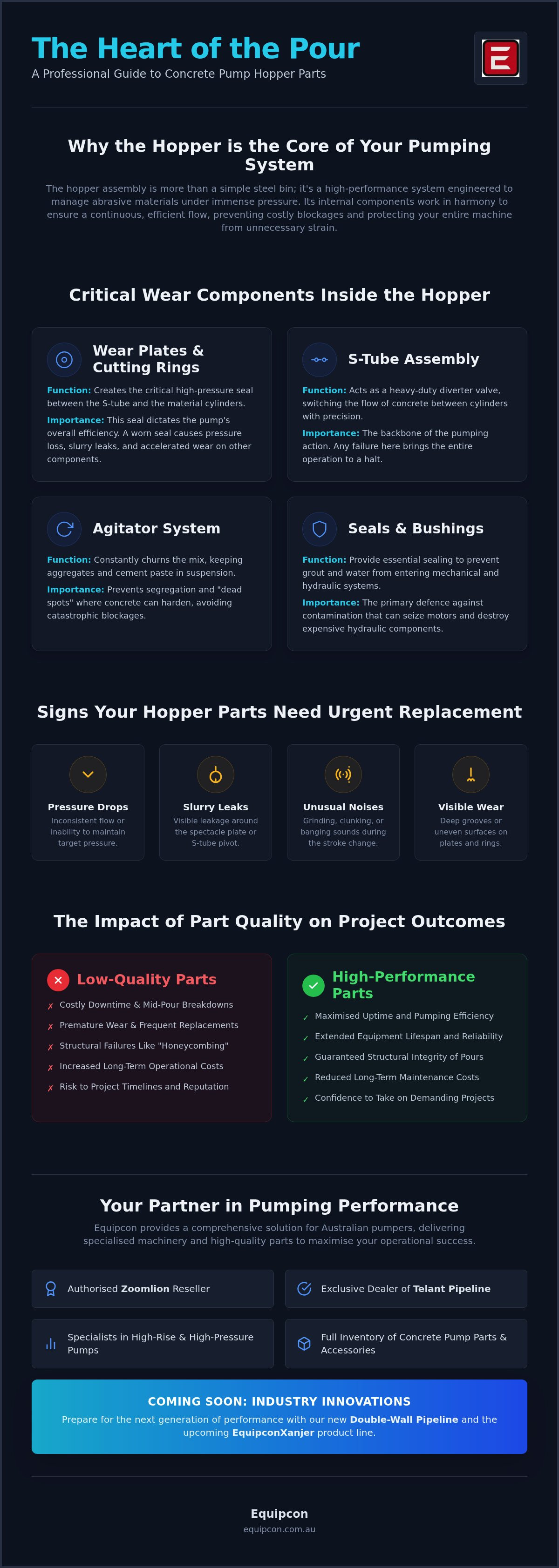
The guts of your hopper take a relentless beating every time the pump is engaged. Understanding the primary concrete pump hopper parts that sustain the most damage is the only way to avoid a blowout. At the centre of this is the relationship between the spectacle plate and the cutting ring. These two components must maintain a perfect, high-pressure seal to ensure concrete moves into the delivery line rather than leaking back into the hopper or water box. While the S-tube assembly acts as the backbone of the diversion system, it's this sealing interface that dictates your pump's efficiency.
Don't overlook the "small" stuff like kidney seals and sleeve bushings. These parts might seem insignificant compared to a massive S-tube, but they are the primary barrier preventing hydraulic contamination. A perished seal can allow abrasive grout to enter the bearing housing, leading to a seized agitator motor or damaged hydraulic cylinders. Proactive replacement of these minor items is the hallmark of a professional operator who values uptime over short-term savings. If you aren't sure which component is causing your pressure loss, it's worth checking out our range of concrete pump spare parts to find a compatible match for your specific rig.
Wear Plates and Cutting Rings
Depending on your model, you'll likely be dealing with either a spectacle plate or a kidney plate. The names refer to their shape, but their job is identical: providing a flat surface for the cutting ring to seal against. For Australian projects, carbide-tipped wear parts are the industry standard. Our local sands are often incredibly abrasive, and standard steel components simply won't last the distance. A proper tensioning system is vital here; it keeps the cutting ring flush against the plate. If this tension drops, slurry will bypass the seal, causing rapid erosion. Adhering to OSHA safety standards during these maintenance checks ensures your team stays safe while inspecting these high-pressure zones.
Agitator and Mixing Components
Your agitator system ensures the mix stays pumpable, especially during those long, hot Australian summer pours. The agitator paddles and shafts must be inspected daily. If you let the paddles wear down to the shaft, you risk structural damage to the entire mixing assembly. It's much cheaper to replace a paddle than a snapped shaft. We also see a lot of success with hopper vibrators, particularly when dealing with "sticky" or low-slump mixes common in civil works. Keeping a spare 24V vibrator in your kit can be a lifesaver when the mix just won't settle. Regularly checking the agitator motor's bearing housing for signs of grease leakage can prevent a total system failure mid-pour.
Signs Your Hopper Parts Need Urgent Replacement
Catching a failing component before it leads to a site-wide shutdown is the difference between a profitable day and a massive loss. Your machine usually provides several warning signs that its internal concrete pump hopper parts are reaching the end of their service life. One of the most obvious red flags is visible slurry leakage from the back of the hopper or the "water box". If you notice grout spraying or dripping where it shouldn't be, your seals have likely perished. This isn't just a mess to clean up; it's a direct threat to your hydraulic system's health.
Another telltale sign is a noticeable drop in pumping pressure or an aggressive "clunking" sound during the stroke change. This often indicates that the S-tube isn't seating flush against the spectacle plate, allowing pressure to bleed off. During your daily visual inspection, look for "rounding" on the edges of the cutting ring. A sharp edge is essential for a clean shear and a tight seal. If that edge looks blunt or rolled, it's time to swap it out. Similarly, check for excessive concrete buildup around the agitator shaft. This buildup suggests the outer seals have failed, allowing abrasive fines to grind away at the bearing housing.
Diagnostic Performance Indicators
Keep a close eye on your gauges. Unusual hydraulic pressure spikes often suggest internal mechanical resistance, perhaps from a warped wear plate or a seized agitator bearing. You might also experience "blow-by" in the delivery cylinders, which many operators mistakenly attribute to piston ram wear. In reality, this can often be traced back to compromised hopper seals failing to maintain a vacuum. Pay attention to vibration patterns too. If the hopper vibrator sounds higher-pitched than usual or the agitator motor is straining, you're likely dealing with a blockage or a part that's about to fail. Adhering to OSHA requirements for concrete pumping systems means staying on top of these mechanical indicators to ensure safe operation for everyone on the slab.
The "Water Box" Inspection
The flushing box, or water box, is your pump's early warning system. The colour of the water tells a story. Clear or slightly cloudy water is normal, but if it turns thick and grey with concrete fines, your hopper seals are definitely compromised. This grit acts like liquid sandpaper on your piston rams, leading to premature failure and expensive repairs. Developing a strict daily pre-start checklist is the best way to catch these issues early.
Check the water box for concrete sediment or hydraulic oil streaks.
Inspect the agitator paddles for excessive wear or thinning of the blades.
Verify the tension of the cutting ring against the spectacle plate.
Look for fresh grease purging from the bearing housings to ensure lubrication is reaching the seals.
Taking ten minutes every morning to inspect these critical components keeps your rig reliable and your maintenance costs predictable. It's a small investment of time that prevents the stress of a mid-pour breakdown.
While mechanical maintenance is vital for uptime, keeping your site documentation and project logs organised is equally important for a professional operation. For all your administrative needs, Mega Office Supplies provides a comprehensive range of stationery and office essentials to help Australian contractors manage their business as efficiently as their machinery.
Selecting the Right Spare Parts for Australian Projects
Selecting concrete pump hopper parts in Australia isn't just about finding a component that matches the bolt holes; it's about finding parts that can survive the intense heat and the abrasive nature of local aggregate. Whether you're running a Schwing, Putzmeister, Sany, or Zoomlion, compatibility is non-negotiable. If you're currently weighing up whether to repair your existing rig or invest in a total equipment upgrade, our guide on Mobile Concrete Pumps for Sale: The Ultimate Guide for Australian Contractors provides a great starting point for making that call.
Sourcing your parts from an Australian supplier provides a level of security that overseas retailers simply can't match. You get access to local warranty support and technical advice from people who actually know what it's like to pour concrete in 40-degree heat. If a part fails, you need a solution today, not in three weeks when the next shipping container arrives. Local stock ensures that even small, critical items like an O-ring or a plastic bush are available for immediate dispatch, preventing a minor part from causing a major site delay.
Material Quality and Longevity
In the harsh Australian climate, material choices dictate your bottom line. Heat-treated chrome components consistently outlast standard steel alternatives because they handle the friction of high-volume pumping without warping under thermal stress. While cast parts might be cheaper upfront, forged steel components offer the structural integrity required for modern, high-pressure pumping. When you calculate the true cost-per-cubic-metre, high-quality wear parts almost always win. For Zoomlion owners, using genuine parts ensures precision fitment and maintains the safety integrity of the machine. It's a proactive choice that pays for itself through reduced maintenance cycles.
Sourcing and Logistics
A national service network is your best friend when you're in a "pump down" situation. You need a partner who understands the local industry and keeps stock on the ground across the country. Reputable suppliers don't just hand you a parts catalogue; they offer technical repair services to help you diagnose why a part failed in the first place. This "boots-on-the-ground" expertise saves you from throwing money at symptoms while the root cause remains unaddressed. If you want to ensure your rig stays on the road, it's time to stock up on reliable concrete pump spare parts from a partner who values your uptime as much as you do.
Maximising Equipment Life with Equipcon Parts and Service
At Equipcon, we don't just supply components; we provide the peace of mind that comes from a genuine "pumping background." Our team knows the grit and pressure of the Australian construction industry because we've lived it. This experience allows us to offer more than just a transaction. We provide proactive advice that helps you manage your fleet's health before a crisis occurs. Whether you're chasing high-quality pipeline or specific concrete pump hopper parts, our commitment is to keep your machinery in turnkey condition so you can focus on the pour at hand.
Reliability is our primary product. We've established a national network of service depots to ensure that support is never far from your site, regardless of where the job takes you. By stocking genuine spare parts for Zoomlion and high-performance alternatives for all major brands, we reduce the logistical headaches that often plague busy contractors. We understand that every hour your pump sits idle is an hour of lost revenue, so we prioritise transparent communication and logistical precision to get you back on the road as quickly as possible.
Professional Repair and Overhaul Services
Sometimes, a simple part swap isn't enough to restore your rig's performance. Our specialised technical depots are equipped to handle complex hydraulic and mechanical repairs that go far beyond basic maintenance. For older stationary and mobile pumps, a professional system overhaul can breathe new life into a tired machine, offering a cost-effective alternative to purchasing new equipment. These diagnostic services help identify deep-seated issues, such as internal valve wear or hydraulic bypass, reducing your long-term costs through expert precision rather than guesswork.
Partnering for Success
Building a relationship with a dedicated specialist beats relying on a generic parts supplier every time. When you're tackling challenging high-rise developments or complex civil projects, you need more than a part number; you need technical support that understands the specific pressures of the job. We pride ourselves on being an attentive partner that goes the extra mile, offering the "boots-on-the-ground" expertise required to navigate unexpected site challenges. Our goal is to support you through the entire lifecycle of your equipment, ensuring your productivity remains high and your downtime stays low. Contact the Equipcon team today for expert parts advice and national support to keep your fleet running at its peak.
Ready Your Rig for the Next Big Pour
Proactive maintenance isn't just about keeping your machine clean; it's about protecting your bottom line from the high costs of unexpected downtime. By mastering the inspection of your concrete pump hopper parts and replacing wear items like cutting rings and agitator paddles before they fail, you ensure every project runs with precision. Whether you're working with a Schwing, Putzmeister, or Zoomlion, the secret to longevity lies in high-quality materials and a "first-time-fix" mentality.
We're here to help you maintain that momentum. With a national network of service depots across Victoria, Adelaide, Perth, and Queensland, Equipcon provides specialised technical repair services for all major brands. Our team comes from a genuine pumping background, so we understand the pressure you're under on site. We don't just sell parts; we partner with you to keep your fleet in turnkey condition.
Browse our range of high-quality concrete pump spare parts and accessories today to secure your next project's success. Your equipment is the heart of your business, and with the right care, it'll keep your crews moving for years to come.
Frequently Asked Questions
How often should I replace the wear plate and cutting ring in my hopper?
You should replace the wear plate and cutting ring based on visual wear indicators and performance drops rather than a fixed calendar schedule. In abrasive Australian conditions, check for rounding on the cutting ring edges during every daily wash-out. If you notice a drop in pumping pressure or slurry bypass, it's a clear sign that these concrete pump hopper parts can no longer maintain a high-pressure seal and need immediate attention.
Can I use parts from different brands in my concrete pump hopper?
You can often use compatible parts across different brands, provided the technical dimensions and pressure ratings match the original manufacturer’s specifications. Many Australian contractors successfully use high-performance aftermarket components for rigs like Putzmeister or Schwing. However, it's vital to consult with a specialist to ensure the fitment is precise. An ill-fitting seal or bushing can lead to hydraulic contamination and far more expensive repairs than the cost of the part itself.
What is the most common cause of hopper agitator failure?
The most common cause of agitator failure is grout ingress into the bearing housing following a seal failure. When abrasive concrete fines bypass a perished outer seal, they act like liquid sandpaper on the shaft and bearings. This eventually leads to a seized agitator motor or a snapped shaft. Keeping up with your greasing schedule and replacing seals at the first sign of leakage is the best way to avoid this breakdown.
Why is concrete leaking into my water box?
Concrete leaking into your water box is a definitive sign that your hopper seals or piston rams are compromised. This "blow-by" occurs when the vacuum or pressure seal between the delivery cylinder and the hopper fails, allowing slurry to be pulled back into the flushing box. If your water box turns thick and grey, stop the pump immediately. The grit in the water box will rapidly scour your cylinders if you continue to operate the rig.
Is it better to repair or replace a worn S-tube?
It is almost always better to replace a worn S-tube to ensure the structural integrity and sealing precision of your diversion system. While minor surface wear can sometimes be hard-faced with welding, a warped or significantly thinned S-tube won't seat flush against the spectacle plate. A replacement assembly provides a reliable, high-pressure seal that prevents the mid-pour blowouts that can ruin your project's timeline and reputation.
What are the benefits of using carbide-tipped wear parts?
Carbide-tipped components offer a significantly longer service life than standard steel parts because they are designed to resist the grinding force of abrasive aggregate. In the harsh Australian climate, these hardened inserts maintain a sharp cutting edge and a flat sealing surface for hundreds of additional pumping hours. While the upfront cost is higher, the reduced frequency of maintenance stops significantly lowers your total cost-per-cubic-metre.
How do I know if my hopper vibrator needs replacing?
You'll know your hopper vibrator is failing if it begins to produce a high-pitched metallic whine or if the concrete stops settling effectively into the cylinders. If the vibrator is getting power but isn't creating the resonance needed to move "sticky" or low-slump mixes, the internal bearings or eccentric weights have likely reached their limit. Replacing a failing vibrator early ensures you don't struggle with blockages during a critical pour.


Comments