
Concrete Pump Electrical System Troubleshooting: The Professional Australian Guide
Updated: Jul 31
You are midway through a critical high-rise pour when the pump suddenly cuts out; the silence across the site is deafening as the concrete begins "going off" in the midday heat. It is a high-pressure moment where effective concrete pump electrical system troubleshooting becomes the only thing standing between a successful finish and a very expensive jackhammering job. We understand that the complexity of modern PLC-controlled systems on high-pressure static pumps can feel overwhelming when every minute counts.
This guide provides a professional, systematic approach to diagnosing electrical faults so you can minimise site downtime and maintain peak performance. Whether you are operating a Zoomlion mobile unit or a high-pressure trailer pump, you will learn how to quickly identify if a fault is a simple blown fuse or a complex sensor issue. We will walk through the essential checks to safely restart your machinery and explain exactly when it is time to call in an authorised Equipcon service technician to ensure the long-term reliability of your fleet, including the upcoming EquipconXanjer line.
Table of Contents
Understanding the Basics of Concrete Pump Electrical Systems
The modern Concrete pump is far more than just steel and hydraulics; it relies on a sophisticated electrical "brain" to manage every stroke and safety check. While the mechanical components do the heavy lifting, the electrical system coordinates the hydraulic timing, safety interlocks, and remote commands that keep the job moving. Effective concrete pump electrical system troubleshooting starts with identifying these key parts and understanding how they interact under pressure.
Australia's harsh climate is notoriously tough on these systems. Between the 40-degree heat in the Pilbara and the coastal humidity of Queensland, wiring and connectors are under constant stress. Dust and grout ingress can easily compromise a control box, while moisture often leads to the corrosion of sensitive pins. Modern Zoomlion machinery has transitioned from basic relay logic to advanced PLC (Programmable Logic Controller) systems. These offer greater precision for high-pressure static pumps but require a methodical diagnostic approach compared to old-school circuitry.
Key components you will encounter include:
Solenoids: These act as the bridge between electrical signals and hydraulic movement.
Proximity Sensors: These monitor the position of the differential cylinders to ensure perfect timing.
Radio Remote Receivers: These translate your hand commands into machine actions.
Emergency Stops: The most critical safety component that can halt all operations instantly.
Voltage and Power Supply Essentials
Most professional pumps operate on a 24V system, and battery health is the first thing you should verify if the machine acts erratically. If the voltage drops even slightly below the required threshold, the PLC may fail to boot or might trigger random error codes. During high-pressure pumping operations, the alternator plays a vital role in maintaining stable power. A slipping belt or a failing regulator can cause "ghost" faults that seem to disappear and reappear without warning, making concrete pump electrical system troubleshooting a frustrating task without a multimeter.
Safety Interlocks and E-Stops
Safety is paramount, but a single tripped emergency stop or a loose hopper grate sensor can shut down the entire cycle. On high-rise placing booms, the intense vibrations of the pour can sometimes rattle safety switches just enough to break the circuit. If the pump stops suddenly, always check the physical state of every E-stop and interlock before diving into deeper circuitry. It is often a simple mechanical misalignment rather than a complex electrical failure that brings a pour to a standstill.
Step-by-Step Guide to Troubleshooting Common Concrete Pump Problems
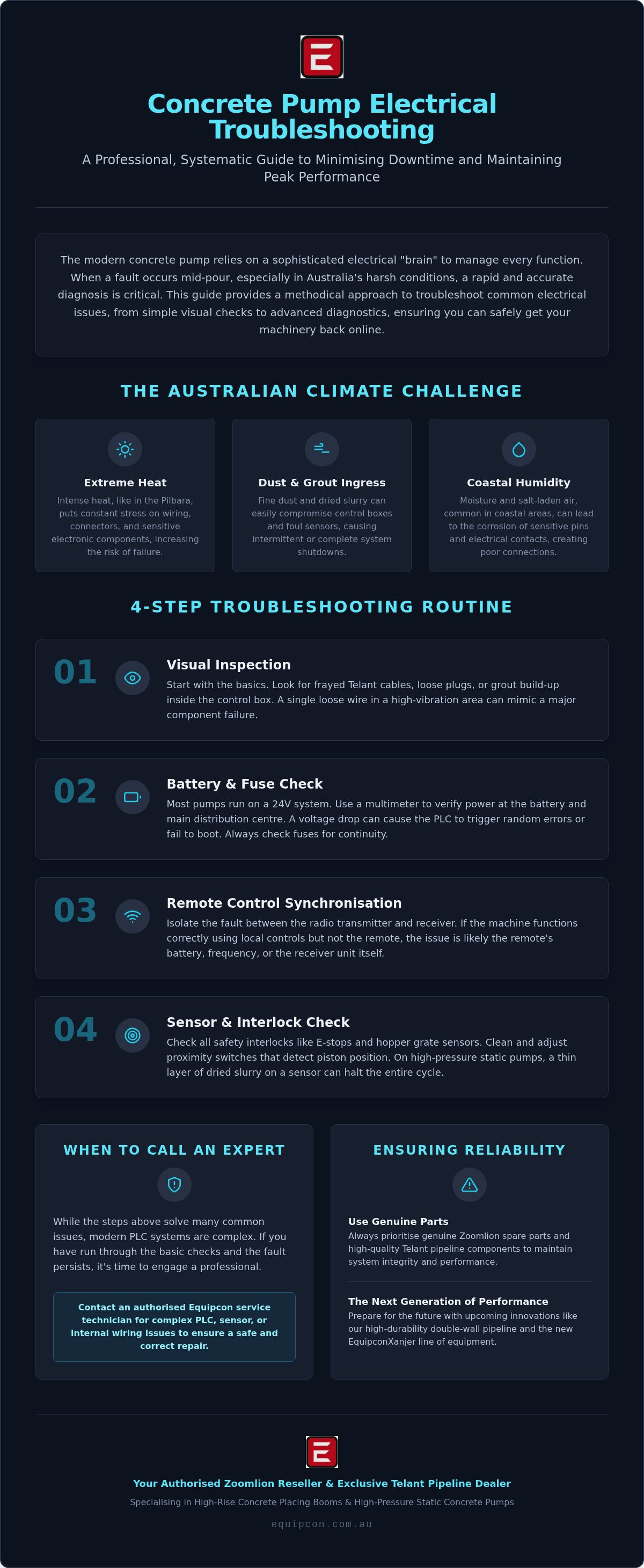
Successful concrete pump electrical system troubleshooting follows a logical path of elimination. Before pulling apart complex PLC modules, start with the physical basics that often fail under the vibration and heat of a standard pour. We recommend following these four steps to isolate the fault quickly.
Step 1: Visual Inspection. Look for frayed Telant cables, loose plugs, or grout ingress in the control box. A single loose wire in a high-vibration area can mimic a major component failure.
Step 2: Battery and Fuse Check. Use a multimeter to verify power at the main distribution centre. When testing live circuits, always adhere to heavy vehicle electrical safety standards to mitigate the risk of arc flash or accidental discharge.
Step 3: Remote Control Synchronisation. Determine if the fault lies in the radio transmitter or the receiver unit. If the machine functions perfectly on local control, your issue is likely within the remote's frequency or battery.
Step 4: Sensor Alignment. Clean and adjust the proximity switches that detect piston position. On high-pressure static pumps, even a thin layer of dried slurry on a sensor face can halt the entire pumping cycle.
Diagnosing Solenoid and Valve Issues
If a specific hydraulic function fails to trigger, try to manually override the solenoid. If the pump moves during this manual test, you have confirmed the mechanical side is sound and the failure is electrical. Watch for signs of a burnt-out coil, such as a distinct acrid smell, discolouration of the housing, or a lack of magnetic pull when the system is energised. If you find a faulty component, ensure you replace it with genuine Zoomlion parts to maintain system integrity.
Remote Control and Cable Troubleshooting
Test the 'Local' vs 'Remote' switch to isolate control panel faults. Australian job sites are increasingly crowded with radio interference, which can occasionally drop the link to your Zoomlion remote. If re-pairing the transmitter doesn't solve the issue, inspect the receiver antenna for damage. For persistent electrical gremlins that defy basic checks, our specialists offer comprehensive concrete pump repairs across our national service network to get you back to the pour.
Advanced Diagnostics and Professional Repair Solutions
There comes a point where on-site "quick fixes" reach their limit. While it's tempting to bridge a sensor or bypass a safety circuit just to finish a pour, these actions carry extreme risks. Bypassing interlocks can lead to catastrophic mechanical failure or severe injury, often voiding your machinery's warranty in the process. If your initial concrete pump electrical system troubleshooting doesn't resolve the issue, it's time to leverage the built-in intelligence of your machine.
Modern Zoomlion pumps are equipped with sophisticated on-board diagnostic screens. These interfaces provide specific error codes that pinpoint faults in the PLC or the sensor network. Interpreting these codes accurately allows for a surgical repair rather than a "parts cannon" approach. To maintain the integrity of your electrical loom, always insist on genuine Zoomlion spare parts. Non-genuine components often lack the precise resistance or shielding required for the high-pressure pumping environments found on Australian sites.
The Equipcon Advantage in Machinery Support
When you face complex PLC programming issues or require a full electrical overhaul, Equipcon’s national network is ready to assist. We operate specialised service depots in Victoria, South Australia, Western Australia, and Queensland. Our technicians are deeply familiar with the nuances of high-rise placing booms and high-pressure static pumps. We're also building anticipation for the upcoming EquipconXanjer launch. This new line will bring next-generation electrical reliability to Australian contractors, complementing our existing range of Telant pipeline and double-wall pipeline solutions.
Preventative Maintenance for Electrical Longevity
Reliability is built through consistency. Implement a daily cleaning routine for all sensors and connectors to prevent grout-induced short circuits. Moisture and slurry are the primary enemies of your pump's wiring. We recommend organising annual electrical inspections as part of your professional concrete pump maintenance. This proactive approach identifies frayed insulation or corroded pins before they cause a breakdown mid-pour. Our team is here to support you through the entire lifecycle of your equipment, ensuring your fleet stays ready for the next big project.
Secure Your Project’s Success Through Electrical Reliability
Mastering a systematic approach to concrete pump electrical system troubleshooting is the best way to protect your site from the high costs of unexpected downtime. By prioritising methodical visual checks and verifying power supply basics, you can resolve most common faults before they escalate. It's about knowing when a quick fix will suffice and when the complexity of a modern PLC system requires professional intervention to maintain safety and performance standards.
Equipcon stands as your dedicated partner in this process. As an authorised Zoomlion Reseller and Service Partner, we provide the genuine parts and technical expertise needed to keep your high-pressure pumps and placing booms at peak performance. From our exclusive Telant Pipeline range to the highly anticipated EquipconXanjer launch, we are committed to bringing the world's best pumping technology to Australian contractors. If a fault persists or you want to schedule a preventative overhaul, we invite you to book a professional electrical diagnostic at your nearest Equipcon depot. Let's work together to keep your concrete flowing and your projects on schedule.
Frequently Asked Questions
What should I do if my concrete pump remote control stops responding mid-pour?
Switch the machine to the local control panel immediately to finish the current stroke and prevent concrete from setting in the pipeline. Once the immediate risk of a blockage is managed, check the transmitter batteries and ensure the aerial is secure and undamaged. If the pump operates perfectly in local mode but ignores the remote, the fault is isolated to the radio transmitter, the receiver unit, or local frequency interference.
How do I know if a proximity sensor is faulty or just dirty?
Clean the sensor face thoroughly with a damp rag to remove any grout, slurry, or dust build-up before testing. Most proximity sensors on Zoomlion machinery feature an integrated LED that lights up when the piston passes; if this light doesn't trigger after cleaning, check the physical alignment and the cable connection. If the sensor is clean and correctly aligned but fails to signal the PLC, the internal component has likely failed and requires replacement.
Can I bypass an emergency stop switch to finish a job safely?
No, you must never bypass an emergency stop switch or any safety interlock, as this creates a severe risk of injury and violates Australian WHS regulations. Bypassing these systems can lead to catastrophic mechanical failure and leaves the operator with no way to halt the machine in a crisis. If an E-stop is faulty, it's vital to replace it with a genuine part from our inventory to ensure the machine remains compliant and safe for your crew.
Why does my pump cycle correctly in 'Manual' but not in 'Automatic' mode?
This issue typically indicates that the PLC isn't receiving the necessary feedback from the proximity sensors to trigger the next part of the cycle. In manual mode, you are bypassing the automated timing, but automatic operation relies on the sensors to confirm the piston position. This is a classic scenario in concrete pump electrical system troubleshooting that often requires checking sensor gaps or inspecting the wiring loom for intermittent signal loss.


Comments