
Common Concrete Pump Problems and Solutions: A Professional Guide
Updated: Jul 29
You’re halfway through a critical pour on a sweltering Tuesday when the pressure gauge dips and the delivery line suddenly goes stiff. It’s the sound every site manager dreads: total silence from the pump and the ticking clock of a transit mixer waiting to discharge. We understand that unexpected downtime isn't just a minor inconvenience; it’s a direct hit to your project budget and a serious safety concern for everyone on-site.
In this guide, we’ll explore the most common concrete pump problems and solutions to help you troubleshoot issues the moment they arise. You’ll learn how to identify the root causes of pump failure, implement safe on-site fixes, and establish a maintenance routine that keeps your machinery in top nick. From managing high-pressure blockages to sourcing the right spare parts, our goal is to provide the professional insight you need to reduce long-term operational stress and keep your site running smoothly. By staying proactive and following modern safety standards, you can ensure your equipment remains a reliable asset rather than a liability.
Table of Contents
Identifying the Root Causes of Concrete Pumping Failures
In the Australian construction industry, downtime is a budget-killer. When a pump fails on a major infrastructure project in Melbourne or a residential pour in Perth, the costs ripple through the entire schedule. It isn't just about the idle machinery; you’re paying for waiting transit mixers, frustrated labour crews, and the potential for cold joints in your structure. Understanding common concrete pump problems and solutions starts with looking at the root causes before the first drop of slurry hits the hopper.
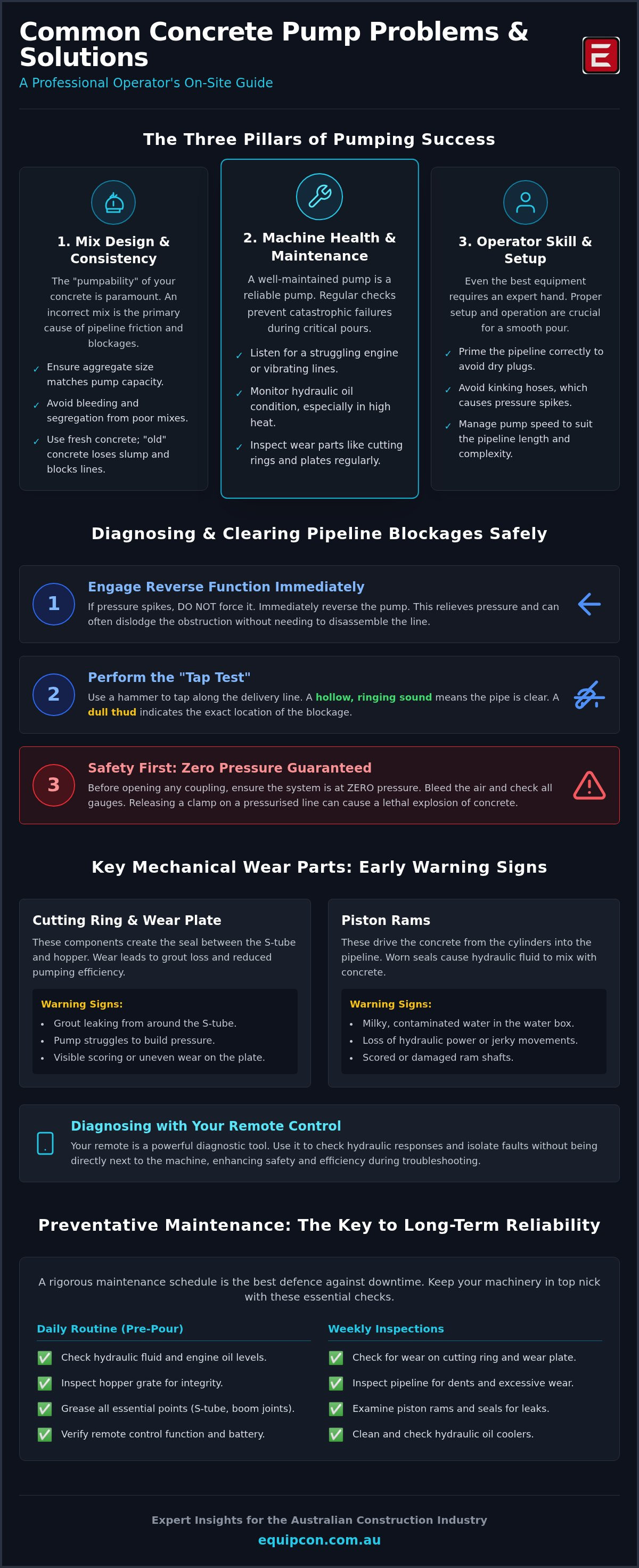
Reliable pumping is a synergy between three critical pillars: mix design, machine health, and operator skill. If any of these are out of balance, the system fails. For those looking for a foundational Concrete pump overview, it's clear that these machines are engineered for precision, but they aren't magic. They require specific conditions to function. Environmental factors play a massive role here too. On a 40-degree summer day in Western Sydney, concrete sets faster and hydraulic oil thins out, increasing the risk of internal component wear and flash-setting in the pipeline. Recognising these early warning signs, like a struggling engine note or a vibrating delivery line, can save you from a total system shutdown.
Mix Design and Material Consistency
The "pumpability" of concrete is often overlooked until the line blocks. If the mix isn't right, you’ll see bleeding or segregation, where water and cement paste separate from the aggregate. This leads to massive pipeline friction. Your aggregate size must match your pump’s cylinder capacity; trying to push 40mm stone through a system designed for 20mm is a recipe for disaster. Additionally, "old" concrete left sitting in the hopper during a long break will lose its slump and lead to immediate blockages the moment you try to restart the flow.
Operator Errors and Site Setup
Even the best mix won't save a poor site setup. Operator errors, such as improper hose handling that leads to kinking, create massive pressure spikes that can blow a coupling. Priming is another flashpoint. If an operator doesn't use enough priming slurry or rushes the process, the dry pipeline will suck the moisture out of the first few metres of concrete, creating a solid plug. Success requires managing the pump speed in relation to the pipeline length. Pushing too hard and too fast through a long, complex run of high-quality pipeline can cause the mix to pack under pressure rather than flow smoothly.
Diagnosing and Clearing Concrete Pump Blockages
Finding a blockage in the middle of a pour is a test of patience and safety. If you’re facing a sudden spike in pressure, your first instinct might be to push through it. Don't. Forcing the pump against a solid plug is one of the most dangerous common concrete pump problems and solutions you'll encounter on-site. Instead, immediately engage the reverse function. This pulls the concrete back toward the hopper, relieving the internal pressure and often loosening the obstruction enough to clear it without disassembling the line.
To find the exact spot of the plug, use the "tap test". Take a small hammer or a heavy spanner and walk the delivery line, tapping each section of the pipe. A hollow, ringing sound indicates an air pocket or a clear pipe, while a dull, heavy thud reveals where the concrete has packed tight. Safety is paramount here. According to OSHA equipment requirements, discharge pipes must be properly supported to handle 100% overload, and fail-safe connectors should be used to prevent catastrophic failure under pressure. If you can't clear the line after a few reverse cycles, it’s time to stop and consider professional concrete pump repair services to avoid damaging your hydraulics.
The Safe Blockage Removal Process
Once you’ve identified the blocked section, you must ensure the system is at zero internal pressure before cracking a single coupling. Bleed the air and double-check the gauges. If the line is still under tension, concrete can explode out with lethal force the moment the clamp is released. After safely removing the plug, use washout balls or sponge balls to purge the remaining material. This ensures the internal walls are clean and ready for a fresh start. It’s a methodical process that rewards patience over haste.
Preventing Recurring Pipeline Issues
Recurring blockages are rarely bad luck; they’re usually a sign of hardware fatigue. Check your concrete pump pipeline accessories for signs of internal wear. Worn elbow pipes and reducers create rough internal surfaces that increase flow resistance and encourage aggregate to "nest". Ensure every gasket is in good condition and every coupling is airtight. Even a tiny grout leak can cause the mix to dehydrate and pack. For long-term peace of mind, investing in high quality pipeline and accessories ensures your setup remains ready for the most demanding pours.
Mechanical and Hydraulic Component Failures
While blockages are visible and immediate, many common concrete pump problems and solutions involve the internal mechanical heart of the machine. If your pump is struggling to maintain a steady flow or if you’ve noticed a decrease in discharge volume, the issue likely lies within the wear components or the hydraulic circuit. These failures don't just happen; they’re often the result of thousands of cubic metres of abrasive material grinding away at precision-engineered seals. Ignoring these signals leads to grout loss, which eventually causes the very pipeline blockages we discussed in the previous section.
The S-valve is the gatekeeper of your pump's performance. Its job is to maintain a high-pressure seal as it shifts between cylinders. If the seal is compromised, you’ll lose the "cream" of the concrete, leaving a dry, unpumpable mass of aggregate behind. This is why monitoring the internal health of your machine is just as vital as managing the mix on-site. When the mechanical integrity of the pump fails, even the most experienced operator will struggle to deliver a clean finish.
Wear Parts: The Silent Efficiency Killers
The gap between your wear plate and the cutting ring is the most critical measurement in your hopper. As these parts wear down, the gap widens, allowing grout to escape back into the hopper instead of being pushed through the line. You can spot this early by checking for "blow-by" in the water box. If the water becomes contaminated with slurry quickly, your piston seals are likely shot. To keep your fleet in top nick, we always recommend using genuine concrete pump spare parts Australia. Cheap aftermarket alternatives often lack the metallurgical hardness required for the harsh Australian sun and our specific high-silica sand mixes, leading to premature failure and more frequent downtime.
Hydraulic System Troubleshooting
Hydraulic efficiency is the backbone of consistent pumping. If you notice irregular cylinder movement or "jerky" boom operation, it’s a clear sign that your hydraulic pump or control valves are under stress. Often, this is caused by contaminated oil or a clogged filter, which restricts the flow needed for smooth operation. If you notice a significant drop in pressure despite a perfect mix, your concrete pump piston rams may be reaching the end of their service life. Regular inspections of hoses and fittings for leaks or external damage are essential. A small hydraulic leak is more than just a mess on the slab; it’s a loss of precision that can make a complex pour feel like a battle. Keeping these systems clean and well-maintained ensures your machinery responds exactly when you need it most.
The Operator’s Diagnostic Framework: Safety and Solutions
When dealing with common concrete pump problems and solutions, the operator is the first line of defence. A skilled operator doesn't just wait for a machine to stop; they use a "Look, Listen, Feel" approach to catch issues before they escalate into expensive downtime. You might notice a subtle change in the engine’s pitch when the hopper is struggling with a stiff mix, or feel an unusual vibration in the placing boom that suggests a hydraulic fluctuation. These sensory cues are your earliest warnings. Maintaining a detailed site log of these observations helps track equipment performance over time, making it much easier to spot a developing fault before it leads to a total system failure.
Modern machinery provides even more precision through digital interfaces. Your concrete pump remote control box is a sophisticated diagnostic tool that offers real-time feedback on the pump’s internal health. By interpreting error codes and monitoring pressure levels from the palm of your hand, you can pinpoint whether a loss of flow is a mechanical glitch or a material issue. However, no amount of technology replaces a clean machine. Keeping the hopper and S-valve area free of dried concrete is essential for a clear visual inspection of the wear parts we discussed earlier.
Pressure Relief and LOTO Procedures
Safety is non-negotiable on an Australian job site. Before you even think about opening a pipeline or inspecting the water box, you must ensure the system is completely "dead". This means discharging the accumulator to relieve all stored hydraulic pressure. For sites with multiple operators or maintenance crews, implementing strict Lock Out / Tag Out (LOTO) procedures is vital. Never assume a machine is safe just because the engine is off. Always verify that all safety pins and mechanical locks are engaged on placing booms to prevent accidental movement during your inspection.
Diagnostic Tools and Precision
Pressure gauges are your best friend when troubleshooting. A high hydraulic pressure reading combined with zero concrete flow usually points to a pipeline blockage, whereas low hydraulic pressure often indicates a pump or valve failure. Using these readings allows you to differentiate between hydraulic and material issues quickly. If your remote control displays an error code you don't recognise, don't guess the fix. Consult your manual or contact a specialist to avoid making a minor electrical fault worse. For expert assistance with complex faults, our team provides comprehensive professional concrete pump repairs to get your fleet back in action with minimal fuss.
Preventative Maintenance: The Key to Long-Term Reliability
Reliability on a job site isn't a matter of luck; it’s the direct result of a steady, methodical maintenance routine. While we’ve covered the most common concrete pump problems and solutions for on-site emergencies, the real secret to profitability is ensuring those emergencies never happen. Regular greasing of every moving mechanical joint is your first line of defence. It keeps the abrasive concrete slurry from grinding away at your S-valve pivot and agitator bearings, extending the life of your high-wear components significantly. Don't skip the grease; it’s the cheapest insurance policy you’ll ever buy.
Scheduled Maintenance Tasks
A structured checklist is the only way to ensure nothing slips through the cracks during a busy week. Staying ahead of common concrete pump problems and solutions through scheduled care ensures your equipment stays in top nick for every pour.
Daily: Check hydraulic oil levels, monitor the clarity of the water box, and walk the pipeline to ensure every coupling is secure.
Weekly: Measure the gap between your wear plate and cutting ring. Flush the hydraulic system if you’ve been working in dusty or high-heat environments.
Monthly: Conduct a full structural inspection of placing booms and outriggers, looking for hairline cracks or hydraulic hose fatigue.
For older machinery in your fleet, professional overhaul services are a strategic investment rather than a cost. A complete system refresh can restore the pressure and precision of a new machine, making it a far more economical choice than a total replacement. It’s about keeping your assets on the road and out of the workshop during peak periods.
Building a Partnership for Uptime
You don't have to manage the lifecycle of your machinery alone. Whether you’re operating in the suburbs of Melbourne, the heat of Queensland, or the remote sites of Western Australia, having a reliable specialist in your corner makes all the difference. Equipcon provides national support through service depots in VIC, SA, WA, and QLD, ensuring you have access to genuine spare parts and expert technical advice whenever a challenge arises. We understand the "boots-on-the-ground" reality of the industry and prioritise your project’s functional success.
We pride ourselves on being more than just a storefront; we’re an attentive partner invested in your long-term PROJECT health. From mobile pump repairs to stationary pump overhauls, our turnkey solutions are designed to reduce your operational stress and keep your business moving forward. It’s about establishing a relationship that supports you from initial inquiry through to years of reliable pumping. Organise your professional pump service with Equipcon today and see the difference that expert maintenance makes to your bottom line.
Maximising Uptime for Your Next Big Pour
Mastering the common concrete pump problems and solutions we've discussed is the most effective way to protect your project’s bottom line and your crew’s safety. By balancing precise mix design with a rigorous "Look, Listen, Feel" diagnostic approach, you can catch mechanical wear before it turns into a costly site stoppage. Reliability is always built on the basics: discharging pressure safely, keeping the hopper clean, and never skipping a scheduled grease interval.
Whether you’re troubleshooting a stubborn blockage or planning a major hydraulic overhaul, you don't have to go it alone. As Australia’s leading supplier of Zoomlion machinery and high-quality wear parts, we’re here to act as your attentive partner through every stage of the equipment lifecycle. Our national service network across VIC, SA, WA, and QLD is staffed by specialised hydraulic repair experts ready to provide the turnkey support you need to stay productive.
Ready to secure your fleet’s future? Browse Genuine Concrete Pump Spare Parts and Repair Services to keep your site running like clockwork. With the right parts and a proactive mindset, there’s no project too complex to handle with confidence.
Frequently Asked Questions
How do I know if a blockage is in the pump or the pipeline?
Check your hydraulic pressure gauge while attempting to pump. If the pressure spikes to the maximum relief setting but no concrete moves, the blockage is situated in the delivery line. If the hydraulic pressure remains unusually low while the pump cycles weakly, the issue is likely internal, such as a worn S-valve or failing piston seals that can no longer maintain a proper vacuum.
What is the most common cause of concrete pump blockages in Australia?
Poor mix design, specifically "bleeding" where water separates from the aggregate under pressure, is the leading cause on local sites. In the harsh Australian heat, concrete can also flash-set in the pipeline if it sits idle for too long without movement. Managing these common concrete pump problems and solutions requires ensuring your mix has the correct slump and aggregate grading for your specific machine capacity.
Is it safe to clear a concrete pump blockage with high pressure?
No, attempting to "blow out" a blockage using maximum pump pressure is extremely dangerous and can lead to catastrophic pipeline failure or burst couplings. You should always engage the reverse function first to relieve internal tension and pull the material back toward the hopper. If the "tap test" confirms a solid plug that won't budge after several reverse cycles, you must safely disassemble the line at zero pressure.
How often should I replace concrete pump wear plates and rings?
You should replace these components when the gap between them exceeds the manufacturer's specific tolerance, which is typically between 1mm and 2mm. While service life varies based on the abrasiveness of your local sand and aggregate, regular inspections of the water box for grout "blow-by" will tell you exactly when the seals are failing. Keeping these parts in top nick prevents grout loss and pipeline blockages.
Why is my concrete pump losing hydraulic pressure during a pour?
Internal leakage within the hydraulic pump or a faulty main relief valve are the most frequent culprits for a sudden pressure drop. It can also be caused by contaminated hydraulic oil or a clogged suction filter restricting the necessary flow. If the pressure loss is accompanied by jerky boom movement, it's a clear sign that your hydraulic system requires a professional diagnostic check to prevent a total breakdown mid-pour.
Can I use any hydraulic oil for my concrete pump repairs?
No, you must use the specific grade and viscosity recommended by the equipment manufacturer, usually an ISO 46 or 68 anti-wear hydraulic oil. Using the wrong oil can lead to overheating, poor lubrication of precision components, and premature seal failure. Always stick to high-quality fluids to ensure your pump maintains its performance under heavy load and the high ambient temperatures common across Australia.
What should I do if the concrete pump remote control stops responding?
Switch immediately to the manual local controls on the side of the pump to safely finish the current stroke and discharge the hopper. Check the battery levels first or inspect the cable connections if you’re using a tethered remote. If the error persists, inspect the receiver box for moisture ingress or loose wiring, as these are frequent electrical faults on busy, vibrating construction sites.
How can I prevent concrete from setting in the pipeline during a delay?
Cycle the pump for a few strokes every 5 to 10 minutes to keep the material moving and prevent the aggregate from settling into a solid mass. If the delay is expected to last longer than 20 minutes in hot weather, it's safer to wash out the line completely. Keeping the pipeline out of direct sunlight or covering it with wet hessian can also help maintain the mix temperature during summer.


Comments