
Common Concrete Pump Failures: A Professional Australian Guide to Prevention
With 82 workplace fatalities recorded across the Australian construction industry in 2023 and 2024, the stakes for onsite safety have never been higher. Many of these incidents, alongside the high cost of emergency repairs, often stem from common concrete pump failures that are entirely preventable. We know there is nothing more stressful than a high-pressure line failing mid-pour, leaving your crew idle and your project budget in the red. You need equipment that stays reliable under pressure so you can focus on the job at hand.
This guide identifies the root causes of machinery downtime and provides expert strategies to keep your equipment in top nick. We will examine the latest preventative measures, from hydraulic inspections to the benefits of the Telant Pipeline, helping you achieve zero unplanned downtime while staying compliant with the updated 2026 Australian safety standards.
Table of Contents
The Most Frequent Pipeline and Pumping Failures on Site
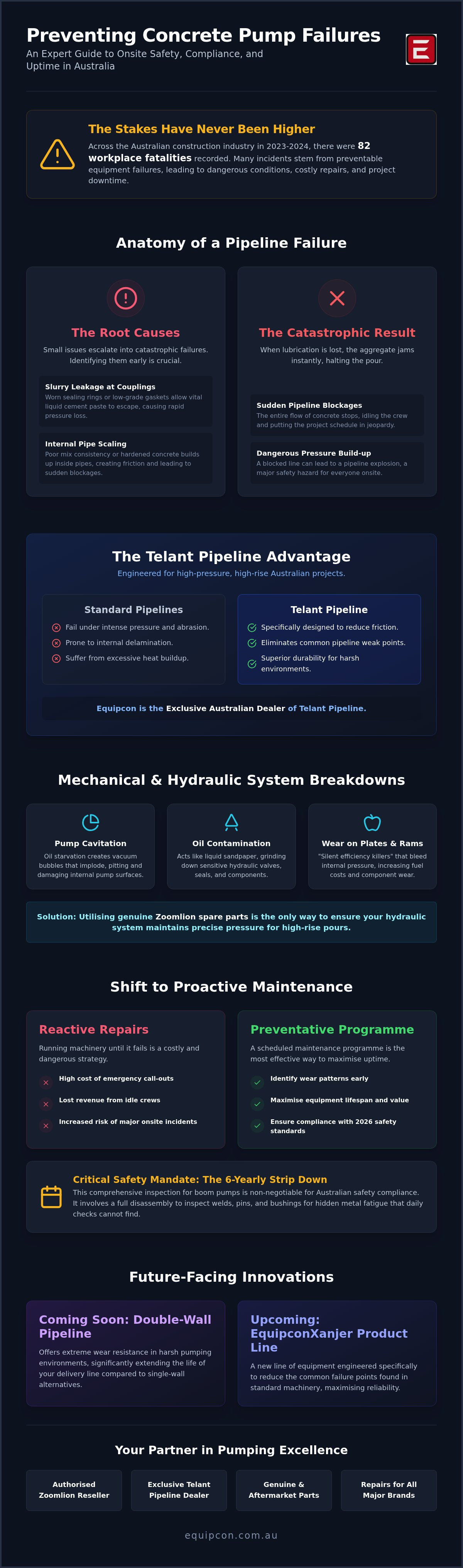
Identifying common concrete pump failures often starts with the mix itself. Poor consistency or internal pipe scaling creates unnecessary friction that leads to sudden, stubborn blockages. Slurry leakage is the precursor to most catastrophic pipeline blockages; it happens when the vital liquid cement paste escapes through small gaps in the line. Once this lubrication is lost, the remaining aggregate settles and jams the flow almost instantly.
When slurry leaks at couplings, you face rapid pressure loss that can halt a pour in seconds. This failure usually results from worn sealing rings or low-grade gaskets that can't handle the force of a modernconcrete pump. Ensuring your team uses high-quality pipe gaskets is a simple, effective way to prevent these common concrete pump failures before they result in a dangerous pipeline explosion. Neglecting these small components often leads to total line failure during critical stages of a project.
Pipeline Integrity and the Telant Advantage
Standard pipelines often fail under the intense pressure of Australian projects. They simply aren't built for the constant abrasive force, which leads to internal delamination and excessive heat buildup. As the exclusive dealer of Telant Pipeline, we provide a system specifically designed to reduce friction and eliminate these common weak points. If you're currently facing a jam on site, our professional guide ontroubleshooting concrete pump pipeline blockagesoffers practical on-site clearing techniques to get your crew moving again. Looking ahead, our upcoming double-wall pipeline will offer even greater wear resistance for the harshest pumping environments.
Mechanical Stress and Hydraulic System Breakdowns
Hydraulic systems provide the necessary muscle for high-pressure pumping, yet they remain vulnerable to common concrete pump failures like pump cavitation and oil contamination. Cavitation occurs when the pump is starved of oil, creating vacuum bubbles that implode and pit internal surfaces. Similarly, contaminated hydraulic oil acts like liquid sandpaper, grinding down sensitive valves and seals. Utilising genuine Zoomlion spare parts is the only way to ensure your hydraulic system maintains the precise pressure required for your pours.
Keep a close eye on your piston rams. Signs of failure include surging delivery or slurry bypassing the seals, which directly impacts the smooth flow of concrete. Wear plates and rings are often "silent efficiency killers" because they allow internal pressure to bleed off gradually. If these aren't replaced according to manufacturer specs, your pump will work harder for less output, increasing fuel costs and wear. If you're noticing a drop in performance, our team providesexpert concrete pump repairsfor all major brands.
The Critical 6-Yearly Strip Down for Boom Pumps
For boom pumps, a 6-yearly strip down is vital for structural integrity and maintaining Australian safety compliance. This process involves disassembling the unit to inspect boom welds, pins, and bushings for hidden fatigue that standard daily checks simply cannot find. Given that metal fatigue was a factor in a fatal 2021 boom collapse, these major inspections are non-negotiable for site safety. You can find more details on managing these risks in our guide tocommon concrete pump problems and solutions.
Optimising Performance Through Professional Maintenance and Parts
Transitioning from reactive repairs to a scheduled preventative maintenance programme is the most effective way to maximise uptime. Running machinery until it stops often leads to common concrete pump failures that could have been caught during a routine service. By identifying wear patterns early, you avoid the high cost of emergency call-outs and the lost revenue associated with idle crews.
We continue to innovate to meet the rigorous demands of high-pressure Australian sites. Our new double-wall pipeline offers extreme wear resistance in harsh environments, significantly extending the life of your delivery line compared to single-wall alternatives. Looking ahead, the upcoming EquipconXanjer product line is engineered specifically to reduce common failure points found in standard machinery. Our national service network ensures that whether you are operating a Zoomlion or another major brand, you have access to professional repairs that keep your project on track.
Sourcing Quality Concrete Pump Spare Parts in Australia
There is a massive difference between a part that simply 'fits' and one that 'performs' under pressure. Aftermarket components often lack the metallurgical integrity of genuine spare parts, leading to premature failure during high-volume pours. You can use ourconcrete pump spare parts australiareference guide to identify the critical inventory your fleet needs to stay operational.
Enquire about our national repair services and Zoomlion parts todayto secure your machinery's future and maintain your professional edge on site.
Secure Your Project Uptime with Proactive Support
Preventing common concrete pump failures requires a shift from reactive fixes to a disciplined, scheduled maintenance programme. High-quality components like the Telant Pipeline make a real difference on site. By adhering to 6-yearly strip downs, you protect your crew and your project timelines. Reliability on a high-pressure site isn't just about the machinery; it's about the seasoned partnership and technical support behind it. As an Authorised Zoomlion Reseller and exclusive Telant Pipeline dealer, we operate specialised service depots nationwide to keep your equipment in top nick. We are ready to assist with everything from the upcoming EquipconXanjer line to immediate repairs.
**Contact Equipcon for Professional Concrete Pump Repairs and Genuine Zoomlion Parts**and let's ensure your next pour is your most efficient yet.
Frequently Asked Questions
How can I prevent concrete pump blockages during a high-pressure pour?
You prevent blockages by ensuring a consistent mix design and maintaining airtight pipeline connections. Slurry leakage is often the root cause; once the lubricating paste escapes through a poor coupling, a jam is inevitable. Using the Telant Pipeline system significantly reduces internal friction. This prevents the heat buildup that often leads to premature setting and subsequent blockages during high-pressure operations.
What are the early warning signs of hydraulic pump failure in a concrete pump?
Early warning signs include unusual knocking noises known as cavitation, increased hydraulic oil temperatures, and jerky movement in the boom or cylinders. These symptoms suggest that the system is struggling to maintain pressure or is being damaged by contaminated fluid. Replacing worn components with genuine Zoomlion spare parts ensures your hydraulic system remains efficient and prevents a total mechanical breakdown mid-pour.
Why is the 6-yearly strip down mandatory for concrete boom pumps in Australia?
The 6-yearly strip down is mandatory under Australian Standard AS 2550.15:2019 to identify hidden structural issues like metal fatigue and internal corrosion. Standard daily inspections cannot detect cracks in king posts or pins that often lead to catastrophic boom failures. Completing this major inspection through our national service network ensures your equipment remains compliant with the latest 2026 safety regulations and site requirements.
How does a double-wall pipeline reduce common pumping failures?
A double-wall pipeline reduces common concrete pump failures by providing a secondary layer of protection against abrasive wear. While the outer shell provides structural strength, the hardened inner sleeve handles the constant friction of high-volume concrete. This design prevents the internal delamination and thinning that typically lead to high-pressure line explosions. It's an essential upgrade for contractors working in extreme or high-rise environments.


Comments