

What’s Involved in a 10-Year Boom Inspection? A Practical Guide
What if the biggest disruption from a 10-year boom inspection isn’t the inspection itself, but not knowing what to prepare for? The scope can vary with the boom, its history and applicable guidance, so planning ahead helps you organise records, arrange access and prepare for possible follow-up work.
If you’re asking what’s involved in a 10-year boom inspection, this guide covers the typical assessment process, the records to gather and how to turn findings into a practical action plan. It also explains the difference between an inspection, repairs and a major strip-down. The scope depends on the boom and the relevant guidance, so the 10-year milestone does not automatically mean every boom needs the same work. Equipcon specialises in high-rise concrete placing booms and high-pressure static concrete pumps, and supports equipment owners with parts, repairs and service for all major concrete pump brands.
What a 10-year concrete boom inspection is designed to establish
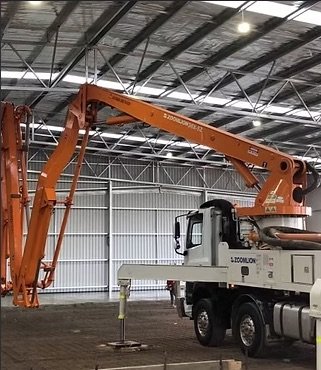
A 10-year concrete boom inspection is a detailed condition assessment intended to help establish the boom’s structural and operational condition at a significant point in its service life. It isn’t a single, universal checklist. The scope can depend on the boom’s configuration, service history, previous findings and the guidance that applies to the equipment.
An inspection assesses condition and records findings. Maintenance is planned work to keep equipment in serviceable condition, while repairs address identified faults or damage. An inspection may lead to maintenance or repairs, but it isn’t automatically either of those. The 10-year milestone alone does not mean every boom requires the same major strip-down.
So, what's involved in a 10-year boom inspection depends on what needs to be assessed and the applicable guidance. General information on crane mechanics and international safety standards can provide broader context, but it shouldn’t be treated as a specification for inspecting a concrete placing boom.
Which boom details shape the inspection scope?
The boom’s configuration, service history and previous inspection findings all help shape the assessment. These details give the qualified inspector context about the equipment and any issues that may warrant attention. Gather the manufacturer documentation and relevant records so the assessment is based on the equipment’s history as well as its current condition, rather than age alone.
Requirements can also vary with the boom type and operating jurisdiction. Use the guidance that applies to the equipment and its location; a requirement described for another boom or jurisdiction may not apply. Equipcon supports concrete placing booms with parts, repairs and service for all major concrete pump brands, helping owners plan practical follow-up once inspection findings are available.
How to prepare for a 10-year boom inspection
Organising the basics before the inspection makes it easier to provide useful information and can help avoid preventable delays. Gather the equipment records, arrange safe access to the boom, then write down known issues or operating concerns. Follow site procedures and the arrangements for preparing the equipment for inspection.
What records and equipment information should you have ready?
Bring together the information available for the specific boom. A clear equipment history helps the inspector interpret current findings, understand how the boom has been used and see whether any areas of concern have been recorded before.
Gather records: collect maintenance and service records, previous inspection reports, operating history and repair records.
Include changes: note documented repairs, component replacements or other changes, with dates and supporting paperwork where available.
Make it accessible: arrange a suitable work area and access to the equipment in line with site procedures and the inspection plan.
Document concerns: write down reported symptoms, such as unusual movement or a recurring operating issue. Describe what has been observed rather than presenting it as a confirmed defect.
For truck-mounted equipment, keep vehicle information separate from records about the placing boom. The NHVR’s National Heavy Vehicle Inspection Manual provides reference material for heavy vehicle inspections. It isn’t a substitute for boom-specific manufacturer documentation or qualified inspection guidance.
If you’re getting familiar with boom configurations, Equipcon’s guide to concrete placing booms for sale offers useful equipment context. For related parts and service support, explore Equipcon’s concrete pump support.
What happens after the inspection: findings, repairs and planning
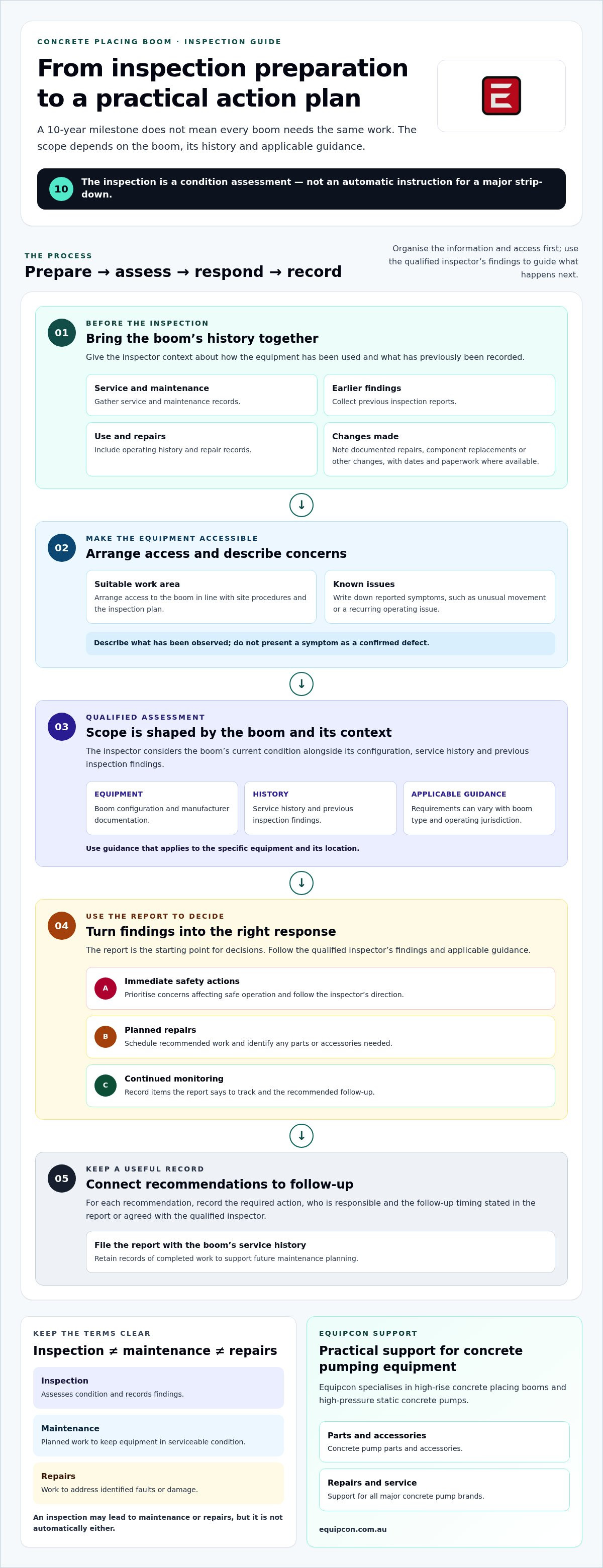
The report is the starting point for decisions, not a reason to assume every finding needs the same response. Use the qualified inspector’s findings and applicable guidance to determine whether the boom can continue operating, needs action before use or should be monitored. If the report identifies a concern affecting safe operation, make it an immediate priority and follow the inspector’s direction.
Turning inspection findings into a practical action plan
Record each recommendation so actions don’t get lost between the inspection and the next job. For every item, note the required action, who is responsible and the follow-up timing stated in the report or agreed with the qualified inspector. Group the actions into:
Immediate safety actions: address issues that require prompt attention, following the inspector’s instructions.
Planned repairs: schedule the work and identify any parts or accessories needed. If component replacement is recommended, the guide to concrete pump spare parts offers related information.
Continued monitoring: record items the report says to track, along with the recommended follow-up.
Keep the report with the boom’s service history and retain records of completed work. This gives you a useful reference for future maintenance planning and connects inspection findings to practical repair support. Equipcon supplies concrete pump parts and accessories, and provides repairs and service for all major concrete pump brands.
If you’re coordinating broader equipment planning alongside boom follow-up, Equipcon’s guide to high-pressure stationary pumps covers related pumping equipment. For parts and repair support, explore Equipcon’s concrete pump support.
Understanding what's involved in a 10-year boom inspection includes knowing how to act on the findings. A documented plan keeps recommendations visible and supports considered operating and maintenance decisions.
Plan your next steps with confidence
Understanding what's involved in a 10-year boom inspection means recognising that the scope depends on the boom, its history and applicable guidance. Prepare the relevant records, then use the qualified inspector’s findings to guide operating decisions and plan any safety actions, repairs or monitoring.
Equipcon specialises in high-rise concrete placing booms and high-pressure static concrete pumps, delivering industry-leading expertise across Australia. It also provides repairs and service for all major concrete pump brands through its national service depot network. Equipcon is the exclusive dealer of Telant Pipeline, with a double-wall pipeline introduction and the EquipconXanjer product line among its planned expansions.
Talk to Equipcon about boom parts, repairs and service support and take your next steps with confidence.
Frequently Asked Questions
What is involved in a 10-year boom inspection?
What’s involved in a 10-year boom inspection is a detailed condition assessment. Its scope depends on the boom’s configuration, service history, previous findings and applicable guidance. A qualified inspector assesses the equipment against relevant manufacturer documentation and guidance, then records findings and recommendations. The assessment doesn’t automatically mean the boom must be stripped down or repaired. Follow-up depends on what the inspection identifies.
Is a 10-year boom inspection mandatory in Australia?
There isn’t one blanket answer that applies to every concrete placing boom across Australia. Requirements may depend on the boom type, its operating jurisdiction and the guidance that applies to the equipment. Refer to the relevant manufacturer documentation and jurisdiction-specific requirements as part of qualified inspection planning. Don’t assume an inspection interval or legal obligation described for a different boom or location applies to yours.
What should I prepare before a boom inspection?
Gather the boom’s available service and maintenance records, previous inspection reports, operating history and repair records. Include documents about component replacements or other changes, plus a written note of reported symptoms or operating concerns. Arrange access to the equipment in line with site procedures and the inspection plan. Describe concerns as observations, rather than treating them as confirmed faults.
Can a boom keep operating after a 10-year inspection?
That depends on the inspection findings and applicable guidance. Follow the qualified inspector’s recommendations before making operating decisions. If the report calls for immediate safety action or further assessment, act on that direction. If it identifies repairs or monitoring, plan those steps and keep records. The boom’s age or completion of an inspection alone doesn’t establish whether it can return to operation.
Comments