

Concrete Pump for Shotcrete Applications: Choosing the Right System
What if the pump is only as suitable as the delivery line and mix it needs to move? Choosing a concrete pump for shotcrete applications means looking beyond pump output: the specified shotcrete method, mix and site layout all shape how the system needs to perform. Start by matching the equipment to the project requirements, rather than relying on a general label or a single output figure.
In wet-mix shotcrete, the pump moves the concrete through the delivery pipeline to the nozzle, where compressed air helps project it onto the surface. This article explains the pump’s role and the project details that guide equipment selection, including placement demands and pipeline configuration. Equipcon specialises in high-pressure static concrete pumps and is an authorised Zoomlion Reseller, as well as the exclusive dealer of Telant Pipeline. Equipcon is also preparing to introduce double-wall pipeline and the EquipconXanjer product line, alongside the parts, repairs and support that help keep a pumping system ready for work.
What does a concrete pump do in shotcrete applications?
Shotcrete is concrete or mortar conveyed through equipment and pneumatically projected onto a surface. In wet-mix placement, a concrete pump moves the prepared mixture through the delivery line to the nozzle, where compressed air helps propel it onto the work. The pump delivers the material; it doesn’t define the shotcrete method or the project requirements.
That distinction matters when specifying a concrete pump for shotcrete applications. The name alone won’t tell you whether a system suits the specified mix, placement method or delivery route. Use the project documents and equipment information to identify those requirements before comparing options. For a general overview of shotcrete and its applications, see Shotcrete.
How dry-mix and wet-mix shotcrete differ
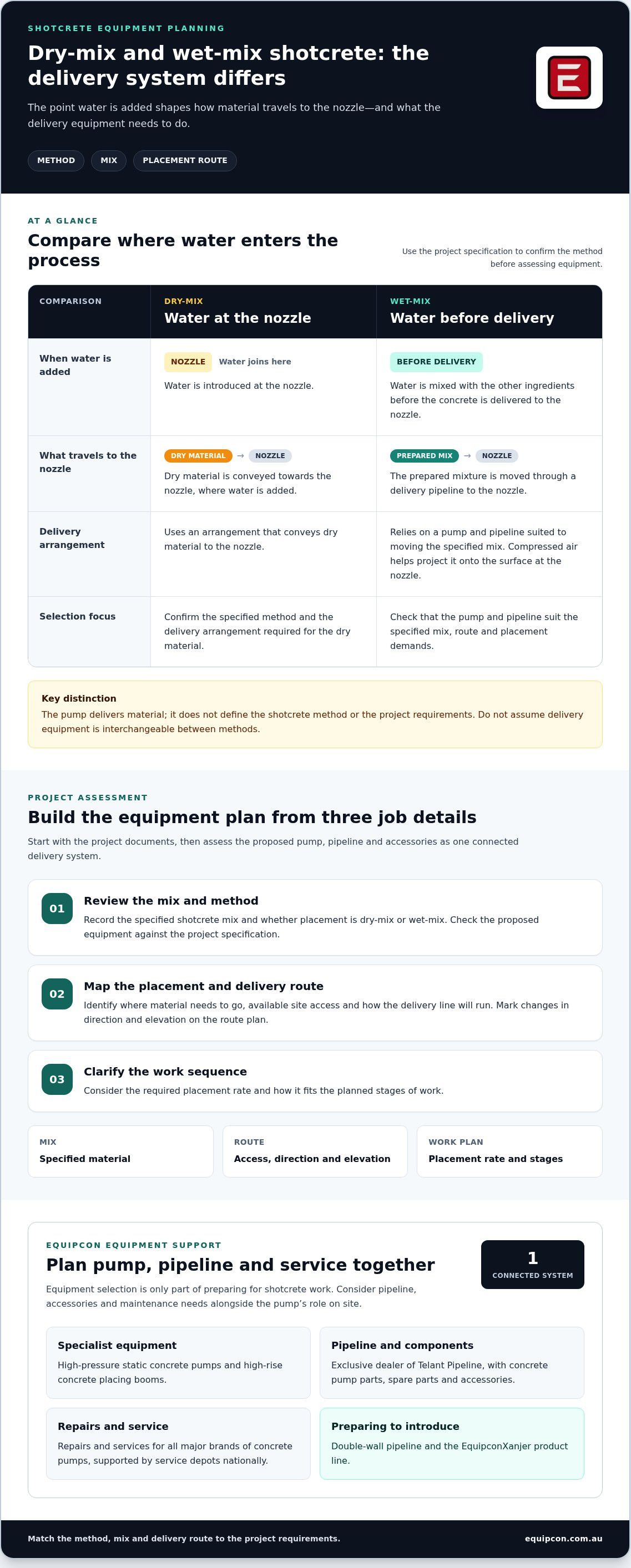
The key difference is when water is added. In dry-mix shotcrete, dry material is conveyed towards the nozzle and water is introduced there. In wet-mix shotcrete, water is mixed with the other ingredients before the concrete is delivered to the nozzle.
Dry-mix shotcrete receives its water at the nozzle, while wet-mix shotcrete is mixed with water before delivery.
Because the processes handle material differently, their delivery equipment isn’t interchangeable by assumption. Wet-mix placement relies on a pump and pipeline suited to moving the specified mix; dry-mix placement uses a delivery arrangement that conveys the dry material to the nozzle. In either case, align the method, mix and equipment requirements with the project specification. This gives equipment selection a practical starting point before you assess the proposed system’s output and layout against the work.
How to assess a concrete pump for your shotcrete project
Start with the project documents, then compare the specified method and placement demands with the proposed equipment. A concrete pump for shotcrete applications can’t be selected by a generic label or an assumed output figure. Suitability depends on the mix, delivery route and work sequence set out for the job. Use the equipment documentation to assess the system against those requirements.
Review the mix and method. Note the specified shotcrete mix and whether placement is dry-mix or wet-mix.
Map the placement. Identify where material needs to go, what site access is available and how the delivery line will run. Mark changes in direction and elevation on the route plan.
Clarify the work sequence. Consider the required placement rate and how it fits the planned stages of work.
Which project details shape pump and pipeline selection?
Record the mix, placement location and proposed delivery-line route together. Access constraints and changes in elevation or direction can affect how the line is arranged, while the work sequence and required placement rate help frame equipment discussions. For context on stationary systems, Equipcon’s stationary concrete pump guide explains their role in high-pressure pumping. Planning the route carefully also helps teams consider blockage risks and responses, covered in the pipeline blockage troubleshooting guide.
Assess the pump, pipeline and accessories as one delivery system, not as separate purchases. Check that the proposed setup aligns with the project specification, including the mix and route. Equipcon’s concrete pump and pipeline options can help frame the equipment discussion around the job’s requirements.
Equipcon’s shotcrete equipment support: pumps, pipeline and service
Choosing a suitable concrete pump for shotcrete applications is only part of preparing for shotcrete work. Consider the pipeline, accessories and maintenance needs alongside the pump’s role on site. Equipcon supplies concrete pumping equipment and related components, with repairs and services available for concrete pumps.
Equipcon’s specialist range includes high-pressure static concrete pumps and high-rise concrete placing booms. As the exclusive dealer of Telant Pipeline, Equipcon brings pump and pipeline supply together to support project planning.
What Equipcon can support across the equipment lifecycle
Alongside pumps and placing booms, Equipcon supplies pipeline, accessories and concrete pump spare parts. It also provides repairs and services for all major brands of concrete pumps, supporting owners beyond the initial equipment selection.
Equipcon is preparing to introduce double-wall pipeline and the EquipconXanjer product line. Its service depots support equipment customers nationally, helping owners access repair and service support across Australia.
For a useful equipment discussion, bring together the project specification, shotcrete method, mix information, placement location and proposed delivery-line route. These details make it easier to discuss the concrete pump for shotcrete applications and supporting components in the context of the job. If you’re planning a shotcrete setup, discuss your shotcrete equipment requirements with Equipcon.
Turn project requirements into a confident equipment plan
A well-planned concrete pump for shotcrete applications starts with a clear picture of the work ahead. Bring the project specification, proposed method and site layout into the equipment conversation so the system can be considered in context, rather than chosen on a single headline figure. This helps turn technical requirements into practical decisions about the setup.
Keep equipment planning connected to the placement plan and the people responsible for operating the system. Share the mix details, intended delivery route and work sequence early so the proposed arrangement can be assessed against the job and any details needing attention can be identified before work begins.
Ready to plan your shotcrete setup? Discuss your equipment requirements with Equipcon and shape a system around your project.
Frequently Asked Questions
What is the difference between shotcrete and gunite?
Usage varies by region and trade, so the terms aren’t universally interchangeable. “Shotcrete” commonly describes concrete or mortar pneumatically projected onto a surface, while “gunite” is often used for the dry-mix process. Check how the project documents use each term and focus on the specified process, since the name alone may not establish when water is added.
Can shotcrete be applied using either a dry-mix or wet-mix method?
Yes, both dry-mix and wet-mix methods are used. In dry-mix work, water is added at the nozzle; in wet-mix work, it’s incorporated before the material is conveyed for spraying. For wet-mix work, assess a concrete pump for shotcrete applications against the method stated in the project specification. Let that requirement guide equipment planning.
What causes rebound when applying shotcrete?
Rebound is material that fails to adhere to the receiving surface and falls away during application. Site conditions and application technique can affect how much material stays in place, so rebound isn’t a fixed figure that can be predicted from the pump alone. Consider the specified mix and planned placement conditions together when assessing the work.
Is shotcrete stronger than conventionally placed concrete?
Not automatically. Performance depends on the specified mix, the structural design and how the concrete is applied. Different methods may be selected to meet different project needs, so comparing them by name alone can be misleading. Refer to the project’s engineering requirements for the required performance, and ensure equipment planning follows the approved specification.
Comments