

Concrete pump hydraulic servicing
What if your next high-rise pour came to a grinding halt because of a single hydraulic failure that could have been spotted weeks ago? We understand that for contractors managing high-pressure static pumps, there is nothing more stressful than the silence of a stalled machine when the mixers are already lined up. Recognising the importance of hydraulic servicing concrete pumps is the first step toward turning that stress into operational certainty. Whether you're operating a Zoomlion boom or another major brand, proactive care is your only real insurance against the safety risks of high-pressure failure and the complexities of AS2550.15:2019 compliance.
In this guide, you'll discover how a rigorous maintenance schedule prevents catastrophic site downtime and protects your fleet investment. We'll preview how Equipcon’s national service networ kwill help you achieve full regulatory compliance and keep your projects moving without a hitch.
Table of Contents
Protecting Your Bottom Line: Why Hydraulic Health is Non-Negotiable
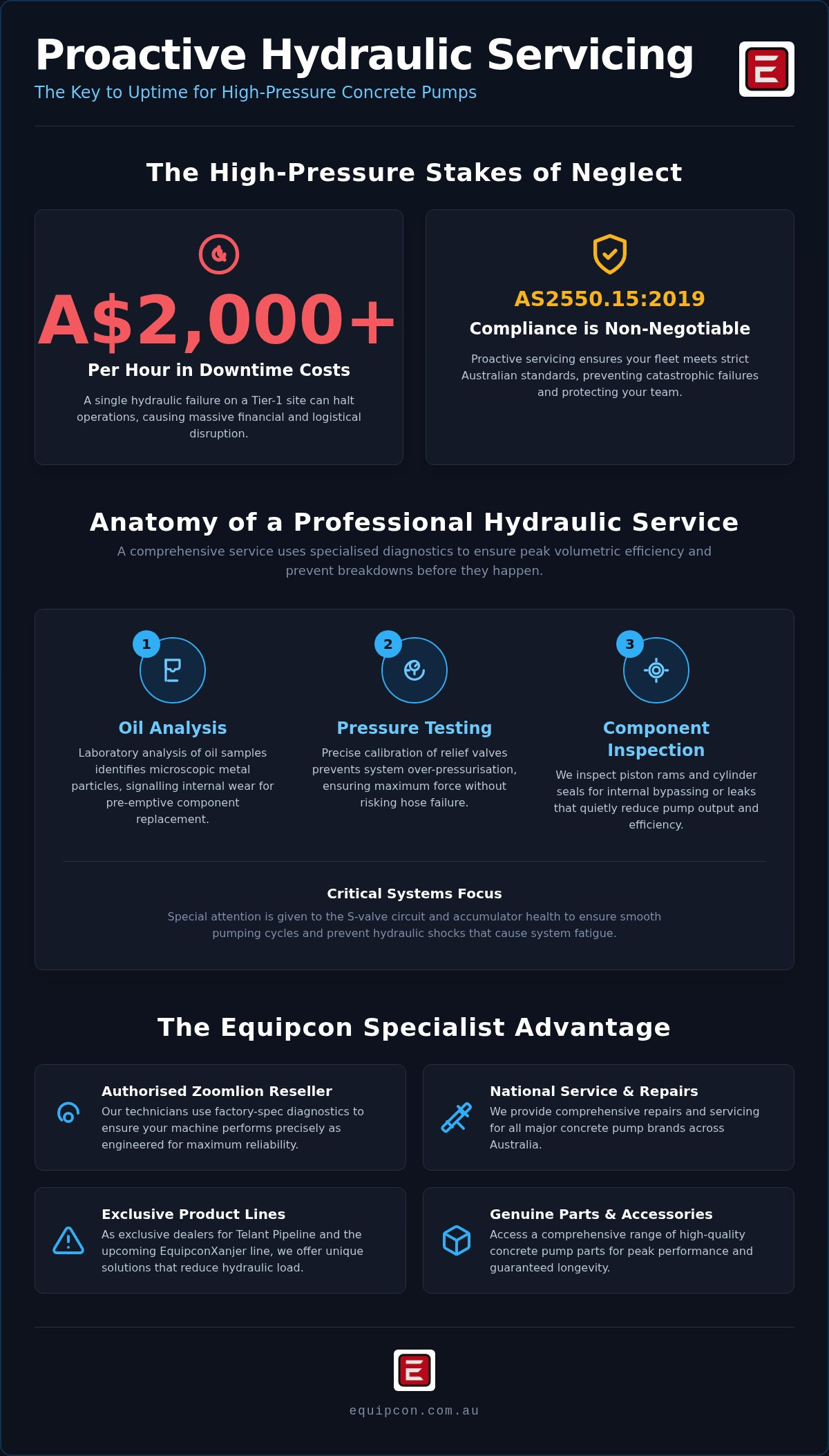
The hydraulic system acts as the functional heart of any concrete pump, converting raw engine power into the massive force required to deliver dense concrete through hundreds of metres of pipeline. When this system operates at peak health, your project stays on schedule. However, neglecting the importance of hydraulic servicing concrete pumps can lead to catastrophic failure during a critical pour. On a Tier-1 Australian construction site, a burst hose or pump failure isn't just a minor delay; it can trigger downtime costs exceeding A$2,000 per hour, not to mention the logistical nightmare of "hot" concrete setting in the lines.
Beyond the financial hit, there's a significant safety and legal imperative. High-pressure hydraulic systems carry inherent risks if components aren't regularly inspected to meet AS2550.15:2019 standards. Understanding the importance of hydraulic servicing concrete pumps allows you to stay compliant while protecting your team on the ground. Professional hydraulic servicing is a proactive strategy to identify microscopic wear before it leads to a total system blowout.
The High-Pressure Stakes of High-Rise Pumping
Operating high-rise placing booms or high-pressure static pumps demands more from your hydraulic circuits than standard applications. The constant heat and pressure cycles inherent in vertical pumping degrade hydraulic oil and seals rapidly, especially in harsh Australian climates. If you're looking to maintain peak performance, it's worth reading our guide on Mastering High-Rise Efficiency: The Essential Guide to Concrete Placing Booms for Sale in 2026. By staying ahead of thermal degradation, you ensure your equipment remains a reliable asset rather than a liability.
The Anatomy of a Professional Hydraulic Service: Beyond the Basics
A professional hydraulic service goes far deeper than a standard oil change. It's a technical deep dive into the machine’s volumetric efficiency. While many operators rely on visual checks, modern fleets require specialised diagnostic tools to detect internal bypass or pump wear that the naked eye simply can't see. As a Zoomlion reseller, we use factory-spec diagnostics to ensure your machine performs exactly as the engineers intended. Recognising the importance of hydraulic servicing concrete pumps ensures that your equipment operates within precise parameters, preventing the slow degradation of performance that often precedes a major breakdown. For fleet owners who value reliability, the importance of hydraulic servicing concrete pumps cannot be overstated.
We place particular emphasis on the S-valve circuit and accumulator health because these components dictate the smoothness of your pumping cycles. If an accumulator loses its nitrogen pre-charge, the resulting hydraulic shocks can fatigue the entire system, leading to premature metal fatigue. During these high-pressure checks, we follow rigorous safety protocols, aligning with global benchmarks like OSHA safety standards, to ensure technicians and operators are safe during calibration. Securing professional concrete pump maintenance is the most effective way to guarantee long-term operational uptime. If you need to verify your system's current health, our team provides comprehensive hydraulic diagnostics tailored to your specific fleet.
A Step-by-Step Hydraulic Inspection Checklist
Our methodical approach ensures no critical component is overlooked. Every professional service we conduct includes these three essential phases:
Step 1: Oil sampling and laboratory analysis. We identify microscopic metal particles that signal internal component wear, allowing for part replacement before a total system blowout.
Step 2: Pressure testing and relief valve calibration. This prevents system over-pressurisation and ensures the pump delivers maximum force without risking a hose failure.
Step 3: Inspection of piston rams and cylinder seals. We check for internal bypassing or leaks that quietly bleed off pressure and reduce your pump's output and efficiency.
Strategic Maintenance: Partnering with Authorised Specialists for National Reliability
Partnering with a specialist ensures your machinery receives attention from technicians who understand factory-spec hydraulic parameters. As a Zoomlion reseller, we provide a level of technical precision that generic workshops simply can't match. Our national service network across VIC, SA, WA, and QLD allows contractors to move equipment between interstate projects with the confidence that expert support is always nearby. This reliability reinforces the importance of hydraulic servicing concrete pumps for fleet owners managing high-pressure assets across the country.
We continue to lead the market through exclusive partnerships and upcoming expansions. We are the exclusive dealer of Telant Pipeline, which is engineered to reduce friction-related hydraulic load and maintain system integrity. Looking ahead, our commitment to innovation includes the introduction of a high-performance double-wall pipeline and the launch of the new EquipconXanjer product line. These future-facing solutions are designed specifically to meet the evolving demands and safety requirements of the Australian pumping industry.
The Value of Genuine Parts in Hydraulic Integrity
High-pressure environments leave no room for compromise on component quality. Using non-genuine concrete pump spare parts is a gamble that can introduce contaminants or lead to failure under the extreme stresses of a high-rise pour. Recognising the importance of hydraulic servicing concrete pumps means ensuring every accessory, from the main pump to the smallest seal, is built for the task. We focus on providing:
Genuine filters and seals to prevent internal bypass and oil contamination.
High-quality pipeline accessories that reduce system back-pressure and hydraulic strain.
Factory-authorised components that preserve your equipment warranty and resale value.
Securing Your Fleet’s Future on Site
Maintaining the hydraulic integrity of your equipment is the most effective way to eliminate the threat of unplanned downtime on major pours. By prioritising detailed diagnostics over simple visual inspections, you protect your bottom line and ensure full compliance with Australian standards. Understanding the importance of hydraulic servicing concrete pumps allows you to transition from reactive repairs to a proactive strategy that extends the lifecycle of your machinery. As a Zoomlion reseller and exclusive Telant Pipeline dealer, we provide the technical expertise and genuine parts required to keep your high-pressure systems running at peak volumetric efficiency. With our national service network across VIC, SA, WA, and QLD, reliable support is always within reach. Book your professional hydraulic service with Equipcon’s national specialist team today. We're here to help your business stay productive and profitable.
Frequently Asked Questions
How often should I organise a hydraulic service for my concrete pump?
Most manufacturers recommend a service every 500 to 1,000 operating hours, but harsh Australian conditions often require more frequent checks. High-pressure static pumps on high-rise sites should be inspected quarterly. Regular scheduling highlights the importance of hydraulic servicing concrete pumps by preventing oil degradation before it damages expensive internal components like the main pump or S-valve circuit.
What are the first signs of hydraulic system failure in a boom pump?
Watch for increased operating temperatures, unusual whining noises from the pump, or sluggish boom movement. If you notice "milky" oil, it indicates water contamination, while dark, burnt-smelling oil suggests overheating. Catching these signs early through routine diagnostics prevents catastrophic failures and ensures your equipment remains compliant and safe for use on Tier-1 sites across Australia.
Does regular servicing help with AS2550.15 compliance in Australia?
Yes, regular hydraulic maintenance is a fundamental requirement for meeting AS2550.15:2019 standards. Compliance audits on major Australian projects specifically look for service records that prove your high-pressure systems and safety valves are functioning correctly. Keeping detailed logs of every service helps you pass site inductions and protects your business from the legal liabilities of equipment failure.
Can I use general hydraulic oil, or does a concrete pump require specialised fluid?
You should always use high-quality, manufacturer-specified hydraulic oil suited for high-pressure applications and Australian temperature ranges. General-purpose oils often lack the anti-wear additives needed for the extreme stress of concrete delivery. Using the correct fluid reduces friction and heat, which is vital for maintaining the longevity of your Zoomlion equipment and exclusive Telant Pipeline systems.
What is the difference between a minor service and a major hydraulic overhaul?
A minor service typically involves oil sampling, filter replacements, and basic pressure checks to ensure day-to-day reliability. A major overhaul is a comprehensive teardown where we inspect piston rams, reseal cylinders, and recalibrate the entire hydraulic circuit to factory specifications. Both levels of care demonstrate the importance of hydraulic servicing concrete pumps in maintaining a high-performance, long-lasting fleet.
How does hydraulic health affect the fuel efficiency of my mobile pump?
Poor hydraulic health forces your engine to work harder to maintain the required pumping pressure, significantly increasing fuel consumption. Internal leaks or clogged filters create back-pressure that wastes energy. By ensuring your system is clean and calibrated, you maximise volumetric efficiency, meaning you move more concrete with less fuel, directly improving your project’s overall profitability and performance.
Comments