

High Rise Concrete Placing Booms: The Professional Guide to Selection and Setup (2026)
Updated: Aug 4
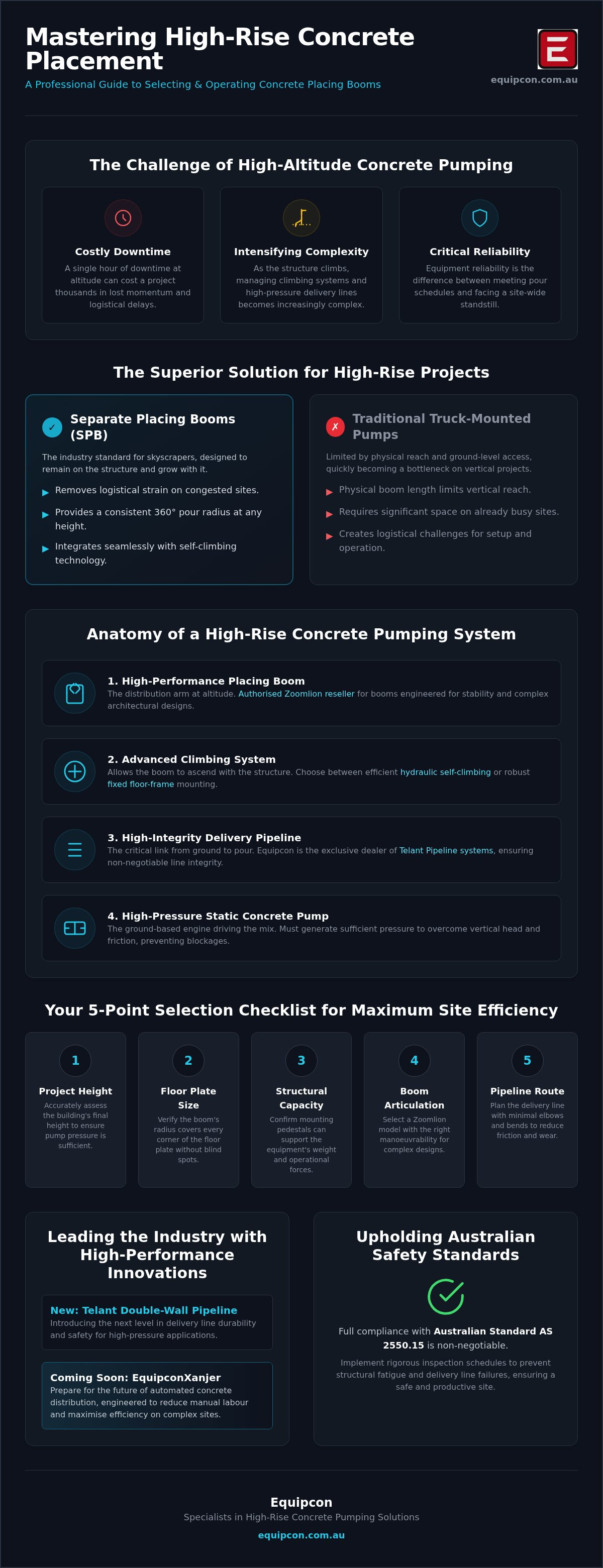
On a high-rise project, the concrete placing boom isn't just another piece of machinery; it's the heartbeat of the critical path. A single hour of downtime at altitude can cost your project thousands in lost momentum and logistical headaches. You likely already know that as your structure climbs, the complexity of managing climbing systems and high-pressure delivery lines only intensifies. It's a high-stakes environment where equipment reliability is the difference between hitting your pour schedule and facing a site-wide standstill.
This guide will help you master the technical selection, installation, and operation of high rise concrete placing booms to ensure your site remains productive and compliant with Australian safety standards. With extensive industry experience in high-rise concrete solutions, Equipcon understands that high-altitude efficiency requires more than just reach. It demands the seamless integration of self-climbing technology with high-performance delivery infrastructure. We will preview the essential setup protocols, the advantages of the new EquipconXanjer innovations, and how to reduce manual labour through advanced automation to keep your project moving upward without the stress of delivery line failures.
Table of Contents
The Mechanics of High Rise Concrete Placing Booms and Climbing Technology
As a project scales vertically, the limitations of mobile equipment quickly become a bottleneck for the critical path. High rise concrete placing booms represent the transition from vehicle-mounted delivery to stationary, high-altitude distribution. These units are separate from the actual pumping source; they're designed to remain on the structure and grow alongside it as each floor plate is poured. This Separate Placing Boom (SPB) concept is the industry standard for skyscrapers because it removes the logistical strain of parking large trucks on congested Australian sites.
Modern Concrete pump technology has evolved to allow these booms to operate hundreds of metres above the ground. Equipcon’s status as an authorised Zoomlion reseller means we provide systems engineered for the extreme stability required at these heights. While a truck-mounted pump is limited by its physical boom length, a stationary placing boom provides a consistent 360-degree pour radius regardless of how high the building climbs. It's a turnkey solution for maintaining a steady pour rhythm on complex infrastructure.
Self-Climbing vs. Fixed Floor Mounting
The choice between mounting systems depends on your site's crane capacity and structural design. Hydraulic self-climbing systems are highly efficient. They use internal hydraulic cylinders to lift the entire boom and mast assembly to the next level without needing a crane for every jump. If you're working on a site where crane time is at a premium, this automation is a lifesaver. Alternatively, fixed floor-frame mounting offers a robust, stationary solution for projects where the boom remains in a central location for extended periods, providing a stable platform for high-volume distribution.
The Role of High-Pressure Static Concrete Pumps
A placing boom is only as effective as the engine driving the mix from the ground. High-performance stationary concrete pumps are the essential partners to high rise concrete placing booms. These ground-based pumps must generate enough pressure to overcome the vertical head and friction of the pipeline. It’s a precise calculation. If the pump pressure doesn't match the building height, you risk line blockages and delivery failures that can stall an entire pour. Ensuring your pump and boom are perfectly matched is the first step toward a successful high-altitude project.
How to Choose and Install a Placing Boom for Maximum Site Efficiency
Selecting high rise concrete placing booms requires a deep dive into your project's specific geometry. You can't just pick a boom based on its maximum reach. You must evaluate the floor plate size and the building's final height to ensure the boom's radius covers every corner without leaving blind spots. If the structural capacity of your mounting pedestals or tubular columns isn't verified early, you risk costly delays and structural concerns during the installation phase. It's about finding the sweet spot where the equipment's weight and reach align perfectly with the building's design.
Efficiency lives in the pipeline. When planning your route, focus on minimising elbows and bends. Every turn increases friction and puts unnecessary strain on your high-pressure static pump, which can lead to premature wear or blockages. You also need to align your schedule with the crane and formwork teams. A seamless climbing transition depends on everyone knowing exactly when the mast needs to jump. If coordination slips, your concrete schedule will follow, leading to expensive standby time for your crews.
Selecting the Right Zoomlion Placing Boom
Zoomlion booms are engineered for complex architectural designs that demand high manoeuvrability. Whether you're dealing with tight urban sites or sprawling commercial plates, choosing a model with the right articulation is vital for reaching difficult pour zones. To maintain this performance over the project lifecycle, ensure you have a reliable source for zoomlion placing boom parts australia. Having immediate access to genuine components is the best way to avoid unexpected downtime during critical pours.
Optimising Delivery with Telant Pipeline Systems
At high altitudes, the integrity of your delivery line is non-negotiable. We recommend exclusive Telant Pipeline systems for all high-pressure applications. Their double-wall pipeline technology is quickly becoming the Australian standard because it provides an extra layer of security against wear and high-pressure bursts. This setup ensures your concrete reaches the discharge point without incident, even at extreme vertical heads. If you're unsure which setup fits your site, our team can help you optimise your pipeline configuration for maximum flow and safety.
Operational Excellence: Maintenance and Safety Protocols for High-Rise Projects
Safety isn't just about ticking boxes. It's about protecting the project's structural integrity and your team's wellbeing. In Australia, the definitive benchmark for this is AS 2550.15, which dictates the safe use and maintenance of concrete placing equipment. Adhering to this standard for high rise concrete placing booms ensures that every lift, pour, and climb is performed within safe engineering limits. It's a proactive commitment to site reliability.
To stay ahead of structural fatigue, you need more than a casual glance. You must implement a rigorous concrete pump boom inspection schedule. This systematic approach identifies micro-cracks or hydraulic leaks before they evolve into site-wide emergencies. Using genuine Zoomlion parts is essential here. Third-party components often fail to meet the exact tolerances required for hydraulic climbing mechanisms, which can compromise the entire system during a climb. We’re also preparing for the launch of EquipconXanjer, a next-generation solution designed to integrate smarter automation with the rugged reliability of our current fleet.
Preventing Pipeline Blockages and Wear
High-pressure lines are under immense stress during vertical pours. Best practices include using specialised washout balls after every pour to ensure the line is completely clear of residual mix. You should also monitor wear in elbows and reducers daily using ultrasonic thickness testers where possible. A blowout at level 40 isn't just a mess; it's a major safety hazard that will stop your site for the day. Consistent cleaning and wear monitoring are the simplest ways to maintain a high-altitude pour schedule.
Reducing Downtime through Professional Support
You don't have to manage these technical complexities alone. Equipcon’s national service network provides rapid repairs and expert technical advice across Australia. We recommend keeping a critical stock of concrete pump spare parts australia on-site. Having seals, clamps, and gaskets ready to go can turn a potential four-hour delay into a twenty-minute fix. Maintaining your high rise concrete placing booms with professional support ensures your project keeps moving upward without the stress of unexpected equipment failure.
Secure the Vertical Success of Your Next Project
Mastering the complexities of high-altitude construction requires more than just high-reach equipment. It demands a proactive approach to technical selection and a strict adherence to Australian safety standards like AS 2550.15. By integrating advanced high rise concrete placing booms with high-pressure delivery systems, you eliminate the bottlenecks that often plague the critical path of a skyscraper build. Whether you're managing climbing transitions or monitoring pipeline wear, the goal is always a seamless, automated flow that keeps your site moving upward.
Equipcon is here to support that journey as an authorised Zoomlion Reseller and the exclusive supplier of Telant Pipeline. With strategically located specialist support depots across Australia, we provide the technical expertise and genuine spare parts needed to maintain operational excellence at any altitude. If you're ready to optimise your concrete distribution and reduce manual labour through industry-leading automation, we're ready to help.
Enquire about Zoomlion Placing Booms for your next high-rise project and partner with a specialist team invested in your long-term success. Let's make your next pour the most efficient one yet.
Frequently Asked Questions
What is the maximum height a self-climbing concrete placing boom can reach?
Self-climbing concrete placing booms have no fixed maximum height because they are designed to ascend alongside the building structure. In practical terms, the height is only limited by the vertical pressure capacity of your ground-based stationary pump and the strength of your delivery pipeline. As long as your pumping system can overcome the vertical head and friction, these booms can reach the summit of any Australian skyscraper.
How is a separate placing boom secured to the building structure?
A separate placing boom is typically secured using a floor-frame mounting system or a mast that passes through internal voids in the floor plates. These systems are anchored using high-strength wedges and structural bolts that fix the tubular column to the concrete slab or formwork. This rigid setup provides the stability required for high rise concrete placing booms to handle the lateral forces and vibrations generated during high-volume concrete distribution.
Do I need a specific stationary pump for high-rise placing booms?
Yes, you must use a high-pressure stationary pump that is specifically engineered to push concrete to extreme elevations. Standard pumps often don't have the hydraulic power to overcome the weight of a vertical concrete column. We recommend pairing your boom with a high-pressure static pump and a Telant double-wall pipeline to ensure the system can handle the intense pressure without the risk of line failure or blockages.
What are the daily inspection requirements for high-rise placing booms in Australia?
Daily inspections in Australia must adhere to the AS 2550.15 standard to ensure the equipment remains safe for operation. This process involves a visual check of all hydraulic hoses, structural pins, and the integrity of the climbing mechanism before the first pour of the day begins. Operators should also pay close attention to high rise concrete placing booms pipeline couplings and elbow wear, as these are common failure points in high-pressure vertical delivery systems.


Comments